
You have not yet added any article to your bookmarks!
Join 10k+ people to get notified about new posts, news and tips.
Do not worry we don't spam!
Post by : Shakul
Scientists around the world are warning that climate change is becoming one of the biggest threats ever faced by plant life on Earth. While global warming discussions often focus on animals such as polar bears, elephants, or marine species, researchers now say plants could suffer an even larger extinction crisis during the coming decades. A major international study published in the journal Science predicts that tens of thousands of plant species may disappear before the end of this century if rising global temperatures continue at the current pace.
According to the research, between 7% and 16% of the world’s plant species could lose nearly all of their natural habitats within the next 55 to 75 years. Scientists estimate that around 35,000 to 50,000 plant species may face extinction under moderate climate change conditions. Experts say the number could become even higher if global carbon emissions continue to rise sharply in the future.
The study was led by ecologist Xiaoli Dong and her research team at the University of California Davis. Researchers used advanced climate and biology computer models to study how global warming may affect nearly 18% of the world’s known plant species. Millions of simulations were conducted to understand how plants may react as temperatures increase and weather patterns continue changing across different regions of the world.
Scientists had previously believed that many plant species could slowly shift toward cooler environments as temperatures rise. Plants can spread through seeds carried by wind, water, birds, or animals into new locations. However, the latest research suggests that migration alone may not save many species from extinction. Dong explained that plants are not simply failing to move fast enough. Instead, the environmental conditions required for their survival may completely disappear due to climate change.
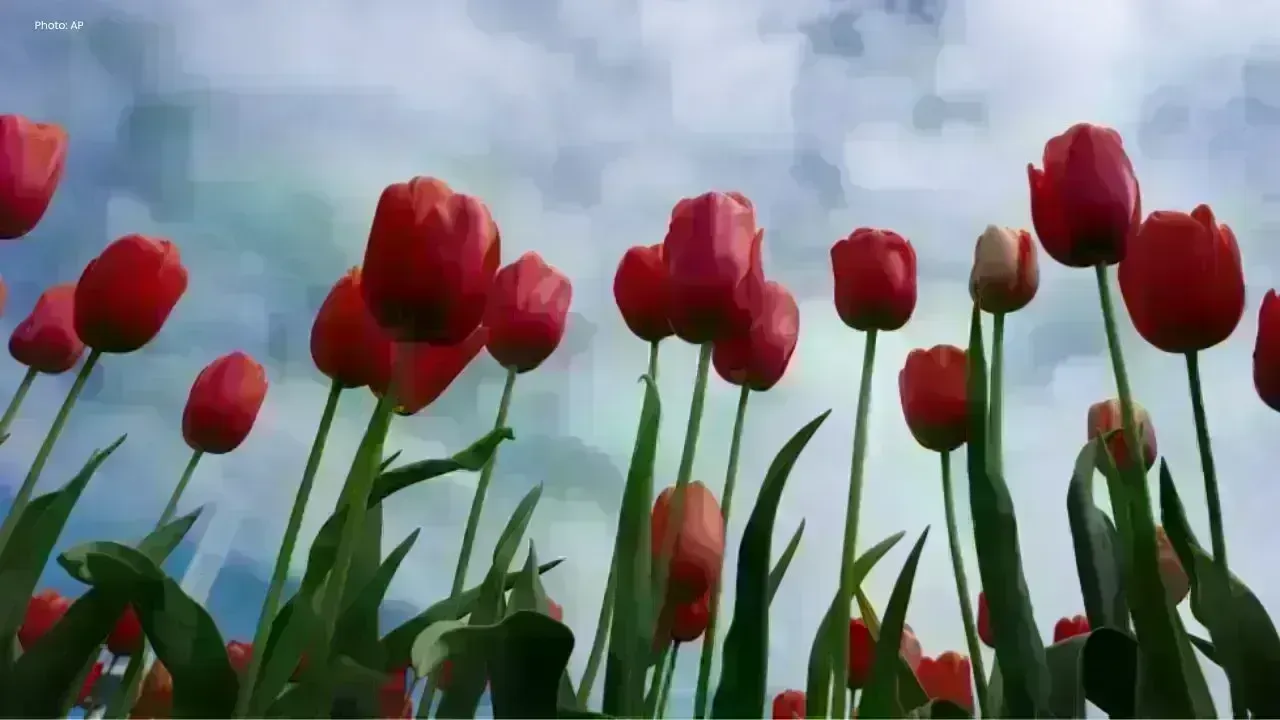
Researchers used the example of tulips to explain the growing problem. Tulips require a very specific combination of soil quality, rainfall, and temperature conditions to survive properly. Climate change is disrupting this balance. In some regions, the right temperature has moved north, rainfall patterns have shifted east, while the required soil conditions remain unchanged. As a result, the perfect habitat needed for certain plant species is becoming smaller and more difficult to find.
The report highlights that regions such as the Arctic, the Mediterranean, and Australia are facing especially serious risks. Scientists say the Arctic is warming nearly four times faster than the rest of the world, creating severe pressure on fragile plant ecosystems. In Australia, changing rainfall patterns are becoming one of the biggest reasons behind habitat loss for many native species.
A second study published alongside the climate report focused on flowering plants and their current extinction risks. Scientists from Kew Gardens in the United Kingdom discovered that nearly 10,000 flowering plant species are already at risk of extinction. Researchers warned that many of these plants are evolutionarily unique, meaning that if they disappear, an irreplaceable part of Earth’s biological history will vanish forever.
The study included rare and unusual species such as titan arum, often called the world’s smelliest plant, and special orchid species that produce natural vanilla. Scientists explained that some plants have no close relatives on Earth, making their extinction even more devastating for biodiversity. One example mentioned was the ancient Ginkgo biloba tree, which represents hundreds of millions of years of plant evolution.
Experts say plant extinction often receives far less public attention compared to endangered animals. Researchers believe this lack of awareness could become dangerous because plants form the foundation of ecosystems and human survival. Plants provide oxygen, food, medicine, shelter, and essential materials used in daily life. Scientists warn that if plant biodiversity continues to collapse, it may eventually affect global food security, agriculture, and access to important natural resources. Environmental experts are now calling for urgent international action to reduce carbon emissions and strengthen conservation efforts before the damage becomes irreversible.










PM Modi Pays Tribute to Mahatma Gandhi, Urges People to Support Khadi
PM Modi pays tribute to Mahatma Gandhi on Gandhi Jayanti and urges citizens to support Khadi and the

Amazon Seeks to Offload $8 Billion in Nvidia Chips to Investors
Amazon plans to move $8 billion in Nvidia chips to investors, using a new financing model to strengt

Samsung Raises Galaxy S26 Prices as Memory Chip Costs Rise
Samsung raises Galaxy S26 prices in South Korea as rising memory chip costs put pressure on smartpho

Lewis Hamilton Calls Singapore Grand Prix One of F1's Toughest Races
Lewis Hamilton discusses the demanding Singapore Grand Prix and brings Plus44 and Almave to Singapor

Denmark's Pandora Opens World's Largest Jewellery Factory in Vietnam
Pandora opens its largest jewellery factory in Vietnam, expanding global production, strengthening s

Gautam Gambhir Questions Batting-Friendly Pitches After India's Record ODI Chase
Gautam Gambhir questions batting-friendly ODI pitches after India’s record chase, calling for a bett

