
You have not yet added any article to your bookmarks!
Join 10k+ people to get notified about new posts, news and tips.
Do not worry we don't spam!
Post by : Shakul
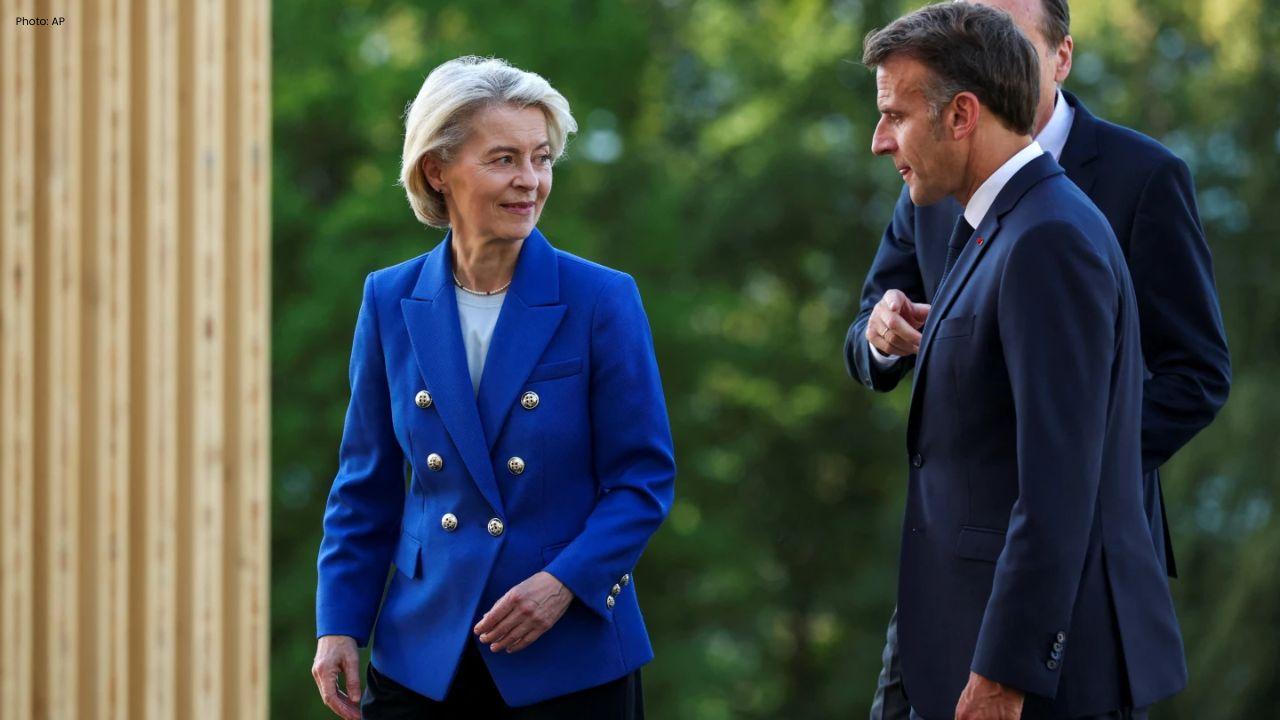
China's rapidly growing exports have emerged as a major concern for European economies, with policymakers warning that a fresh wave of low-cost Chinese products could threaten domestic industries across the continent. The issue has become a key topic at the G7 Summit in France, where leaders are discussing measures to address trade imbalances and protect manufacturing sectors from increasing competition.
Despite years of tariffs imposed by the United States, China has continued to expand its industrial output and recorded a global trade surplus of nearly $1.2 trillion last year. As exports to the United States declined due to trade restrictions, Chinese manufacturers redirected products toward Europe and other Asian markets, increasing pressure on local producers.
European leaders fear the situation could resemble the "China Shock" that affected the United States in the early 2000s, when a flood of Chinese imports contributed to factory closures and job losses. However, analysts say the current challenge is even more significant because China is now exporting advanced products such as electric vehicles, batteries, solar panels, industrial machinery and technology equipment.
Germany has been among the countries most affected by the growing competition. Key sectors including automotive manufacturing, chemicals and industrial machinery are facing increasing pressure from Chinese rivals. Economic experts believe the rise in Chinese imports has contributed to slower industrial growth in several European economies.
Trade data shows Chinese exports to the European Union increased sharply during the first months of 2026, widening trade deficits for several member states. Policymakers argue that China's industrial policies encourage excessive production while domestic consumption remains relatively weak, leading manufacturers to rely heavily on overseas markets.
European officials are now considering stronger trade measures, including higher tariffs on selected Chinese products. Discussions at the G7 Summit are expected to focus on coordinated strategies aimed at protecting domestic industries while maintaining stable global trade relations. Many economists believe the outcome of these discussions could shape the future direction of international trade policy in the coming years.










PM Modi Pays Tribute to Mahatma Gandhi, Urges People to Support Khadi
PM Modi pays tribute to Mahatma Gandhi on Gandhi Jayanti and urges citizens to support Khadi and the

Amazon Seeks to Offload $8 Billion in Nvidia Chips to Investors
Amazon plans to move $8 billion in Nvidia chips to investors, using a new financing model to strengt

Samsung Raises Galaxy S26 Prices as Memory Chip Costs Rise
Samsung raises Galaxy S26 prices in South Korea as rising memory chip costs put pressure on smartpho

Lewis Hamilton Calls Singapore Grand Prix One of F1's Toughest Races
Lewis Hamilton discusses the demanding Singapore Grand Prix and brings Plus44 and Almave to Singapor

Denmark's Pandora Opens World's Largest Jewellery Factory in Vietnam
Pandora opens its largest jewellery factory in Vietnam, expanding global production, strengthening s

Gautam Gambhir Questions Batting-Friendly Pitches After India's Record ODI Chase
Gautam Gambhir questions batting-friendly ODI pitches after India’s record chase, calling for a bett

