
You have not yet added any article to your bookmarks!
Join 10k+ people to get notified about new posts, news and tips.
Do not worry we don't spam!
Post by : Rameen Ariff
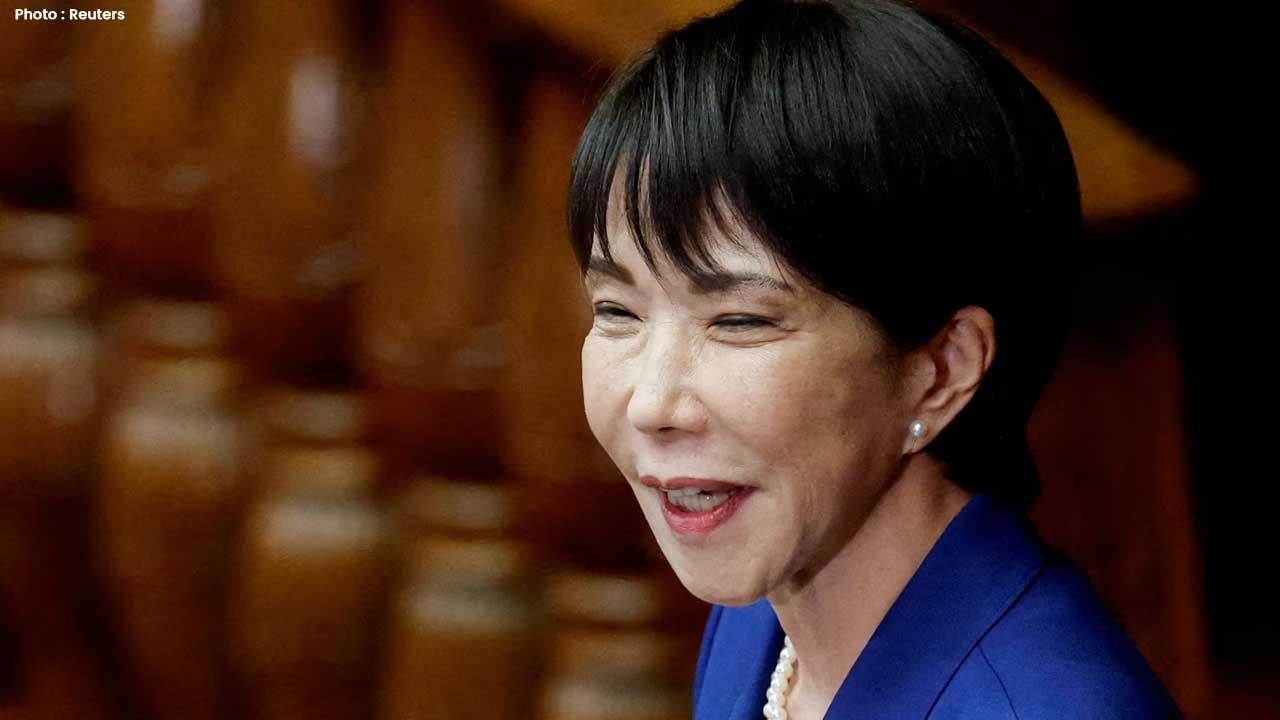
In recent days, a diplomatic crisis has unfolded between China and Japan, triggered by remarks from Japan’s newly appointed Prime Minister, Sanae Takaichi, concerning Taiwan. During a recent parliamentary discussion, Takaichi implied that Japan might take military action if China were to attack the self-governing island, referencing a key aspect of Japan’s 2015 security legislation on “survival-threatening situations.”
This assertion has faced immediate backlash from Beijing, with China’s foreign ministry labeling the comments as “outrageous” and breaching the one-China principle. The situation escalated after China’s consul general in Osaka, Xue Jian, issued a contentious statement on social media perceived as a threat to Takaichi, prompting Japan to file an official complaint and leading to Beijing summoning the Japanese ambassador for a discussion.
Takaichi, known for her hawkish political stance and connections to former Prime Minister Shinzo Abe, defended her remarks as aligned with Japan's longstanding security doctrines. While asserting Japan’s continued desire for a peaceful resolution regarding tensions in the Taiwan Strait, she reiterated her concerns about Taiwan potentially threatening Japan’s national security.
This diplomatic dispute underscores the longstanding historical tensions between China and Japan, rooted in the wartime conflicts during World War Two. Beijing has made it clear that any perceived military involvement regarding Taiwan would have dire consequences, emphasizing its sensitivity towards the territory it claims.
Experts observe that Takaichi’s ascent demonstrates a notable pivot toward a more proactive Japanese foreign policy, with her administration seeking to strengthen its alliances with the United States and promising an increase in defense spending—moves that have raised alarms in Beijing. Takaichi’s past endorsements of Taiwan have led her to suggest potential Japanese intervention should China impose a blockade or engage in military aggression against the island.
China’s position remains unwavering, with officials continually warning that any interference in Taiwan's affairs is seen as a threat to its sovereignty, potentially resulting in serious repercussions. This recent escalation highlights the precarious security landscape of the region, where historical strategic ambiguity has traditionally helped mitigate conflicts while maintaining economic cooperation.
As China and Japan find themselves in this critical juncture, analysts caution that the ongoing dispute over Taiwan could significantly impact East Asian regional stability across various dimensions, including military, economic, and diplomatic spheres.










PM Modi Pays Tribute to Mahatma Gandhi, Urges People to Support Khadi
PM Modi pays tribute to Mahatma Gandhi on Gandhi Jayanti and urges citizens to support Khadi and the

Amazon Seeks to Offload $8 Billion in Nvidia Chips to Investors
Amazon plans to move $8 billion in Nvidia chips to investors, using a new financing model to strengt

Samsung Raises Galaxy S26 Prices as Memory Chip Costs Rise
Samsung raises Galaxy S26 prices in South Korea as rising memory chip costs put pressure on smartpho

Lewis Hamilton Calls Singapore Grand Prix One of F1's Toughest Races
Lewis Hamilton discusses the demanding Singapore Grand Prix and brings Plus44 and Almave to Singapor

Denmark's Pandora Opens World's Largest Jewellery Factory in Vietnam
Pandora opens its largest jewellery factory in Vietnam, expanding global production, strengthening s

Gautam Gambhir Questions Batting-Friendly Pitches After India's Record ODI Chase
Gautam Gambhir questions batting-friendly ODI pitches after India’s record chase, calling for a bett

