
You have not yet added any article to your bookmarks!
Join 10k+ people to get notified about new posts, news and tips.
Do not worry we don't spam!
Post by : Shweta
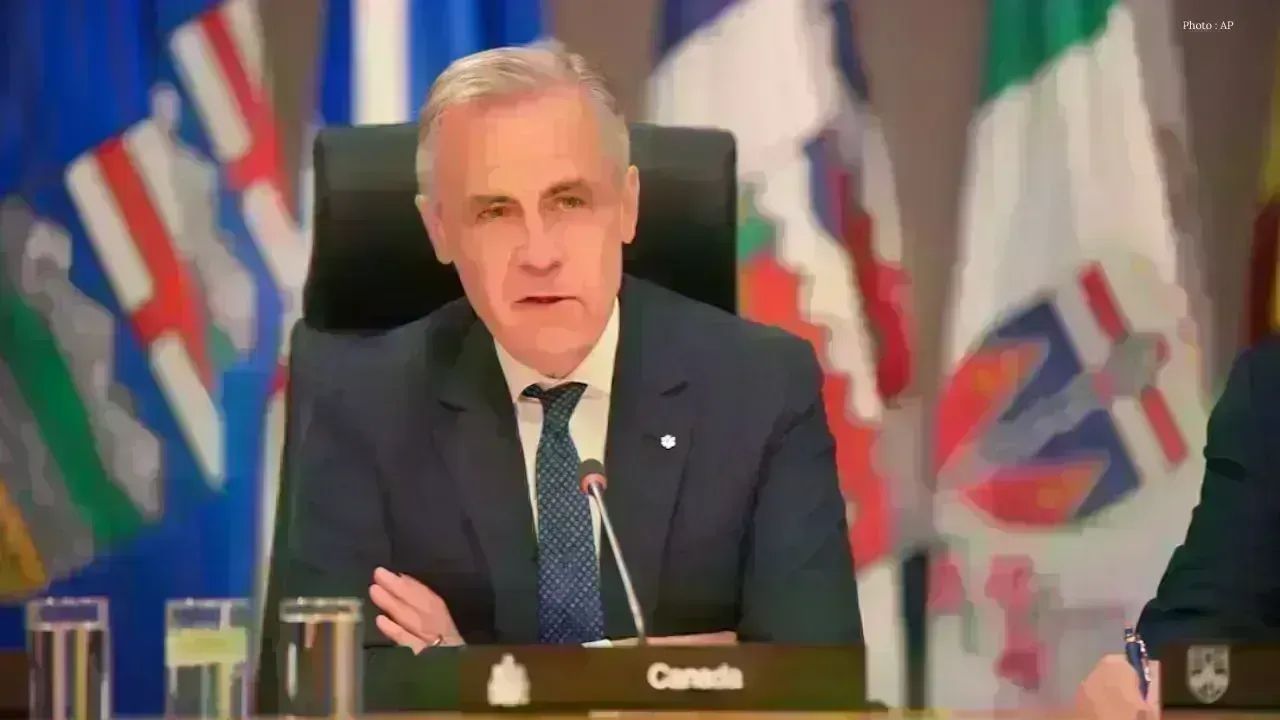
In light of a recent tariff threat from the United States, Canada is set to bolster its measures against the importation of goods linked to forced labour. Prime Minister Mark Carney revealed plans for enhanced legislation that will improve oversight of supply chains to prevent products associated with forced or child labour from entering Canadian markets.
This announcement follows U.S. President Donald Trump’s administration proposing additional tariffs on imports from Canada and other countries, asserting that some trading partners fall short in preventing goods tied to forced labour from entering their borders. A proposed tariff of 10 percent on imports from Canada, the U.K., and Mexico, along with higher tariffs for countries with laxer forced-labour regulations, is under consideration.
Carney addressed the media in Ottawa, confirming that while Canada has strong regulations against forced labour in global supply chains, there is still room for improvement in enforcement and ensuring high ethical standards for incoming goods. He announced that the federal government will introduce more legislation in the coming weeks as part of its broader commitment to eradicate forced and child labour globally.
The proposed U.S. tariffs are prompted by an investigation from the Office of the United States Trade Representative, which highlighted insufficient actions taken by several countries including Canada to block imports linked to forced labour. Although the report acknowledged Canada’s existing regulations and international trade commitments, it critiqued the limited enforcement of these regulations. U.S. officials emphasized the necessity for stronger measures to prevent forced-labour-tainted products from infiltrating North American supply chains.
Officials in Canada have countered claims that they are neglecting this issue. Carney reiterated Canada’s support for the global goal of eradicating forced labour from trade practices and noted that businesses are already required to submit annual reports detailing efforts to minimize forced labour risks in their operations and supply chains.
This trade dispute arises during a sensitive period for Canada-U.S. relations as both nations look toward upcoming discussions regarding the Canada-United States-Mexico Agreement (CUSMA), North America’s primary trade agreement. Trade matters have contributed to tensions between Ottawa and Washington, particularly as the Trump administration continues to utilize tariffs as a central element of its trade strategy.
Despite the tariff proposals, Canadian officials have indicated that many goods under CUSMA would remain exempt from these new duties if they are enacted. The U.S. plans are currently subject to public consultation and review before any official decision, with hearings anticipated later this year, meaning the tariffs are not yet in effect.
Industry experts suggest that this scenario underscores the increasing significance of supply chain transparency in global trade. Around the world, governments are under rising pressure to ensure imported goods are free from connections to forced labour, human rights violations, or unethical production processes. Businesses may soon face tougher reporting obligations and rigorous scrutiny from regulators.
For Canadian firms, impending new laws may lead to heightened compliance requirements and increased oversight of foreign suppliers. However, advocates argue that stricter rules could promote workers’ rights and bolster consumer confidence in products sold in Canada. The government has indicated that forthcoming measures will enhance existing regulations rather than replace them.
In the coming weeks, Ottawa is expected to announce specifics regarding the upcoming legislation and its enforcement procedures. The results of the U.S. tariff review are also anticipated by businesses and policymakers on both sides of the border. Canada, for now, signals its intent to address the issue not by retaliation but by reaffirming its commitment to eliminating forced labour globally while preserving its trading rapport with the United States.










PM Modi Pays Tribute to Mahatma Gandhi, Urges People to Support Khadi
PM Modi pays tribute to Mahatma Gandhi on Gandhi Jayanti and urges citizens to support Khadi and the

Amazon Seeks to Offload $8 Billion in Nvidia Chips to Investors
Amazon plans to move $8 billion in Nvidia chips to investors, using a new financing model to strengt

Samsung Raises Galaxy S26 Prices as Memory Chip Costs Rise
Samsung raises Galaxy S26 prices in South Korea as rising memory chip costs put pressure on smartpho

Lewis Hamilton Calls Singapore Grand Prix One of F1's Toughest Races
Lewis Hamilton discusses the demanding Singapore Grand Prix and brings Plus44 and Almave to Singapor

Denmark's Pandora Opens World's Largest Jewellery Factory in Vietnam
Pandora opens its largest jewellery factory in Vietnam, expanding global production, strengthening s

Gautam Gambhir Questions Batting-Friendly Pitches After India's Record ODI Chase
Gautam Gambhir questions batting-friendly ODI pitches after India’s record chase, calling for a bett

