
You have not yet added any article to your bookmarks!
Join 10k+ people to get notified about new posts, news and tips.
Do not worry we don't spam!
Post by : Shakul
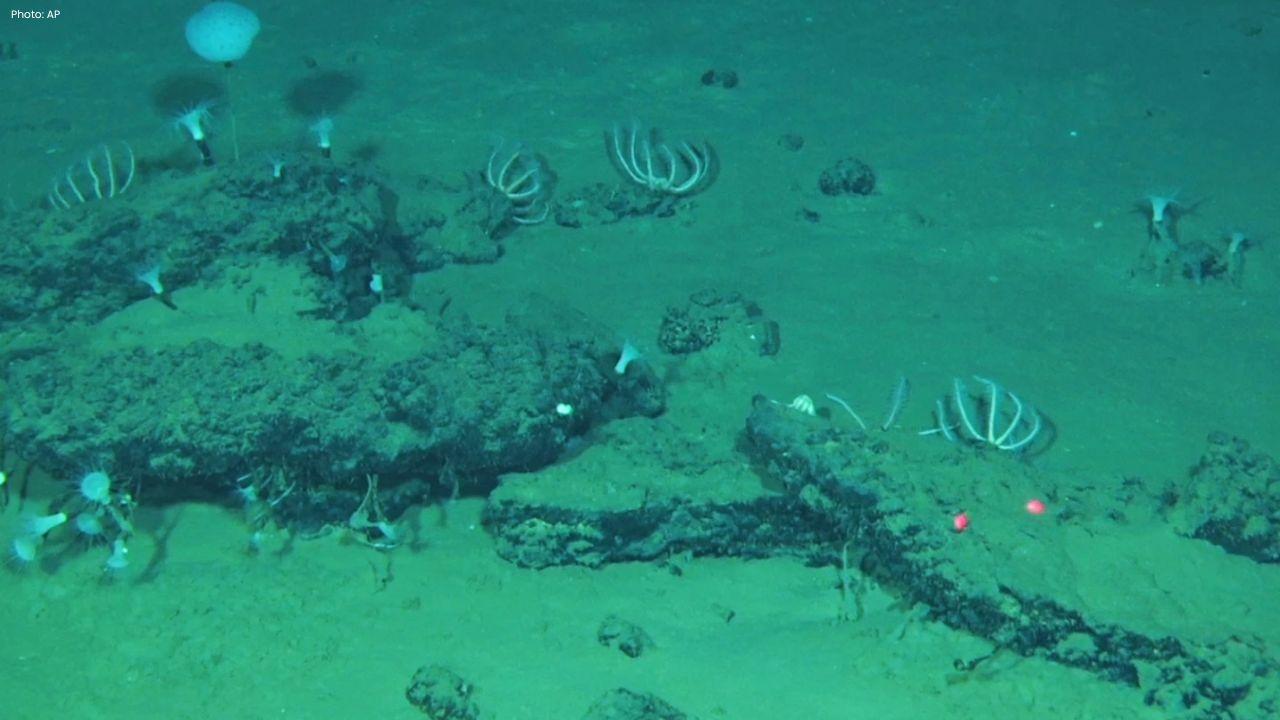
Scientists have uncovered an extraordinary ancient whale graveyard deep beneath the southeastern Indian Ocean, revealing a thriving ecosystem of marine life living on whale remains that are millions of years old. The discovery is being described as the deepest, oldest, and largest whale-fall site ever documented.
Millions Of Years Of Marine History
Researchers explored the site during several deep-sea missions conducted in 2023. The team identified five separate whale carcass locations along with fossilized remains, including skulls belonging to beaked whales and baleen whales. Analysis showed that some of the bones date back approximately 5.3 million years, offering a rare glimpse into ancient ocean life.
Diverse Creatures Thrive On Whale Remains
The whale graveyard supports a surprisingly rich community of marine organisms. Scientists observed jellyfish, tubeworms, brittle stars, sea cucumbers, squat lobsters, and saltwater clams living around the remains. Researchers believe many of these creatures could represent previously undocumented species that have never been scientifically recorded.
Extreme Conditions Preserve The Bones
Experts say several factors helped preserve the whale remains for millions of years. The bones are dense and resistant to destruction by bone-eating organisms. Their location nearly seven kilometers below the ocean surface protects them from sediment buildup, while mineral coatings formed from seawater have helped prevent decay over time.
Mystery Surrounds The Whale Deaths
Scientists are still investigating why so many whales ended up in the same location. One theory suggests that whales naturally lived and died in the area over long periods. Another possibility is that the V-shaped underwater landscape funneled carcasses toward a common resting place on the ocean floor.
Important Insights Into Deep-Sea Life
Researchers say the discovery provides valuable information about how life survives in one of Earth’s most extreme environments. The site demonstrates how unique ecosystems can develop even in complete darkness, under crushing pressure, and with limited food resources.
Study Highlights Ocean Biodiversity
The findings, published in the journal Nature, highlight the remarkable adaptability of marine organisms and the importance of exploring remote ocean regions. Scientists believe further research at the site could lead to the identification of many new species and improve understanding of deep-sea biodiversity.










APEC Members Emphasise Safe and Responsible Use of Artificial Intelligence
APEC members discuss responsible AI use, digital innovation and data governance as China and the US

Union of European Clubs Challenge UEFA and EFC Over EU Competition Rules
UEC files an EU competition complaint against UEFA and EFC, challenging club representation, governa

Mohammed Shami Retires From Test Cricket, Eyes White-Ball Career
Mohammed Shami retires from Test cricket after 13 years, with 229 wickets. He will continue playing

Singapore Warns Users About Privacy and Security Risks of AI Agents
Singapore warns users about AI agent security risks, data privacy, online scams and unauthorised acc

Chris Lynn Completes One-Month Ban After Positive Cocaine Test
Australian cricketer Chris Lynn completes a one-month ban after a positive cocaine test during the T

Djokovic Eyes Strong Season Finish as Health Improves Ahead of Paris Masters
Novak Djokovic reports improved health and performance as he targets a strong Paris Masters finish a