You have not yet added any article to your bookmarks!
Join 10k+ people to get notified about new posts, news and tips.
Do not worry we don't spam!
Post by : Anis Farhan
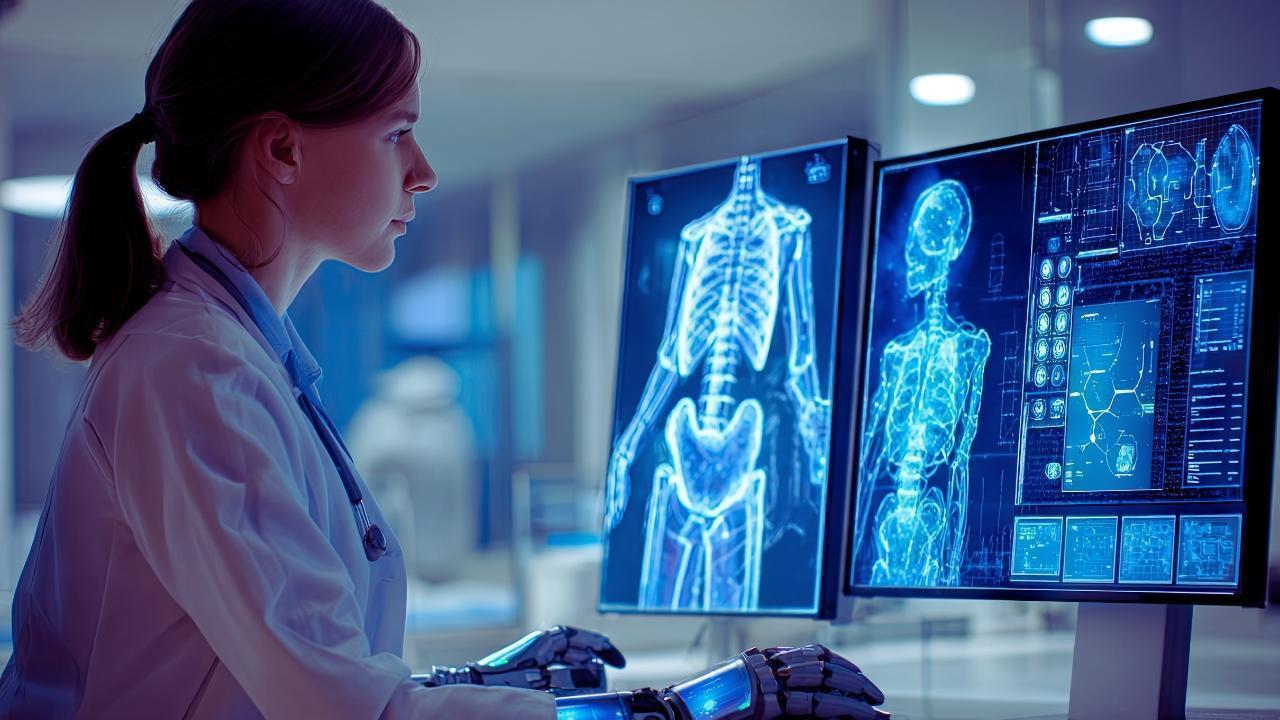
For decades, the healthcare industry has pursued faster and more accurate ways of diagnosing diseases. Misdiagnosis and late detection have often been the Achilles’ heel of traditional medicine, leading to delayed treatment and higher mortality rates. But now, artificial intelligence (AI) has taken a monumental leap forward. Recent advancements in AI-powered diagnostic systems have achieved a staggering 98.7% accuracy rate, a figure that surpasses even some of the most skilled physicians in certain fields.
This development represents more than just a technological triumph. It signals a turning point in how healthcare will be practiced, delivered, and accessed in the years ahead. From radiology scans to genetic analysis, AI is not only matching but, in some cases, exceeding human expertise.
Accuracy in diagnosis is the cornerstone of effective healthcare. A misdiagnosis can mean the difference between life and death, early intervention and missed opportunities, or cost-effective treatment and financial strain. Studies have shown that traditional methods of diagnosis, relying heavily on physician experience and manual interpretation, can have error rates ranging from 5% to 15% depending on the disease.
AI, trained on vast datasets of medical images, patient histories, and laboratory results, reduces this margin significantly. A 98.7% accuracy rate is not just a statistic—it reflects the potential to save millions of lives by minimizing errors and ensuring that patients receive the right treatment at the right time.
Reaching such a high accuracy rate did not happen overnight. It is the result of years of research, deep learning innovations, and access to massive datasets. Here are some factors that made this milestone possible:
Deep Neural Networks: Modern AI systems are modeled on neural networks that mimic the human brain’s ability to process complex patterns. These networks can analyze thousands of medical images within seconds, identifying patterns invisible to the human eye.
Big Data Integration: With access to billions of health records, X-rays, MRIs, CT scans, and genomic sequences, AI has a knowledge pool far richer than any single doctor could accumulate in a lifetime.
Continuous Learning: Unlike static medical knowledge, AI systems evolve constantly. Each new scan or dataset improves their learning capacity, meaning accuracy improves with time.
Edge Computing in Hospitals: Faster processing at the point of care means that AI can deliver real-time insights, reducing delays in diagnosis.
The 98.7% accuracy milestone has unlocked new opportunities across almost every branch of medicine:
Radiology: AI can spot tumors, fractures, and anomalies in medical imaging with incredible precision. In some cancer screenings, AI has reduced false negatives to historically low levels.
Cardiology: AI tools now detect irregular heartbeats, early signs of stroke, and blockages more reliably than traditional ECG analysis.
Oncology: Early cancer detection remains one of the biggest breakthroughs, with AI catching microscopic tumors that even trained specialists sometimes miss.
Pathology: Automated analysis of blood samples and biopsies has shortened turnaround times and reduced human error.
Ophthalmology: AI has been instrumental in diagnosing diabetic retinopathy and glaucoma at early stages, preventing vision loss.
Mental Health: By analyzing speech patterns and behavioral data, AI is making strides in detecting depression and neurological disorders earlier than conventional assessments.
This breakthrough in accuracy comes with several real-world advantages:
Early Detection: Diseases like cancer or heart conditions can be caught in their earliest, most treatable stages.
Personalized Treatment: AI can cross-reference patient data with global medical databases, tailoring treatment to each individual.
Lower Costs: By reducing unnecessary tests and hospital visits, AI diagnostics can cut healthcare costs significantly.
Accessibility: Rural and underserved areas, where specialists are scarce, can benefit from AI-powered diagnostic tools via telemedicine.
Efficiency for Doctors: AI doesn’t replace doctors but supports them, giving physicians more time to focus on patient care rather than paperwork and image analysis.
Despite the impressive accuracy, AI in healthcare is not without challenges:
Data Privacy: AI relies heavily on patient data, raising questions about how sensitive information is stored and shared.
Bias in Algorithms: If the datasets used to train AI are not diverse, there is a risk of biased diagnoses that disproportionately affect certain populations.
Regulatory Approval: Healthcare systems are tightly regulated, and introducing AI into mainstream clinical practice requires careful oversight.
Trust Issues: Patients may feel uneasy about a machine making life-changing medical decisions, even if accuracy rates are higher.
Over-Reliance: There is a danger of doctors becoming too dependent on AI, potentially eroding clinical judgment over time.
The implications of AI diagnostics stretch beyond hospitals:
Developing Countries: In regions with few specialists, AI can bring world-class diagnostic capabilities at a fraction of the cost.
Medical Training: Future doctors may train alongside AI, learning how to interpret and validate its results.
Public Health: Governments can use AI-driven insights to predict and manage outbreaks more efficiently.
Insurance Models: With fewer misdiagnoses, health insurance systems may shift toward preventative care rather than expensive corrective treatments.
While 98.7% accuracy is groundbreaking, the journey doesn’t stop here. Researchers aim to achieve near-perfect precision, reducing false positives and negatives to negligible levels. Integration with wearable devices, genetic testing, and AI-powered home diagnostics will take healthcare further into a proactive, continuous monitoring model rather than reactive treatment.
Imagine a future where a smartwatch not only tracks your steps but also detects early signs of cancer or heart failure. That vision is rapidly approaching reality.
The achievement of 98.7% diagnostic accuracy by AI systems is not just a technical milestone—it is a human one. It brings us closer to a world where healthcare is faster, safer, and more equitable. While ethical, regulatory, and social questions remain, one thing is clear: the role of artificial intelligence in medicine will only grow stronger.
Rather than replacing doctors, AI is poised to become their most reliable ally, enabling them to deliver better outcomes, save more lives, and transform healthcare from a reactive service into a proactive safeguard for humanity.
This article is an editorial analysis of recent AI advancements in healthcare diagnostics. It does not provide medical advice and should not be considered a substitute for consultation with licensed healthcare professionals.









Jordan Burroughs Returns to Wrestling with 2028 Olympic Dream
Jordan Burroughs returns to wrestling with Real American Freestyle as the Olympic champion eyes a po

Lamborghini Catches Fire on Singapore's ECP, Causing Heavy Traffic
A Lamborghini caught fire on Singapore's ECP, causing heavy traffic and bus delays. No injuries were

Bangkok Airport Duty-Free Area Flooded by Pipe Burst
A burst water pipe flooded the duty-free shopping area at Bangkok's Suvarnabhumi Airport on July 16,

Nine Monks Killed in Thailand Pickup Truck Tragedy
An 11-year-old boy driving a pickup truck crashed into monks during a pilgrimage in northeastern Tha

Anwar Congratulates Xi on CPC's 105th Anniversary
Malaysia reaffirms strong ties with China as PM Anwar Ibrahim sends a congratulatory letter to Presi

Thai Agriculture Team Reviews 2026 Farm Development Plans
Agriculture Ministry officials inspected livestock and organic rice projects in Nakhon Sawan to moni