
You have not yet added any article to your bookmarks!
Join 10k+ people to get notified about new posts, news and tips.
Do not worry we don't spam!
Post by : Saif Rahman
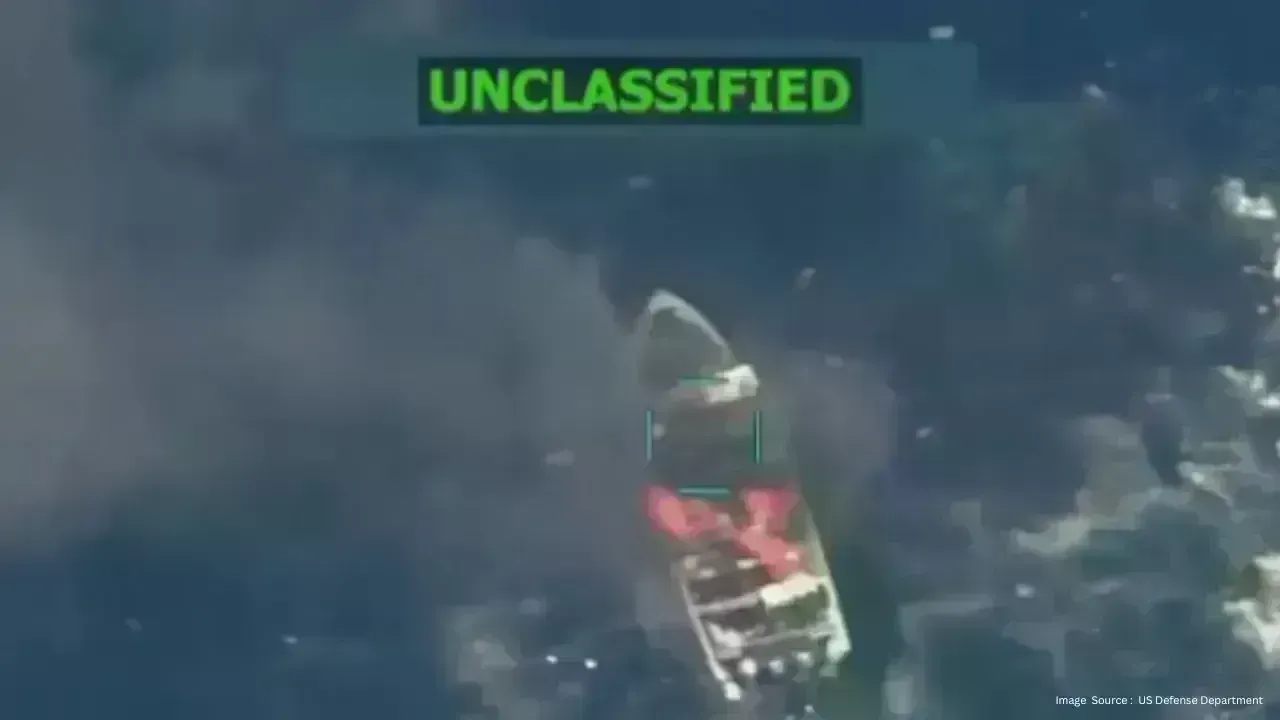
In a recent military operation, the United States struck a vessel in the eastern Pacific Ocean, resulting in the deaths of two individuals. This action forms part of a sustained campaign aimed at combating drug trafficking in international waters. While the US administration maintains the necessity of such operations for national security, the incident has stirred up significant concerns surrounding legality and human rights implications.
Officials indicated that the strike targeted a boat believed to be involved in drug smuggling activities. According to US military claims, the vessel was navigating established trafficking routes, allegedly tied to what was described as “narco-terrorism.” However, concrete evidence supporting these assertions or the identities of those killed has not been disclosed.
This incident follows closely on the heels of a similar strike in the same area, where five individuals lost their lives and one survived. These repeated military actions indicate a commitment to ongoing operations against suspected traffickers.
Since the commencement of this broader military campaign in 2025, the US has reportedly executed many strikes against vessels in both the eastern Pacific and Caribbean sectors, claiming at least 170 fatalities in such operations to date.
US officials defend these military actions as part of a larger armed conflict against drug cartels, arguing that decisive military action is vital in curbing the flow of illegal drugs that threaten public safety. This issue has gained prominence with the rising incidence of overdose deaths linked to illicit substances.
However, significant criticism has emerged from human rights advocates and experts, who argue that utilizing lethal force against suspected criminals without proper investigations or judicial processes may infringe both US and international laws. Such operations could potentially be interpreted as extrajudicial killings.
Transparency has also been a contentious issue, as the US military frequently fails to provide substantial evidence that the targeted vessels are indeed engaged in drug trafficking. This lack of information complicates efforts by independent observers to validate claims and assess the justification for these strikes.
Legal analysts emphasize that international waters operate under strict regulations. While nations have the authority to address illegal activities such as drug trafficking, any military action must adhere to established legal frameworks. This ongoing military initiative has ignited discussions about whether these legal standards are being upheld.
Concerns about potential collateral damage have also arisen. In previous instances, some families and legal representatives have alleged that those killed were fishermen or civilians, not criminals. Such claims have prompted lawsuits and entreaties for further investigations into these military operations.
Notwithstanding the backlash, the US military continues its activities, asserting that they are essential to dismantling drug networks and safeguarding national interests. Officials further assert that these measures are integral to a broader strategy aimed at destabilizing criminal organizations within Latin America.
This situation underscores a mounting challenge in global security. As governments grapple with transnational criminal issues such as drug trafficking, the methods employed often provoke significant ethical and legal scrutiny. The ongoing challenge remains to achieve a balance between ensuring security and upholding human rights.
In summary, the recent US military action in the eastern Pacific highlights the persistent war against drug trafficking while also illuminating critical legal and ethical questions. While there is widespread support for efforts to halt illegal drugs, the methods adopted warrant careful scrutiny. As discussions proceed, global attention will focus on the implementation of such operations and their adherence to justice and international legal principles.










PM Modi Pays Tribute to Mahatma Gandhi, Urges People to Support Khadi
PM Modi pays tribute to Mahatma Gandhi on Gandhi Jayanti and urges citizens to support Khadi and the

Amazon Seeks to Offload $8 Billion in Nvidia Chips to Investors
Amazon plans to move $8 billion in Nvidia chips to investors, using a new financing model to strengt

Samsung Raises Galaxy S26 Prices as Memory Chip Costs Rise
Samsung raises Galaxy S26 prices in South Korea as rising memory chip costs put pressure on smartpho

Lewis Hamilton Calls Singapore Grand Prix One of F1's Toughest Races
Lewis Hamilton discusses the demanding Singapore Grand Prix and brings Plus44 and Almave to Singapor

Denmark's Pandora Opens World's Largest Jewellery Factory in Vietnam
Pandora opens its largest jewellery factory in Vietnam, expanding global production, strengthening s

Gautam Gambhir Questions Batting-Friendly Pitches After India's Record ODI Chase
Gautam Gambhir questions batting-friendly ODI pitches after India’s record chase, calling for a bett

