You have not yet added any article to your bookmarks!
Join 10k+ people to get notified about new posts, news and tips.
Do not worry we don't spam!

Post by : Samjeet Ariff
Middle-class families put in significant effort and keep a close watch on their budgets, yet many still experience ongoing financial strain. Despite steady incomes, challenges with savings, escalating costs, and long-term financial stability persist. It's typically not due to a lack of diligence, but rather financial missteps that accumulate unnoticed over time.
Such errors are common, often normalized, and passed down through generational habits rather than intentional choices. This article outlines the most prevalent financial pitfalls faced by middle-class families, their underlying causes, and actionable strategies for improvement.
Countless families believe that a consistent paycheck guarantees safety.
Rapid shifts in the job market
Health emergencies or family crises can disrupt income
Inflation diminishes real purchasing power
Having a stable income without additional safeguards can be precarious.
Focus on building financial resilience beyond mere salary reliance, including emergency funds, comprehensive insurance, and awareness of diversified income.
Inflation gradually erodes purchasing power, yet many families budget their expenses based on outdated criteria.
Escalating school fees
Rising grocery costs each month
Sharp increases in healthcare expenses
Neglecting inflation can result in budget surprises.
Perform a comprehensive review of household expenses bi-annually
Gradually elevate savings and investment contributions
Stay flexible with financial structures
Budgeting for inflation is a realistic approach, not a pessimistic outlook.
The prevalent error in budgeting is saving after all expenditures.
Expenditures tend to expand to match income
Savings become variable and unreliable
Unexpected emergencies can obliterate savings progress
Saving leftover amounts hardly builds significant wealth.
View savings as a fixed monthly obligation and automate transfers immediately following income deposit.
While safety is vital, an excessive focus on guaranteed returns may lead to long-term losses.
Returns frequently fall short of inflation
Tax liabilities eat into actual earnings
Long-term aspirations may not be met
Although money seems safe, it diminishes over time.
Allocate funds based on purpose:
Short-term needs in low-risk assets
Long-term objectives through growth-focused investments
This balance preserves both security and future value.
As income rises, expenses often follow suit.
Upsizing into larger homes with greater EMIs
Increasing dining out and endless subscriptions
Regular upgrades of expensive gadgets
What starts as comfort can morph into a financial obligation.
Elevated fixed costs limit financial flexibility. When income fluctuates, lifestyle inflation can turn into significant stress.
Enhance comfort gradually while increasing savings more rapidly than lifestyle expansions.
Numerous families depend on credit cards or loans in times of need.
High-interest debts can accumulate swiftly
Stress escalates during emergencies
Recovery can take years
While timing may be unpredictable, emergencies are often foreseeable.
Keep an emergency fund that covers a minimum of 6 months of essential costs, easily accessible and liquid.
Not all debts carry the same weight, yet many families treat them uniformly.
Only paying minimums on credit card bills
Neglecting high-interest personal loans
Delaying the repayment of costly EMIs
The impact of interest can quietly diminish future earnings.
Always focus on repaying high-interest debts first, regardless of their small amounts.
Insurance is frequently thought of as an avoidable expense.
Healthcare costs escalate faster than income
Waiting on insurance ultimately leads to higher costs
Insufficient coverage can drain savings
Consider insurance a necessity, not just an investment.
Ensure adequate health insurance for the whole family
Align life insurance with family responsibilities
Early action can save both money and stress.
Future educational needs are often managed emotionally.
Lack of a designated education fund
Future borrowing at higher interest rates
Last-minute financial demands
Children's educational funding should have a long-term vision.
Begin early, even with modest contributions. Time can significantly ease pressure compared to large, last-minute funds.
Financial habits are typically cultivated within the home.
Children may grow into financial dependents
Poor spending behaviors may persist
Family financial stress can repeat through generations
Teaching financial literacy is a shared family responsibility.
Involve children in discussions about budgeting
Encourage saving, not merely spending
Teach the concept of value versus price
This lays the groundwork for generational financial wisdom.
Fear and greed can often dictate decisions during uncertain markets.
Constantly switching investments
Following investment tips from acquaintances or social media
Panic-selling during downturns
Such actions can undermine long-term growth.
A well-defined, consistent plan outperforms impulsive reactions every time.
Many families lack insight into their monthly spending patterns.
Minor financial leaks can accumulate over the year
Overspending can go unnoticed
Stagnation in savings
Awareness is the first step to control.
Monitor your expenses over a minimum of 90 days for clearer insights.
Short-term conveniences often overshadow long-term security.
Planning for retirement
Potential healthcare costs later in life
The long-term effects of inflation
Neglecting these aspects can lead to costly futures.
While planning for today, also consistently fund future needs.
Stress often drives hasty financial decisions.
Shopping for emotional relief
Frequent dining out
Unplanned luxury upgrades
Emotional expenditures can quietly drain finances.
Take a moment to pause before spending when under stress and implement a 24-hour waiting period for decisions.
Relying on hope is not a strategy for success.
Procrastination in taking action
Normalizes financial pressures
Increases dependency on credit
Clarity is a substitute for anxiety.
Implement small, sustainable steps for gaining control.
Prioritize saving before spending
Eliminate high-interest debt
Account for inflation in financial planning
Clearly define financial goals
Regularly review financial standings
You don’t need to achieve everything perfectly; consistency suffices.
Middle-class families are not necessarily failing at financial management; they are navigating systems that demand improved planning more than ever. Steering clear of these frequent pitfalls fosters stability, assurance, and long-term independence.
Successful money management is less about limitations and more about deliberate control.
This article is intended solely for informational and educational purposes and does not provide financial, legal, or investment counsel. Financial circumstances can vary widely based on income, geography, responsibilities, and individual goals. It is advisable to seek guidance from a qualified financial expert prior to making significant financial changes.










George Russell Wins Dutch GP Sprint, Boosts Mercedes Morale
George Russell wins the Dutch GP Sprint from pole as Mercedes teammate Kimi Antonelli extends his F1

Australia 50/3 After Bangladesh Bowled Out for 64 in Second Test
Australia reached 50/3 after Bangladesh were bowled out for 64 in the second Test, with Mitchell Sta

Jordan Burroughs Returns to Wrestling with 2028 Olympic Dream
Jordan Burroughs returns to wrestling with Real American Freestyle as the Olympic champion eyes a po

Lamborghini Catches Fire on Singapore's ECP, Causing Heavy Traffic
A Lamborghini caught fire on Singapore's ECP, causing heavy traffic and bus delays. No injuries were

Bangkok Airport Duty-Free Area Flooded by Pipe Burst
A burst water pipe flooded the duty-free shopping area at Bangkok's Suvarnabhumi Airport on July 16,
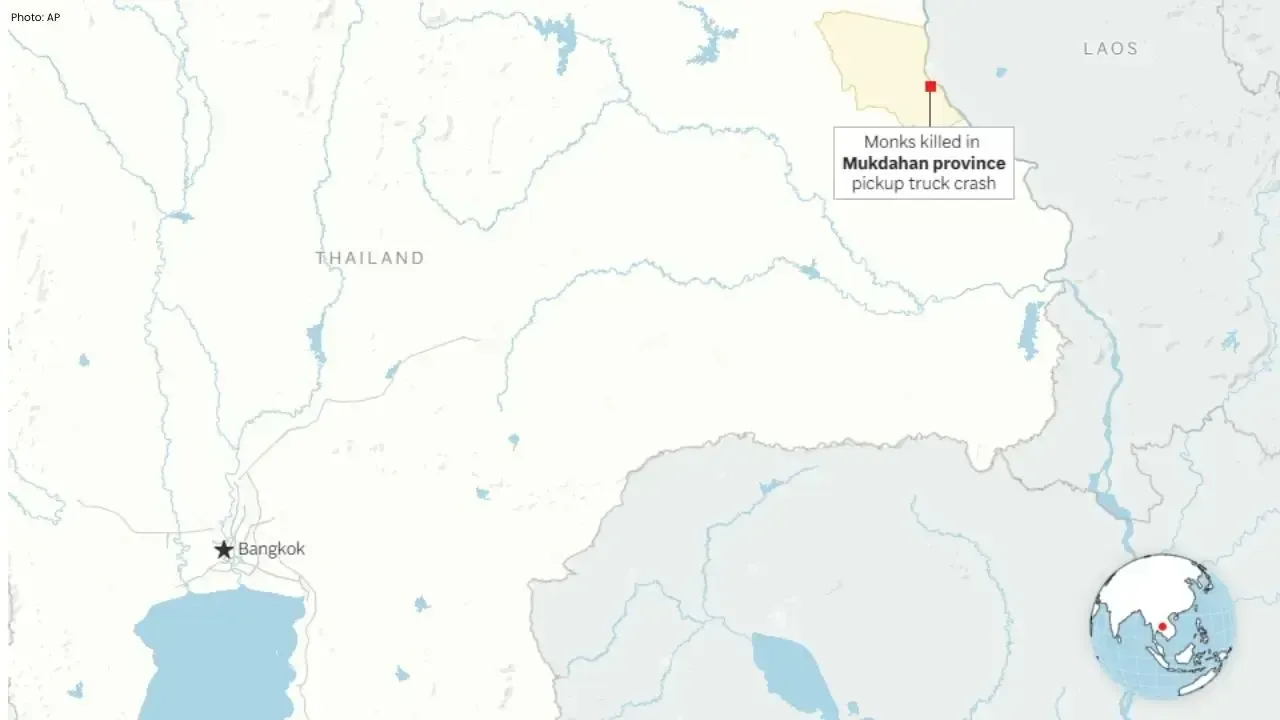
Nine Monks Killed in Thailand Pickup Truck Tragedy
An 11-year-old boy driving a pickup truck crashed into monks during a pilgrimage in northeastern Tha