
You have not yet added any article to your bookmarks!
Join 10k+ people to get notified about new posts, news and tips.
Do not worry we don't spam!
Post by : Shweta
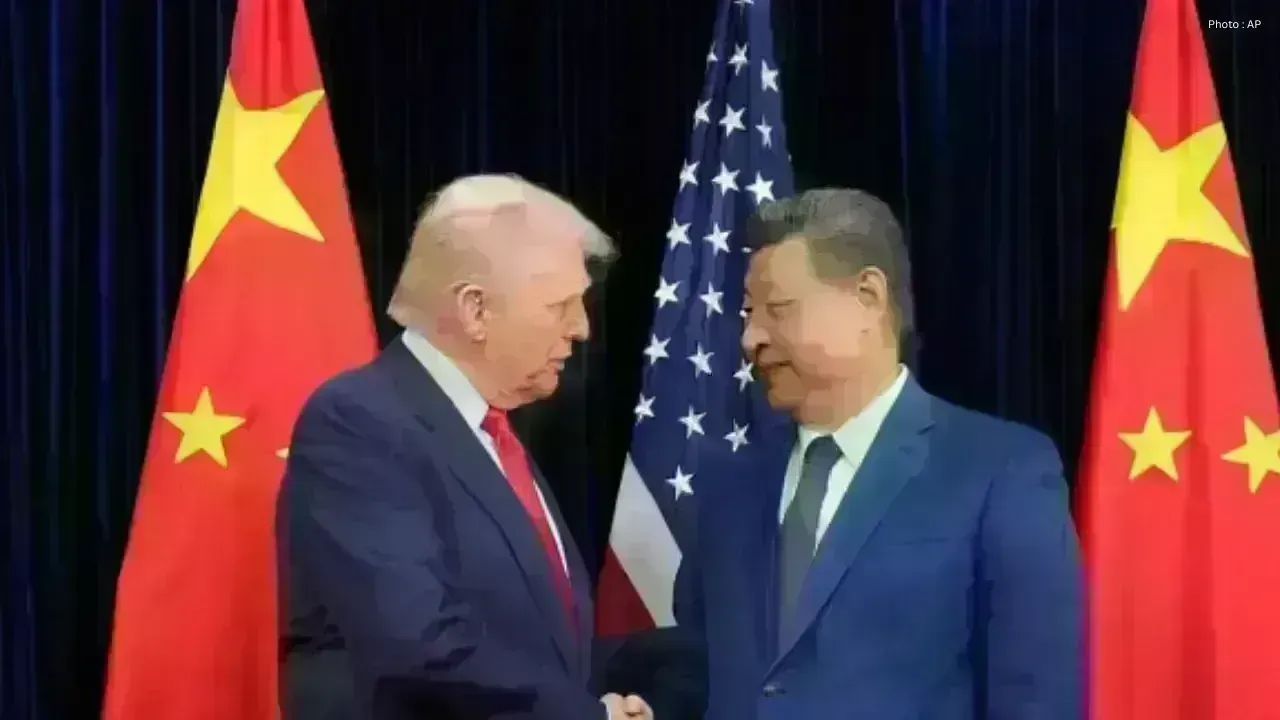
In a significant exchange during a summit in Beijing, Chinese President Xi Jinping sent a clear warning to the United States regarding Taiwan, underscoring a critical issue in U.S.-China relations. Concurrently, U.S. President Donald Trump characterized Xi as a “great leader,” reflecting an intention to foster diplomatic dialogue despite existing tensions between these two major powers.
The summit gathered the leaders of the world’s largest economies during a time marked by global uncertainty linked to trade, technological rivalry, and military considerations. While discussions included various economic and trade-related issues, the focus swiftly shifted to Taiwan.
Chinese officials stated that Xi emphasized Taiwan as a “core national interest” for China, expressing concern over any U.S. actions that might encourage Taiwanese independence. Beijing asserts that Taiwan is part of its territory and has reiterated that reunification is a high priority, even mentioning potential military actions if needed.
Xi urged the U.S. to acknowledge China’s sovereignty and lessen its military support for Taiwan. State media from China highlighted that any foreign involvement in Taiwan matters is perceived as interference in its internal issues.
Trump, during the discussions, praised Xi, indicating his political presence and influence. Analysts interpret this as Trump’s strategy to maintain a constructive dialogue, thereby avoiding direct confrontations during a sensitive negotiation process. He reiterated the need for economic stability and for both nations to sidestep escalation.
Despite the ostensibly positive exchanges, substantial disagreements persist. The U.S. continues its arms sales and strategic cooperation with Taiwan while adhering to the “One China” policy, maintaining its commitments under the Taiwan Relations Act to bolster Taiwan’s defense capabilities.
As a significant flashpoint in global affairs, tensions over Taiwan have heightened, with China ramping up military activities near the island. In response, the U.S. and allied nations have escalated their naval operations and regional security partnerships in the Indo-Pacific.
The agenda of the summit also encompassed discussions related to tariffs, technology, artificial intelligence, cybersecurity, and supply chains. Despite years of trade tensions, economic ties between the two nations endure.
Political analysts speculate that Xi approached the summit with confidence stemming from China's robust global trade relationships and increasing influence. Meanwhile, Trump faces domestic expectations to convey strength concerning China while safeguarding American economic interests.
Some observers perceived Trump’s tribute to Xi as part of his ongoing approach to sustain relationships with influential leaders, even amid challenging negotiations. Critics argue, however, that such gestures could undermine America’s stance on Taiwan and human rights issues.
Taiwanese officials carefully monitored the summit, particularly Xi’s assertions on sovereignty and independence. Taipei's leaders consistently refute Beijing’s claims and seek to bolster defense collaboration with the U.S. and its allies.
Global financial markets were attentive to the summit’s outcomes, recognizing that escalating tensions between the U.S. and China could disrupt international trade and financial systems. Investors generally favor indicators of stable communication between the two countries, even amid continuing significant disagreements.
The summit concluded without major progress regarding Taiwan, but both nations regarded the discussions as crucial in maintaining dialogue in an increasingly competitive geopolitical environment. Experts anticipate that Taiwan will continue to be a pivotal and sensitive aspect of future U.S.-China relations.
As the rivalry intensifies, the Beijing summit underscored the complex interplay of diplomacy, economic interests, and military tensions in the broader context of influence across the Indo-Pacific and globally.










PM Modi Pays Tribute to Mahatma Gandhi, Urges People to Support Khadi
PM Modi pays tribute to Mahatma Gandhi on Gandhi Jayanti and urges citizens to support Khadi and the

Amazon Seeks to Offload $8 Billion in Nvidia Chips to Investors
Amazon plans to move $8 billion in Nvidia chips to investors, using a new financing model to strengt

Samsung Raises Galaxy S26 Prices as Memory Chip Costs Rise
Samsung raises Galaxy S26 prices in South Korea as rising memory chip costs put pressure on smartpho

Lewis Hamilton Calls Singapore Grand Prix One of F1's Toughest Races
Lewis Hamilton discusses the demanding Singapore Grand Prix and brings Plus44 and Almave to Singapor

Denmark's Pandora Opens World's Largest Jewellery Factory in Vietnam
Pandora opens its largest jewellery factory in Vietnam, expanding global production, strengthening s

Gautam Gambhir Questions Batting-Friendly Pitches After India's Record ODI Chase
Gautam Gambhir questions batting-friendly ODI pitches after India’s record chase, calling for a bett

