You have not yet added any article to your bookmarks!
Join 10k+ people to get notified about new posts, news and tips.
Do not worry we don't spam!
Post by : Badri Ariffin
According to the latest report from the World Bank, India is projected to sustain its position as one of the fastest-growing major economies globally, with an anticipated growth rate of 7.2% in FY 2025–26. This optimistic outlook is primarily due to strong domestic consumption, even amidst escalating global trade tensions and policy ambiguities.
The World Bank remarked that India's economic strength has significantly contributed to enhancing overall growth in South Asia. The regional growth is expected to reach 7.1% in 2025, largely driven by India's robust economic performance, which helps counterbalance the adverse effects of global trade disputes.
Notably, the report clarifies that Pakistan and Afghanistan are not counted as part of South Asia in this context, as their economies are categorized within the Middle East and North Africa region.
India’s economic upswing is propelled by vigorous private consumption, underpinned by past tax reforms and increasing household incomes, particularly in rural communities. Sustained consumer demand continues to play a crucial role in driving growth.
Looking forward, growth in India is projected to slightly soften to 6.5% in FY 2026–27, assuming that elevated US import tariffs remain. Growth is forecasted to pick up again to 6.6% in FY 2027–28, bolstered by a thriving services sector, a rebound in exports, and enhanced investment inflows.
The World Bank noted that while the rise in US tariffs on select Indian exports may present hurdles, the growth outlook for India remains stable. This is attributable to domestic demand that surpasses expectations, potentially mitigating the adverse effects of global trade limitations.
India remains the principal growth catalyst for South Asia. Without India, the region's growth is predicted to rise to 5.0% in 2026 and 5.6% in 2027. Overall, South Asia's growth is expected to moderate to 6.2% in 2026 before experiencing a recovery.
On a global scale, the World Bank highlighted that easing financial conditions and fiscal backing in major economies are dampening the impact of weak trade and demand. However, it warned that the 2020s may mark the weakest decade for global growth since the 1960s.
Indermit Gill, the World Bank Chief Economist, cautioned that even though the global economy seems resilient against policy uncertainties, the combination of slow growth and unprecedented levels of public and private debt could endanger public finances and credit systems.
The report emphasized that developing economies like India must focus on enhancing productivity and job creation as per capita income growth in these countries is expected to be 3% in 2026, falling below long-term averages and potentially slowing down income convergence with developed nations.








George Russell Wins Dutch GP Sprint, Boosts Mercedes Morale
George Russell wins the Dutch GP Sprint from pole as Mercedes teammate Kimi Antonelli extends his F1

Australia 50/3 After Bangladesh Bowled Out for 64 in Second Test
Australia reached 50/3 after Bangladesh were bowled out for 64 in the second Test, with Mitchell Sta

Jordan Burroughs Returns to Wrestling with 2028 Olympic Dream
Jordan Burroughs returns to wrestling with Real American Freestyle as the Olympic champion eyes a po

Lamborghini Catches Fire on Singapore's ECP, Causing Heavy Traffic
A Lamborghini caught fire on Singapore's ECP, causing heavy traffic and bus delays. No injuries were

Bangkok Airport Duty-Free Area Flooded by Pipe Burst
A burst water pipe flooded the duty-free shopping area at Bangkok's Suvarnabhumi Airport on July 16,
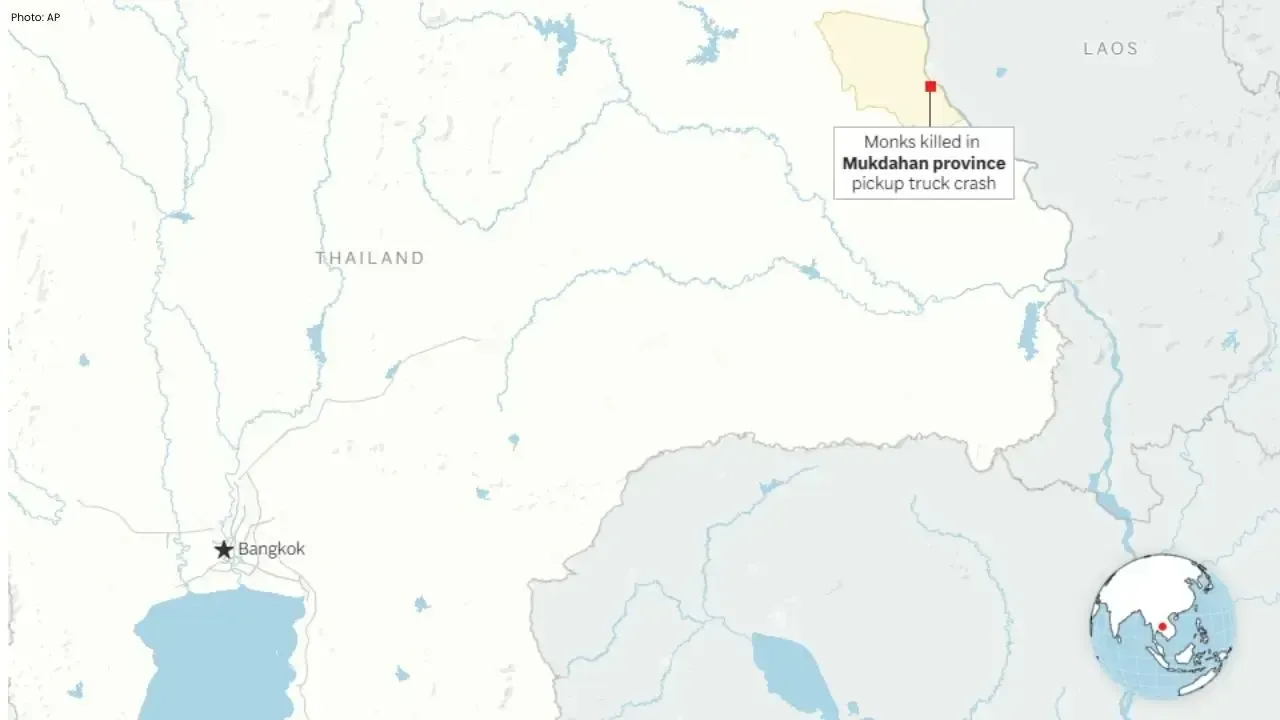
Nine Monks Killed in Thailand Pickup Truck Tragedy
An 11-year-old boy driving a pickup truck crashed into monks during a pilgrimage in northeastern Tha