
You have not yet added any article to your bookmarks!
Join 10k+ people to get notified about new posts, news and tips.
Do not worry we don't spam!
Post by : Shweta
The United States has escalated its approach to Iran, with President Donald Trump revealing plans for a US Navy blockade of Iranian ports after ceasefire negotiations faltered in Pakistan.
According to US Central Command (CENTCOM), the blockade will commence on Monday, targeting all vessels entering or leaving Iranian ports. However, officials have assured that ships traveling between non-Iranian ports will still be allowed safe passage through the vital Strait of Hormuz, mitigting fears of a total closure.
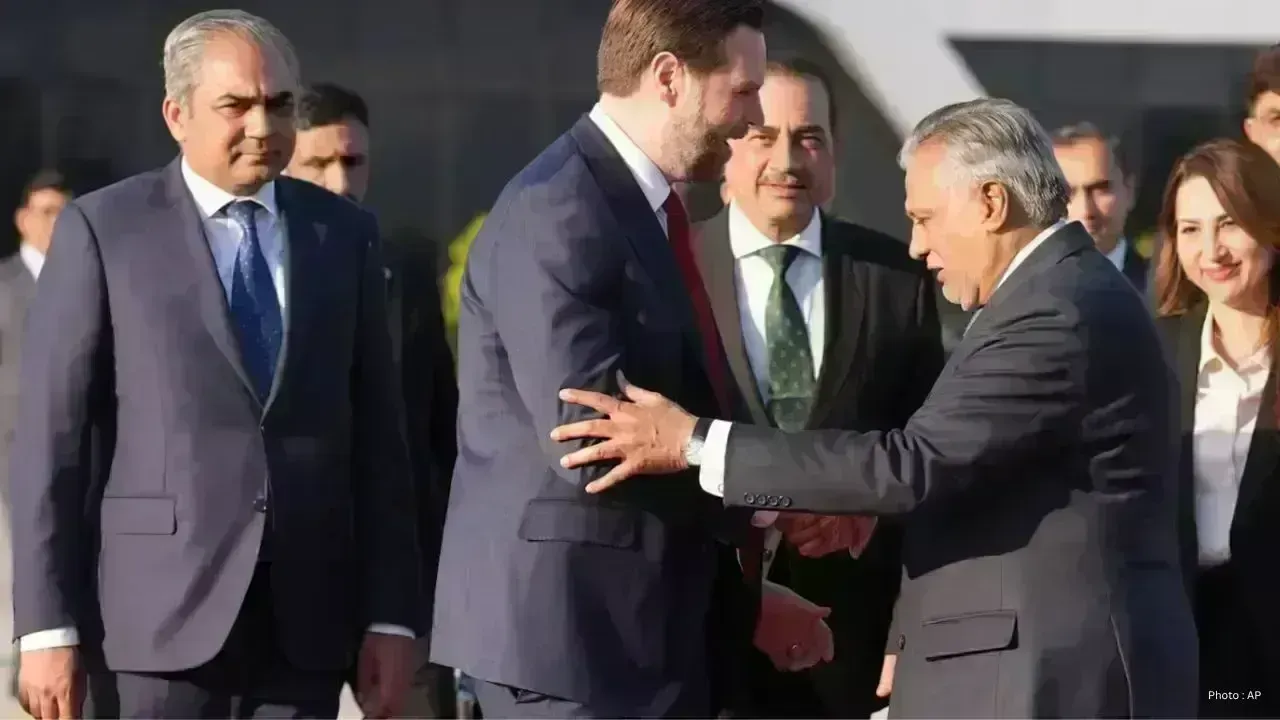
This decisive move follows the breakdown of high-stakes discussions in Islamabad, which were recognized as among the most significant attempts at diplomacy between Washington and Tehran in recent years. The talks, spearheaded by US Vice President JD Vance, ultimately failed due to unresolved disputes over Iran’s nuclear ambitions and other regional matters.
President Trump indicated that this blockade aims to diminish Iran’s economic influence, particularly in oil transport through the Strait of Hormuz—an area vital for nearly 20% of global oil trade. Even prior to the blockade's implementation, maritime activity in the region had been constrained, highlighting widespread uncertainty.
The announcement has triggered immediate shifts in global energy markets, with both US and Brent crude prices experiencing significant increases. Analysts predict that if disruptions in the Strait of Hormuz continue, it could result in greater volatility in oil prices and trade.
Iran responded firmly, asserting its control over the strait. Officials from the Revolutionary Guard stated that while civilian vessels would continue to pass, any military presence may provoke a decisive response. This underscores the potential for further escalation amidst rising tensions.
Experts are wary of the feasibility of enforcing such a blockade. Analysts suggest that controlling maritime traffic in such a crucial and densely trafficked area poses significant challenges and may expose US naval forces to various risks, including missile or drone strikes.
The current ceasefire is due to expire on April 22, and uncertainties loom large about the future. Both parties have shown some willingness for dialogue; however, fundamental disagreements linger.
This escalating situation has invoked concern across the globe, with international leaders urging both nations to return to the negotiating table to prevent further unrest. The upcoming days are anticipated to be pivotal for regional stability and the continuity of global energy supplies.










PM Modi Pays Tribute to Mahatma Gandhi, Urges People to Support Khadi
PM Modi pays tribute to Mahatma Gandhi on Gandhi Jayanti and urges citizens to support Khadi and the

Amazon Seeks to Offload $8 Billion in Nvidia Chips to Investors
Amazon plans to move $8 billion in Nvidia chips to investors, using a new financing model to strengt

Samsung Raises Galaxy S26 Prices as Memory Chip Costs Rise
Samsung raises Galaxy S26 prices in South Korea as rising memory chip costs put pressure on smartpho

Lewis Hamilton Calls Singapore Grand Prix One of F1's Toughest Races
Lewis Hamilton discusses the demanding Singapore Grand Prix and brings Plus44 and Almave to Singapor

Denmark's Pandora Opens World's Largest Jewellery Factory in Vietnam
Pandora opens its largest jewellery factory in Vietnam, expanding global production, strengthening s

Gautam Gambhir Questions Batting-Friendly Pitches After India's Record ODI Chase
Gautam Gambhir questions batting-friendly ODI pitches after India’s record chase, calling for a bett

