
You have not yet added any article to your bookmarks!
Join 10k+ people to get notified about new posts, news and tips.
Do not worry we don't spam!
Post by : Badri Ariffin
The United States is exploring new restrictions on software exports to China, intensifying the economic standoff between the world’s two largest economies. The potential measures come in response to Beijing’s recent sweeping curbs on rare-earth exports, a move that has sent ripples through global markets.
Treasury Secretary Scott Bessent confirmed that Washington is considering limits on products made with American software destined for China, signaling that “everything is on the table.” Any such action would likely involve coordination with the G-7 allies, according to officials.
Earlier this month, President Donald Trump announced that the U.S. would bar shipments of goods containing U.S. software to China starting next month, alongside a 100% tariff on certain Chinese exports. The decisions follow Beijing’s tightening grip on rare-earth minerals, which are critical for a wide range of high-tech applications, from electric vehicles to smartphones.
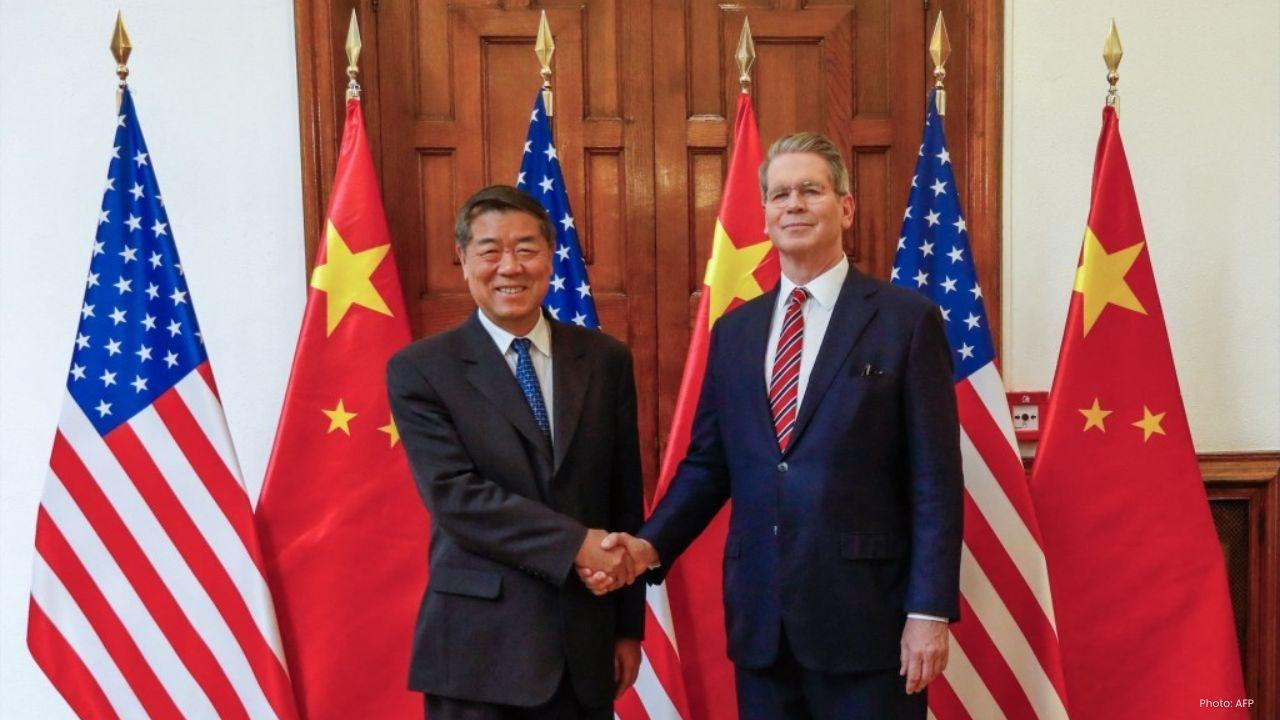
The announcement comes ahead of key ministerial-level negotiations. Bessent is scheduled to meet Chinese Vice Premier He Lifeng in Malaysia later this week, setting the stage for a potential Trump-Xi summit in South Korea at the end of the month. Analysts say the outcome of the ministerial talks could shape the prospects for a high-level agreement, especially in sensitive areas like technology transfers, soybean trade, and nuclear safeguards.
Tensions between Washington and Beijing have intensified in recent weeks. The U.S. expanded its export controls to limit China’s access to advanced semiconductors, while China responded with rare-earth export curbs, added U.S. companies to its blacklist, and opened an antitrust investigation into Qualcomm. Both countries have also imposed reciprocal fees on ships entering each other’s ports.
The looming deadline for reciprocal tariffs—set for Nov. 10—adds urgency to the negotiations. Without an extension, both sides could face an escalation in tariffs and trade restrictions, potentially affecting global supply chains and markets. Experts suggest that both nations may agree to extend deadlines to maintain dialogue and avoid immediate economic fallout.
As the clock ticks toward critical meetings, the world watches closely. Decisions made in the coming weeks could redefine the dynamics of U.S.-China trade, influencing industries from technology to agriculture, and shaping the broader geopolitical landscape.








Michael Bracewell Chooses Casual Contract, Targets BBL Opportunity
Michael Bracewell moves to a casual contract as he eyes a BBL opportunity while remaining available

Tuchel Says Alex Scott Can Challenge Declan Rice for England Midfield Spot
Thomas Tuchel says Alex Scott can challenge Declan Rice for an England midfield place after his impr

Air Quality Turns Unhealthy in Central and Western Singapore Amid Haze
Singapore haze pushes PSI above 100 in central and western areas as smoke from regional hotspots rai

PM Modi Pays Tribute to Mahatma Gandhi, Urges People to Support Khadi
PM Modi pays tribute to Mahatma Gandhi on Gandhi Jayanti and urges citizens to support Khadi and the

Amazon Seeks to Offload $8 Billion in Nvidia Chips to Investors
Amazon plans to move $8 billion in Nvidia chips to investors, using a new financing model to strengt

Samsung Raises Galaxy S26 Prices as Memory Chip Costs Rise
Samsung raises Galaxy S26 prices in South Korea as rising memory chip costs put pressure on smartpho

