
You have not yet added any article to your bookmarks!
Join 10k+ people to get notified about new posts, news and tips.
Do not worry we don't spam!
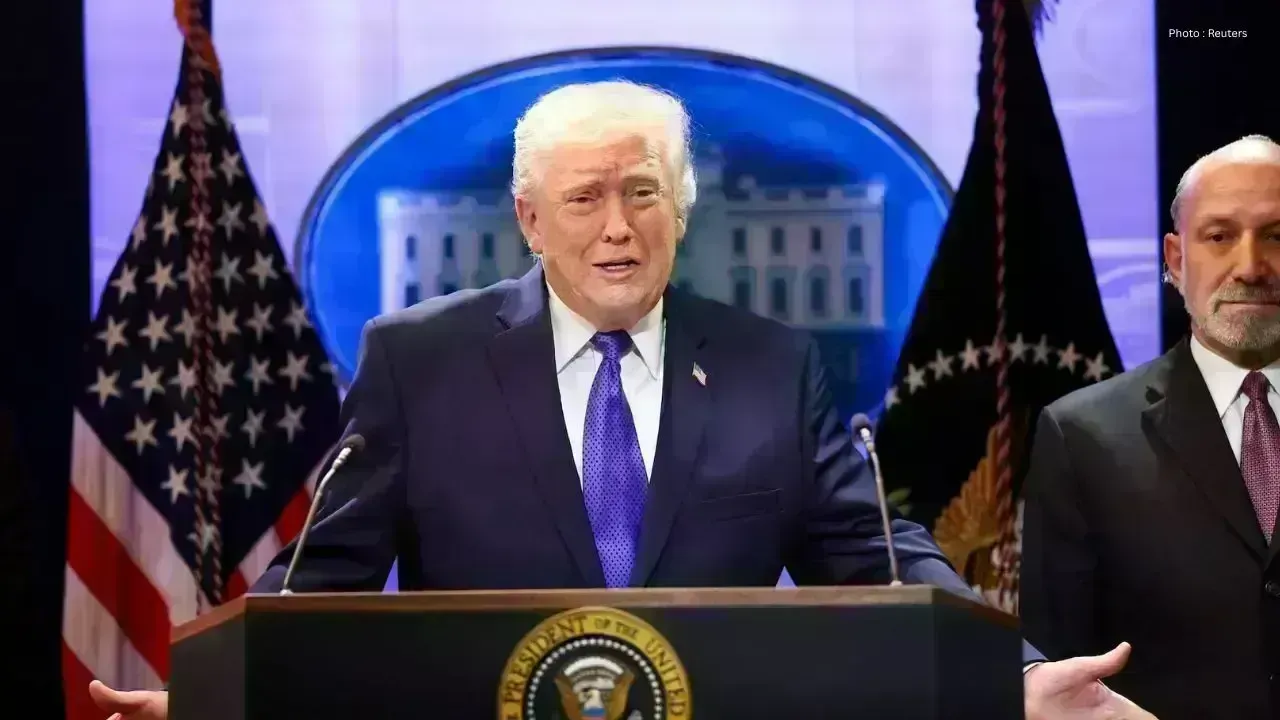
Post by : Shweta
U.S. President Donald Trump is advocating for various Muslim-majority nations to participate in the Abraham Accords, which he links to an expansive peace initiative regarding ongoing dialogues with Iran. This push is a significant diplomatic maneuver aimed at enhancing ties between Israel and other countries in the region.
In a recent high-profile phone conversation, Trump addressed leaders from Saudi Arabia, Qatar, Pakistan, Turkey, Egypt, Jordan, Bahrain, and the UAE. During this discussion, he stated that nations seeking a stake in future regional peace should normalize relations with Israel via the Abraham Accords.
Initially introduced during Trump’s administration in 2020, the Abraham Accords paved the way for diplomatic relations between Israel and several nations, including the UAE, Bahrain, Morocco, and Sudan. Trump now envisions a broader expansion of these accords to redefine Middle Eastern diplomacy.
Reports indicate Trump believes that a more extensive regional partnership with Israel could bolster any forthcoming agreement involving Iran. He argued that participation in the accords signifies a commitment to peace and collaboration. Notably, sources mentioned that Trump envisages a future where even Iran might be included in this diplomatic arrangement if tensions ease.
However, this proposal has elicited mixed responses throughout the region. Nations like Saudi Arabia and Pakistan have historically tied formal recognition of Israel to the advancement of an independent Palestinian state. Analysts emphasize that the ongoing hostilities in Gaza and heightened tensions surrounding Israel have made normalization a sensitive issue in many Muslim-majority countries.
Pakistani officials have rejected notions that joining the Abraham Accords should hinge on Iran negotiations, viewing these two matters as distinct diplomatic efforts. Saudi Arabia has expressed similar caution, reiterating that Palestinian statehood is crucial for any future arrangements with Israel.
On the other hand, Trump asserts that negotiations with Iran are showing positive movement. While specifics of the burgeoning agreement remain unclear, early reports suggest it encompasses regional security, sanctions, maritime routes in the Strait of Hormuz, and Iran's nuclear activities. The U.S. seeks a comprehensive peace framework to alleviate military tensions in the Middle East.
Political analysts speculate that Trump is threading various diplomatic aims into a groundbreaking regional accord. Proponents believe that broadening the Abraham Accords could foster enhanced trade, security cooperation, and political stability, while critics warn that entwining Iran negotiations with Israel normalization might complicate already challenging discussions.
Despite ongoing uncertainties, Trump continues to advocate publicly for the Abraham Accords as a cornerstone of his Middle Eastern strategy. Officials engaged in these talks assert that discussions are active, with no official agreement confirmed yet.










PM Modi Pays Tribute to Mahatma Gandhi, Urges People to Support Khadi
PM Modi pays tribute to Mahatma Gandhi on Gandhi Jayanti and urges citizens to support Khadi and the

Amazon Seeks to Offload $8 Billion in Nvidia Chips to Investors
Amazon plans to move $8 billion in Nvidia chips to investors, using a new financing model to strengt

Samsung Raises Galaxy S26 Prices as Memory Chip Costs Rise
Samsung raises Galaxy S26 prices in South Korea as rising memory chip costs put pressure on smartpho

Lewis Hamilton Calls Singapore Grand Prix One of F1's Toughest Races
Lewis Hamilton discusses the demanding Singapore Grand Prix and brings Plus44 and Almave to Singapor

Denmark's Pandora Opens World's Largest Jewellery Factory in Vietnam
Pandora opens its largest jewellery factory in Vietnam, expanding global production, strengthening s

Gautam Gambhir Questions Batting-Friendly Pitches After India's Record ODI Chase
Gautam Gambhir questions batting-friendly ODI pitches after India’s record chase, calling for a bett

