You have not yet added any article to your bookmarks!
Join 10k+ people to get notified about new posts, news and tips.
Do not worry we don't spam!
Post by : Jyoti Singh
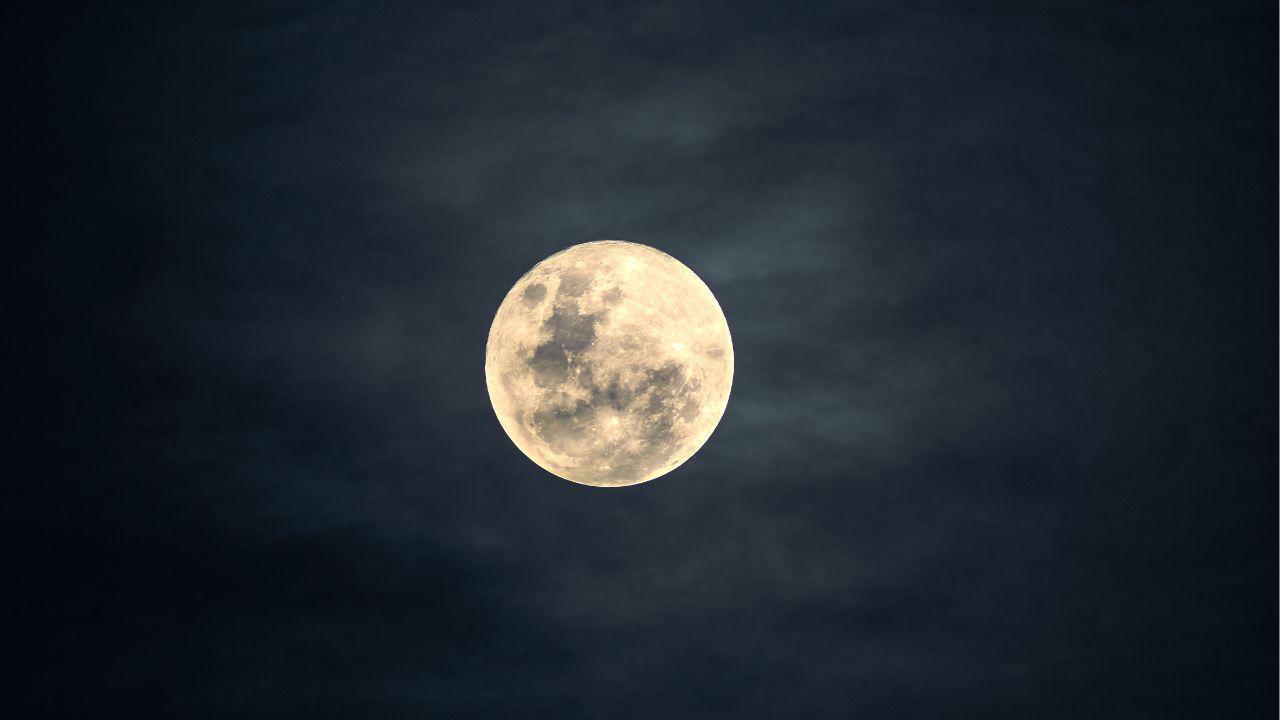
The Moon has always fascinated humankind. Looking up at the night sky, people have wondered about its origin, its mysterious glow, and its powerful influence on Earth. For centuries, poets, scientists, and explorers have written about the Moon, making it one of the most studied yet most inspiring objects in the universe.
This article explores the Moon in depth—from its history and scientific importance to its cultural role and future possibilities of human settlement.
Scientists believe that the Moon formed around 4.5 billion years ago, shortly after the birth of Earth. The most accepted theory, called the “giant impact hypothesis,” suggests that a massive object collided with Earth, sending debris into space. This debris eventually came together and formed the Moon.
The Moon is Earth’s only natural satellite, orbiting at an average distance of 384,400 kilometers. Though smaller than Earth, its gravitational pull has a profound effect, shaping ocean tides and influencing ecosystems.
Its surface tells a story of cosmic history. Covered with craters, mountains, and plains, the Moon is a record of billions of years of space impacts. Unlike Earth, it has no atmosphere to protect it, which is why its surface remains frozen in time.
The Moon has been more than a celestial object—it has been a source of wonder and inspiration. In ancient civilizations, it was worshiped as a deity. The Greeks associated it with Artemis, the goddess of the hunt, while in Hindu mythology, Chandra is seen as a powerful lunar god.
In literature and poetry, the Moon symbolizes romance, mystery, and change. Countless songs and stories have been inspired by its glow. In many cultures, full moon nights mark celebrations, festivals, and spiritual rituals. For instance, the Chinese Mid-Autumn Festival honors the harvest moon, while in Islamic tradition, the lunar calendar guides the rhythm of daily life.
The Moon has thus shaped not just science, but also culture, art, and belief systems throughout history.
The 20th century marked a new era in humanity’s relationship with the Moon—direct exploration. In 1959, the Soviet Union’s Luna 2 spacecraft became the first human-made object to touch the lunar surface. A decade later, on July 20, 1969, NASA’s Apollo 11 mission achieved what once seemed impossible. Neil Armstrong’s famous words—“That’s one small step for man, one giant leap for mankind”—announced humanity’s arrival on the Moon.
Over the years, several Apollo missions collected rocks, conducted experiments, and expanded our understanding of lunar geology. These missions revealed that the Moon’s surface is rich in minerals and may hold frozen water in permanently shadowed craters.
In recent years, renewed interest in the Moon has emerged. NASA’s Artemis program, along with space agencies from China, India, and Europe, aims to return humans to the Moon and build sustainable habitats. This renewed exploration could mark the beginning of a new era—where the Moon becomes a stepping stone for journeys deeper into space, including Mars.
Though distant, the Moon plays a vital role in maintaining life on Earth. Its gravitational pull causes the rise and fall of tides, which impact marine life, coastal ecosystems, and even human activity such as fishing and navigation.
The Moon also stabilizes Earth’s tilt, ensuring a relatively stable climate over long periods. Without it, our planet might have extreme shifts in weather, making life less predictable.
Folklore often connects the Moon with human emotions and behavior. Terms like “lunacy” come from the belief that full moons affect mental states. While modern science does not support all such claims, the psychological and cultural associations remain strong.
The Moon is not just a past wonder; it is a future frontier. Scientists are exploring possibilities of lunar bases that could support long-term human presence. Its surface may provide valuable resources like helium-3, a potential fuel for nuclear fusion, and water ice that can be used for drinking, farming, and making rocket fuel.
International collaborations are also rising. The Moon could serve as a hub for global science, technology, and even tourism. Private companies are investing in lunar missions, envisioning a time when ordinary people might experience walking on the Moon.
At the same time, the Moon’s cultural significance continues to grow. As humanity prepares to live and work there, it remains a reminder of our shared history and our dreams for the future.
This article is written for educational and informational purposes only. It explores the Moon’s scientific, cultural, and exploratory aspects using commonly available knowledge. Newsible Asia does not provide professional or scientific advice. Readers are encouraged to refer to official space agencies and scientific institutions for detailed research. Newsible Asia is not responsible for any decisions made based on this article.









George Russell Wins Dutch GP Sprint, Boosts Mercedes Morale
George Russell wins the Dutch GP Sprint from pole as Mercedes teammate Kimi Antonelli extends his F1

Australia 50/3 After Bangladesh Bowled Out for 64 in Second Test
Australia reached 50/3 after Bangladesh were bowled out for 64 in the second Test, with Mitchell Sta

Jordan Burroughs Returns to Wrestling with 2028 Olympic Dream
Jordan Burroughs returns to wrestling with Real American Freestyle as the Olympic champion eyes a po

Lamborghini Catches Fire on Singapore's ECP, Causing Heavy Traffic
A Lamborghini caught fire on Singapore's ECP, causing heavy traffic and bus delays. No injuries were

Bangkok Airport Duty-Free Area Flooded by Pipe Burst
A burst water pipe flooded the duty-free shopping area at Bangkok's Suvarnabhumi Airport on July 16,
Nine Monks Killed in Thailand Pickup Truck Tragedy
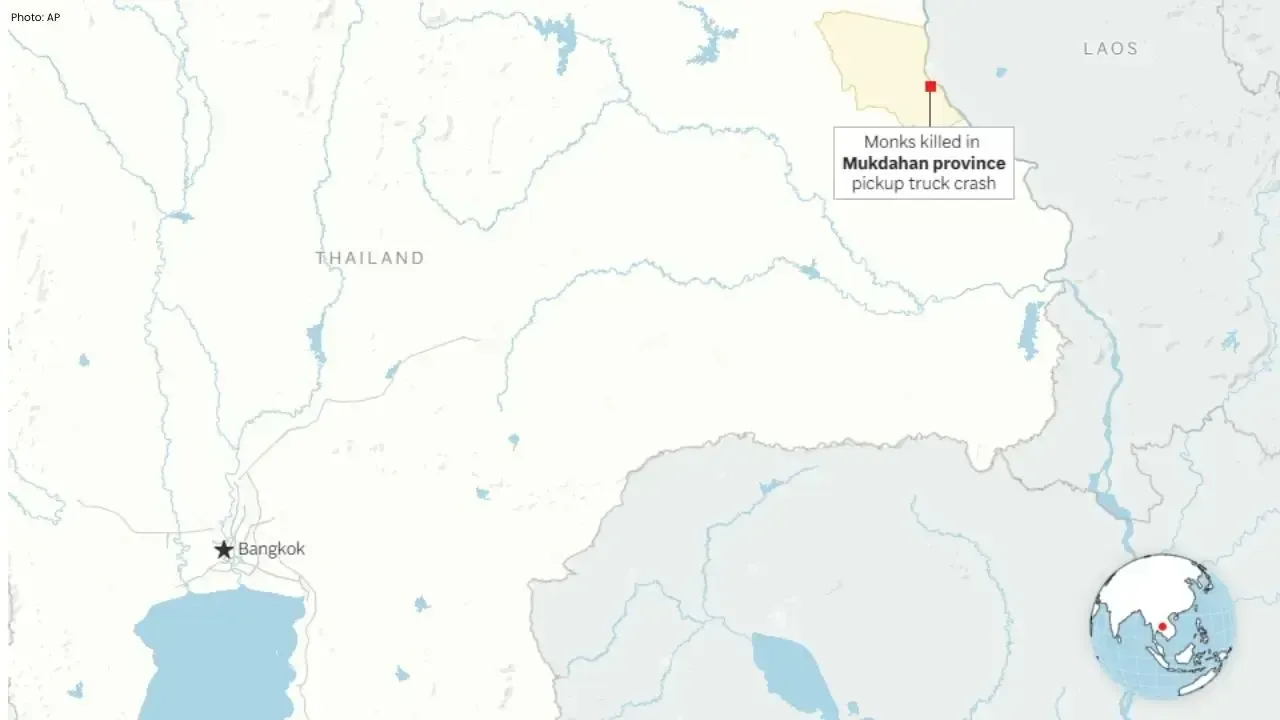
An 11-year-old boy driving a pickup truck crashed into monks during a pilgrimage in northeastern Tha