
You have not yet added any article to your bookmarks!
Join 10k+ people to get notified about new posts, news and tips.
Do not worry we don't spam!
Post by : Anis Farhan
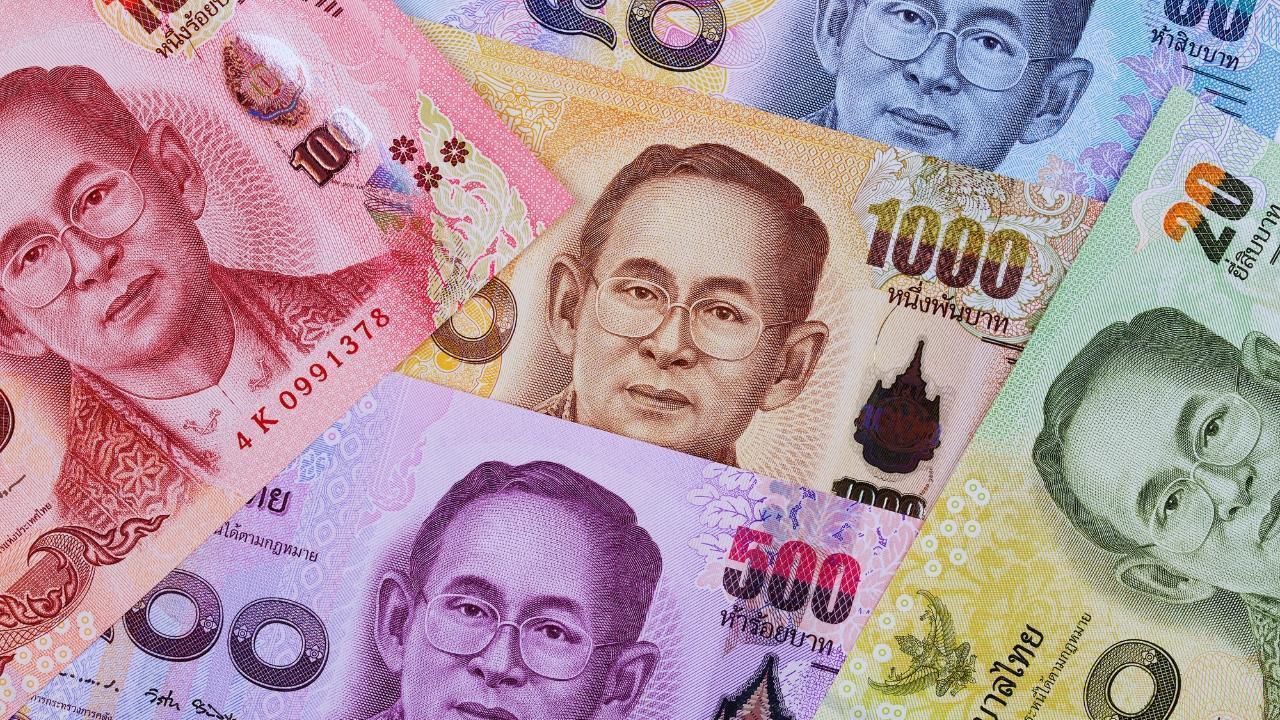
In 2025, Thailand’s baht (THB) is staging a notable comeback, reversing a multi-year trend of depreciation and becoming one of the top-performing emerging market currencies in Asia. After hitting lows near 38 baht to the US dollar in early 2023, the baht has since appreciated by over 9.4%, now hovering around 34.4 to the dollar as of July 2025.
This rebound is not just a technical correction—it reflects deeper shifts in Thailand’s economic fundamentals, investor sentiment, and geopolitical positioning. With the country’s tourism sector recovering, export performance holding strong, and the Bank of Thailand (BoT) adopting a balanced monetary stance, the baht is enjoying renewed confidence both domestically and abroad.
But beneath the optimism lie structural concerns about capital flows, productivity, and Thailand’s longer-term growth trajectory. The question now is whether the baht’s strength is a durable economic signal or a temporary rally.
One of the most visible factors behind the baht’s resurgence is the resilient return of international tourism. Thailand, which hosted over 40 million foreign visitors annually before the pandemic, has now bounced back to pre-COVID levels, with projections indicating 42 million arrivals in 2025.
This revival is translating into substantial inflows of foreign exchange. The Ministry of Tourism and Sports reported that tourism revenues have exceeded THB 3.2 trillion in the first half of the year alone, driven by high-spending tourists from China, India, and Russia.
Notably, new visa waivers and expanded air routes have improved access from secondary markets, while the government’s push toward “high-value, low-impact” tourism is helping to boost per capita tourist spending.
The result: a positive current account balance, increased dollar reserves, and rising foreign demand for baht—pushing up its value and improving macroeconomic confidence.
While global trade has been under pressure due to geopolitical tensions and slower demand in Europe and China, Thailand’s export performance has remained surprisingly resilient. In the first two quarters of 2025, the country registered a cumulative trade surplus of $9.7 billion USD, thanks to strong shipments of electronics, processed food, and automotive components.
Key export partners such as the United States, Vietnam, and Japan have increased their orders, especially for hard drives, semiconductors, and hybrid vehicle parts—sectors in which Thailand has built strong manufacturing capabilities.
Moreover, the Regional Comprehensive Economic Partnership (RCEP) agreement is starting to bear fruit, with reduced tariffs and smoother customs procedures improving trade flows across ASEAN and East Asia.
This steady export momentum is boosting foreign exchange inflows, reducing the pressure on the central bank to defend the baht, and improving Thailand’s balance of payments position—a vital underpinning of the currency's strength.
The Bank of Thailand’s cautious and transparent approach has also bolstered investor confidence. After a gradual tightening cycle that peaked in 2024, the BoT has held the policy rate at 2.5% throughout 2025, striking a balance between supporting growth and containing inflation, which remains moderate at 2.1%.
Crucially, the central bank has avoided the aggressive rate hikes seen in other emerging markets, instead focusing on exchange rate stability, capital flow management, and communication clarity.
The BoT’s decision to hold off on further hikes has drawn in carry trade investors, who are attracted to the relative stability of Thai bonds compared to more volatile counterparts in Latin America and Africa. Net foreign inflows into Thai government securities have topped $5.4 billion USD this year—strengthening the baht further.
Beyond trade and tourism, foreign investors are also returning to Thai equities and real estate, sectors that had seen outflows during the 2022–2023 global tightening cycle. The Stock Exchange of Thailand (SET) index is up 14% year-to-date, buoyed by strong earnings from hospitality, consumer, and logistics firms.
Additionally, Japanese, South Korean, and Singaporean firms have announced new investment pledges totaling over $3 billion USD in electric vehicle (EV) assembly, battery plants, and smart logistics hubs—many of them located in Thailand’s Eastern Economic Corridor (EEC).
These medium- to long-term bets on Thailand’s industrial pivot are increasing dollar-to-baht conversions and strengthening the perception that the baht is backed by real economic assets, not just speculation.
Despite the current optimism, the baht’s rally comes with potential downsides. A stronger currency can hurt export competitiveness, especially for traditional sectors like rice, textiles, and rubber—where Thai producers face thin margins and price-sensitive buyers.
There are also concerns that if the baht appreciates too quickly, it could deter future foreign direct investment (FDI) in cost-sensitive manufacturing. Small- and medium-sized exporters are already lobbying the Ministry of Commerce for currency management tools or short-term tax relief.
At the same time, global risks persist. Any significant rate cut from the U.S. Federal Reserve, or a sudden surge in oil prices, could reverse capital flows and put downward pressure on the baht. Thailand’s high household debt levels (around 89% of GDP) also make the economy vulnerable to external shocks.
In response, the BoT has stated it will “manage excessive volatility” without pegging the baht, and it stands ready to use its $260 billion USD in foreign exchange reserves to smooth any disorderly moves.
The baht’s resurgence in 2025 is more than a currency story—it reflects Thailand’s broader economic recalibration. With tourism regaining strength, exports diversifying, and investment flowing back into high-potential sectors, the country is slowly regaining its regional economic footing.
Still, policymakers must remain vigilant. Sustaining currency strength without undermining competitiveness will require continued reforms, especially in digital infrastructure, vocational training, SME financing, and green transition.
If managed prudently, the current rally could mark the beginning of a more balanced and resilient Thai economy—where macro stability coexists with inclusive growth.
This article is for informational purposes only. It does not constitute financial, investment, or monetary policy advice. Please consult official financial institutions and economic experts before making related decisions.










PM Modi Pays Tribute to Mahatma Gandhi, Urges People to Support Khadi
PM Modi pays tribute to Mahatma Gandhi on Gandhi Jayanti and urges citizens to support Khadi and the

Amazon Seeks to Offload $8 Billion in Nvidia Chips to Investors
Amazon plans to move $8 billion in Nvidia chips to investors, using a new financing model to strengt

Samsung Raises Galaxy S26 Prices as Memory Chip Costs Rise
Samsung raises Galaxy S26 prices in South Korea as rising memory chip costs put pressure on smartpho

Lewis Hamilton Calls Singapore Grand Prix One of F1's Toughest Races
Lewis Hamilton discusses the demanding Singapore Grand Prix and brings Plus44 and Almave to Singapor

Denmark's Pandora Opens World's Largest Jewellery Factory in Vietnam
Pandora opens its largest jewellery factory in Vietnam, expanding global production, strengthening s

Gautam Gambhir Questions Batting-Friendly Pitches After India's Record ODI Chase
Gautam Gambhir questions batting-friendly ODI pitches after India’s record chase, calling for a bett

