
You have not yet added any article to your bookmarks!
Join 10k+ people to get notified about new posts, news and tips.
Do not worry we don't spam!
Post by : Saif Rahman
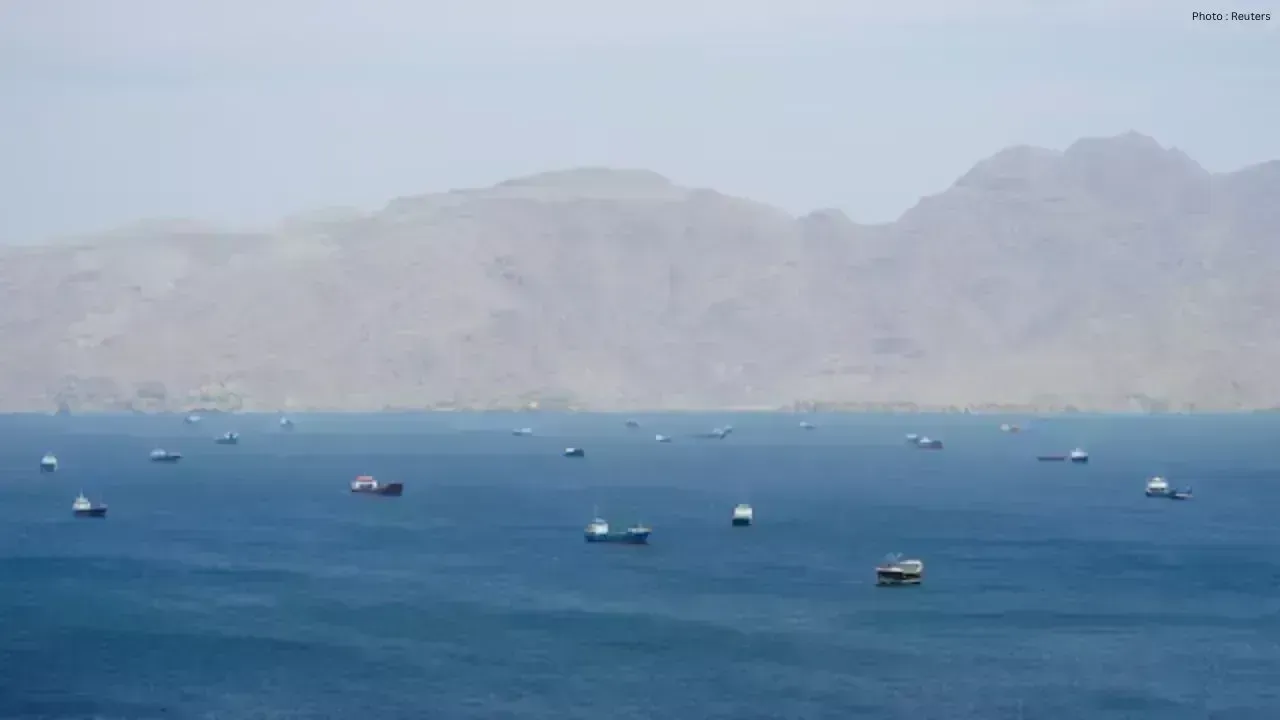
Shipping traffic in the Strait of Hormuz has significantly decreased as US-Iran relations remain strained without any sign of resolution. This ongoing conflict raises alarm bells regarding supply chains and the broader market stability.
Current statistics reveal that daily crossings through the Strait have dwindled to a mere handful, compared to around 130 to 140 ships prior to the escalation of tensions. This dramatic decline in activity reflects serious disruptions.
The Strait of Hormuz plays a pivotal role in global maritime trade, facilitating a majority of the world's oil and gas shipments. A slowdown in this key channel invariably results in supply constraints and heightened costs for nations reliant on imports.
The reduced shipping activity is attributed primarily to the escalating rift between the United States and Iran. The US has instituted a naval blockade on Iranian waters, while Iran has enhanced its vigil over the Strait. These measures have contributed to a threatening atmosphere for commercial vessels.
As a consequence of these risks, a growing number of shipping firms are opting to divert their routes. Concerns over safety, surging insurance premiums, and ongoing military uncertainties are prompting companies to reconsider their shipping strategies.
This downturn in maritime activity has global implications. Limited oil transport translates into higher prices, which subsequently increase transportation costs. This chain reaction ultimately influences consumer prices and general living costs.
While discussions to reinitiate dialogue have been made, an agreement remains elusive. Divergent priorities regarding security and nuclear matters have hampered progress, keeping tensions at a high level.
The decrease in shipping also signifies that even a ceasefire may not immediately restore operational regularity. Confidence levels between the US and Iran remain low, with businesses awaiting signs of stability before resuming standard procedures.
Another pressing issue is the numerous vessels trapped or delayed in the vicinity. Crew members are experiencing extended waiting periods, which adds to the economic and humanitarian toll of this ongoing crisis.
This situation underscores the crucial role the Strait of Hormuz plays in global commerce. Disruptions in this narrow passage can ripple through energy markets and supply chains, showcasing the interconnectedness of worldwide trade and energy dynamics.
Various nations are working actively to facilitate negotiations and ease rising tensions. Nonetheless, without a comprehensive agreement, prospects for shipping in the Strait remain bleak.
This current predicament serves as a stark reminder of how essential international cooperation is for global stability. Until a definitive solution is attained, the ramifications of decreased shipping and climbing energy prices will be felt far and wide.










PM Modi Pays Tribute to Mahatma Gandhi, Urges People to Support Khadi
PM Modi pays tribute to Mahatma Gandhi on Gandhi Jayanti and urges citizens to support Khadi and the

Amazon Seeks to Offload $8 Billion in Nvidia Chips to Investors
Amazon plans to move $8 billion in Nvidia chips to investors, using a new financing model to strengt

Samsung Raises Galaxy S26 Prices as Memory Chip Costs Rise
Samsung raises Galaxy S26 prices in South Korea as rising memory chip costs put pressure on smartpho

Lewis Hamilton Calls Singapore Grand Prix One of F1's Toughest Races
Lewis Hamilton discusses the demanding Singapore Grand Prix and brings Plus44 and Almave to Singapor

Denmark's Pandora Opens World's Largest Jewellery Factory in Vietnam
Pandora opens its largest jewellery factory in Vietnam, expanding global production, strengthening s

Gautam Gambhir Questions Batting-Friendly Pitches After India's Record ODI Chase
Gautam Gambhir questions batting-friendly ODI pitches after India’s record chase, calling for a bett

