
You have not yet added any article to your bookmarks!
Join 10k+ people to get notified about new posts, news and tips.
Do not worry we don't spam!
Post by : Saif Rahman
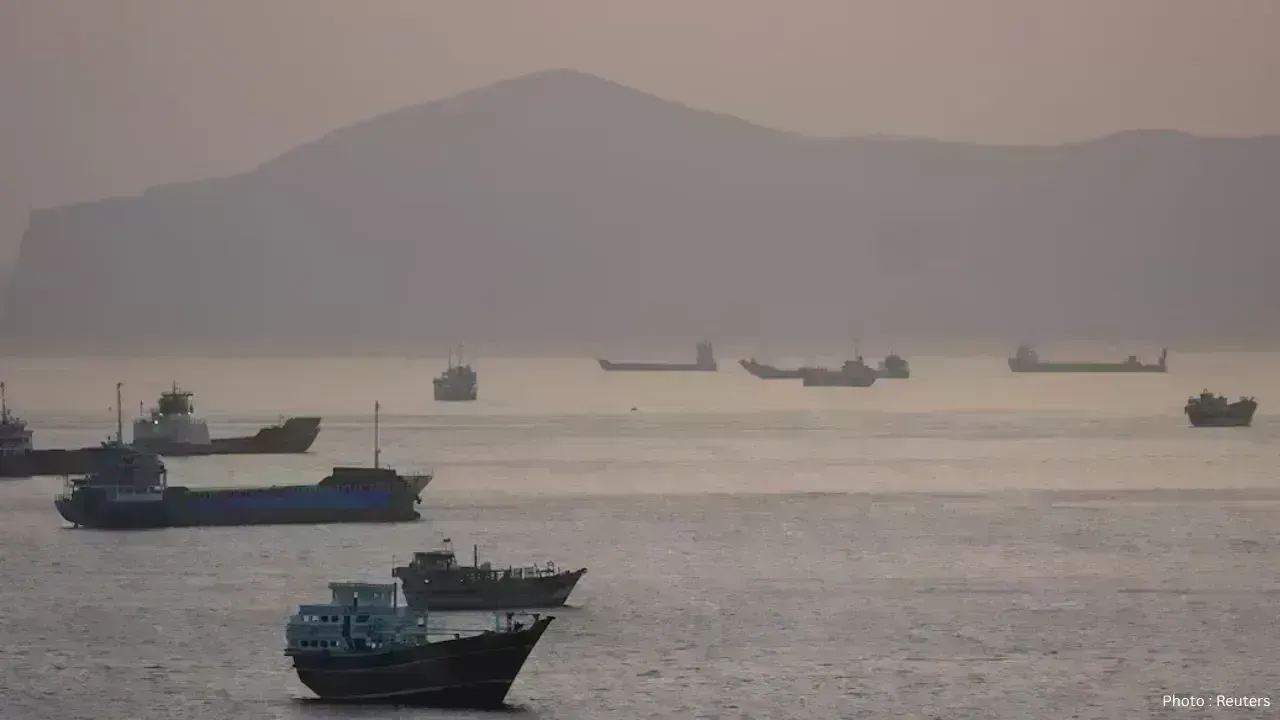
A commercial tanker was targeted by unidentified projectiles in the vicinity of the Strait of Hormuz, heightening fears regarding security in this critical shipping lane. The incident has gained worldwide attention, especially following President Donald Trump's declaration that the United States will intervene to assist stranded vessels.
Taking place near the United Arab Emirates, this attack adds to the rising security threats in the region. No injuries have been reported; however, the strike has sent waves of apprehension through shipping companies, causing many ships to alter or postpone their routes.
The Strait of Hormuz is integral to global commerce, particularly for oil shipments, with a significant portion of the world's energy supply flowing through this narrow passage. Thus, any disruption here is of great concern to multiple nations.
Recent days have seen shipping operations face numerous threats, including drone surveillance and potential missile attacks. Reports indicate that nearly 20,000 sailors are currently stranded, facing dwindling supplies and uncertain conditions.
In response, President Trump announced a U.S. initiative to aid these stranded vessels by facilitating their safe passage through the risky region. The strategy involves deploying naval forces to escort ships, minimizing the chance of future assaults. This initiative is viewed as a humanitarian effort aimed at safeguarding crews and reestablishing regular shipping operations.
Nevertheless, the situation remains delicate. Iran, overseeing one side of the Strait, has cautioned against foreign military escalation, asserting that such measures may further heighten tensions and destabilize the fragile peace.
Iran has also proposed diplomatic channels, seeking ways to alleviate restrictions and sustain dialogues. Despite these overtures, significant disparities persist, leaving a swift resolution improbable.
The ripple effects of this crisis are already manifesting globally, with oil prices on the rise due to potential disruptions in supply routes, which could subsequently elevate fuel and transport costs in numerous countries.
The situation continues to be volatile, with the possibility that even minor events could ignite a larger conflict. For now, the world's focus is on whether diplomatic initiatives can ease tensions and avert further escalation.
#world news #Global News #Iran News #Middle East #Middle East Crisis #Iran War










PM Modi Pays Tribute to Mahatma Gandhi, Urges People to Support Khadi
PM Modi pays tribute to Mahatma Gandhi on Gandhi Jayanti and urges citizens to support Khadi and the

Amazon Seeks to Offload $8 Billion in Nvidia Chips to Investors
Amazon plans to move $8 billion in Nvidia chips to investors, using a new financing model to strengt

Samsung Raises Galaxy S26 Prices as Memory Chip Costs Rise
Samsung raises Galaxy S26 prices in South Korea as rising memory chip costs put pressure on smartpho

Lewis Hamilton Calls Singapore Grand Prix One of F1's Toughest Races
Lewis Hamilton discusses the demanding Singapore Grand Prix and brings Plus44 and Almave to Singapor

Denmark's Pandora Opens World's Largest Jewellery Factory in Vietnam
Pandora opens its largest jewellery factory in Vietnam, expanding global production, strengthening s

Gautam Gambhir Questions Batting-Friendly Pitches After India's Record ODI Chase
Gautam Gambhir questions batting-friendly ODI pitches after India’s record chase, calling for a bett

