
You have not yet added any article to your bookmarks!
Join 10k+ people to get notified about new posts, news and tips.
Do not worry we don't spam!
Post by : Badri Ariffin
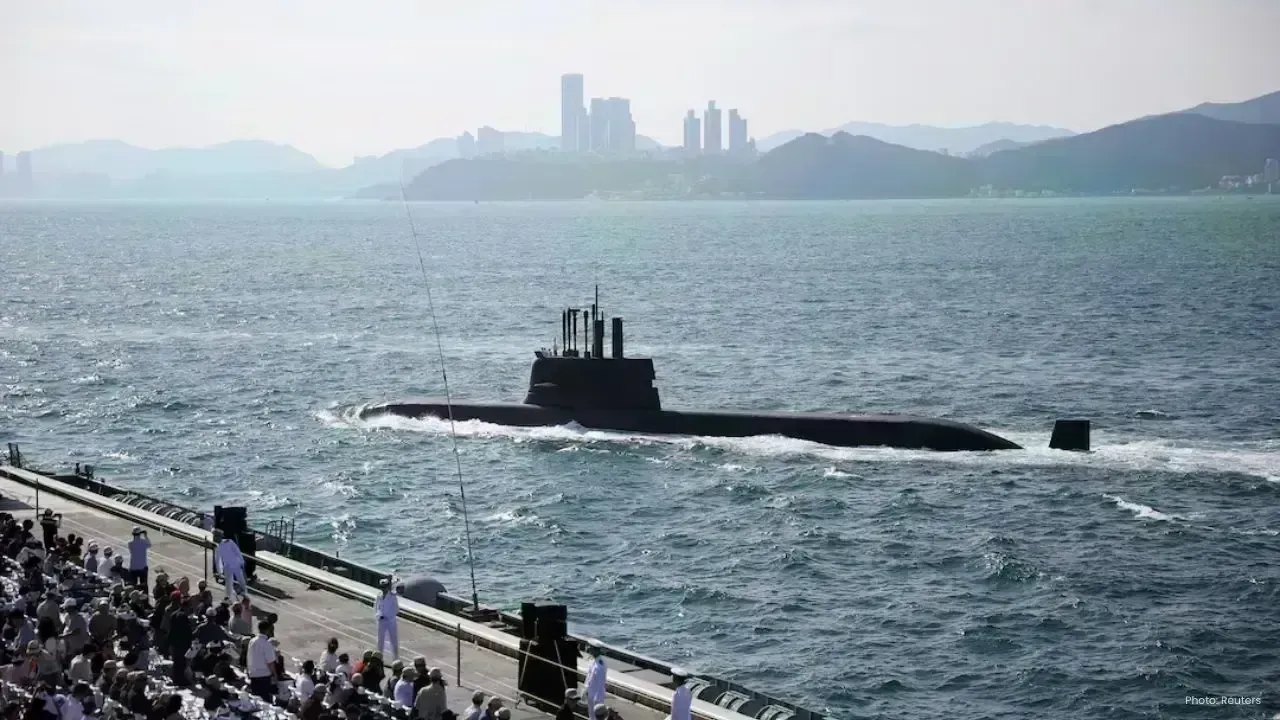
In a significant shift for East Asian security, South Korea is speeding up its nuclear-powered submarine initiative following former U.S. President Donald Trump's crucial support, which dismantles years of opposition from Washington. This decision could instigate a new arms race beneath the sea in the region.
Seoul has aspired to join the select group of nations with operational nuclear submarines, driven by concerns over North Korea's escalating underwater capabilities, particularly its submarine-launched ballistic missiles. Trump's endorsement facilitates South Korea’s access to nuclear fuel per a bilateral agreement, erasing a significant hurdle in the program's progression.
This development has garnered widespread attention throughout the area. Experts suggest China may adopt a cautious stance, while Japan might rethink its maritime strategy in light of these advancements. Nuclear submarines boast greater speed, extended submerged endurance, and broader operational capabilities, challenging the existing balance of naval power.
South Korea's strategy is built on years of groundwork, dating back to 1994 during the North Korean nuclear crisis when the idea of nuclear propulsion for submarines first emerged. Despite technical challenges that delayed progress, the nation has steadily cultivated its capabilities, achieving foundational submarine designs and nearing reactor assembly. Defence officials predict that the first of the planned four 5,000-ton nuclear submarines could launch within ten years.
North Korea has cautioned that this development might spark a "nuclear domino" effect and reports indicate potential assistance from Russia to bolster Pyongyang’s own capabilities. Japan recognizes nuclear propulsion as a feasible option, yet formal investigations have yet to begin.
The U.S. has positioned its backing as part of a wider strategy to deter threats and strengthen alliances against increasing Chinese military assertiveness. South Korea, for its part, asserts that the initiative is strictly defensive, aimed at addressing North Korean provocations, while upholding its commitment to global non-proliferation.
As South Korea emerges as a key player in naval advancements, the upcoming years may witness a transformation in undersea military strategies in East Asia, with nuclear submarines likely becoming central to a revised strategic dynamic.






Josh Kerr and Jakob Ingebrigtsen Set for 1,500m Rivalry Rematch
Josh Kerr and Jakob Ingebrigtsen will renew their 1,500m rivalry at the Ultimate Championship in Bud

PSG Coach Luis Enrique Urges Players to Step Outside Comfort Zone
PSG coach Luis Enrique says players must leave their comfort zone and keep improving as the club tar

China’s Tiangong Sets New 400m Record at Robot Olympics
China’s Tiangong robot sets a new 400m record at the Robot Olympics, beating a South African robot i

George Russell Wins Dutch GP Sprint, Boosts Mercedes Morale
George Russell wins the Dutch GP Sprint from pole as Mercedes teammate Kimi Antonelli extends his F1

Australia 50/3 After Bangladesh Bowled Out for 64 in Second Test
Australia reached 50/3 after Bangladesh were bowled out for 64 in the second Test, with Mitchell Sta

Jordan Burroughs Returns to Wrestling with 2028 Olympic Dream
Jordan Burroughs returns to wrestling with Real American Freestyle as the Olympic champion eyes a po

