
You have not yet added any article to your bookmarks!
Join 10k+ people to get notified about new posts, news and tips.
Do not worry we don't spam!
Post by : Rohit Dhiman
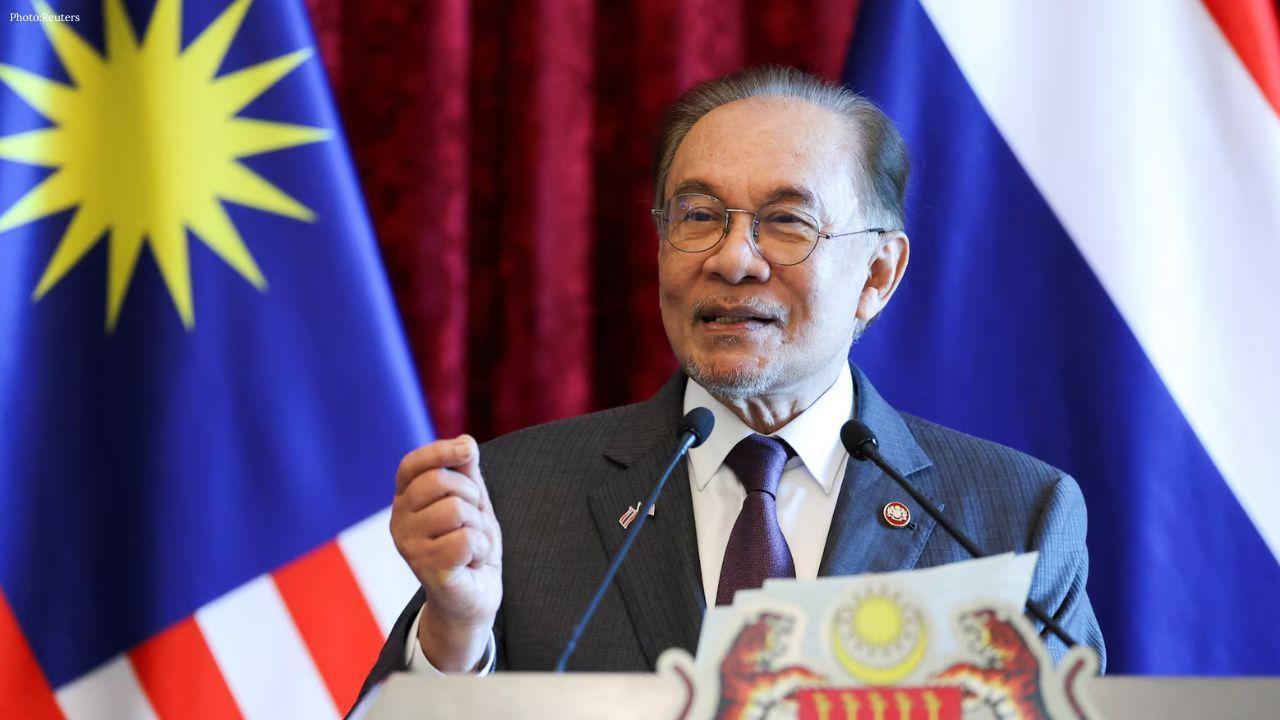
Malaysia could once again become a regular destination on the global Formula 1 calendar, with Prime Minister Anwar Ibrahim confirming that the government is discussing the possibility of bringing the country's own Grand Prix back to the Sepang International Circuit. Anwar made the comments as Formula 1 returned to Sepang for the first time since 2017. Although the event being held this weekend is officially the Formula 1 Gulf Air Bahrain Grand Prix, its temporary relocation to Malaysia has renewed interest in a permanent Formula 1 Malaysia event. Asked whether Malaysia could eventually host an F1 race again, Anwar expressed optimism but stopped short of making any commitment. The prime minister made the comment during a brief exchange with former Formula 1 driver and Sky Sports commentator Martin Brundle on the grid.
The return of Formula 1 generated considerable excitement in Malaysia, with Anwar himself attending the event at Sepang. Heavy rain left the prime minister drenched while he was at the circuit, but he said the weather did not dampen his enthusiasm. "You see, I'm wet, drenched, but am very excited. You see, the entire country is rejoicing," Anwar told Brundle. His remarks came as fans gathered at the circuit for what became an unusual chapter in the history of the Malaysia Grand Prix. The weekend represents the first Formula 1 race to take place at Sepang since the country stopped hosting its own event after the 2017 season.
Malaysia's unexpected place on the current F1 schedule came because the Bahrain Grand Prix had to be relocated from its original venue. The race was moved to the Sepang International Circuit because of security concerns linked to the conflict in the Middle East. As a result, Malaysia received the opportunity to host Formula 1 action again, even though the country was not originally scheduled to return to the championship calendar. The temporary arrangement has now triggered fresh discussions about whether Malaysia could seek a more permanent place in Formula 1. However, the financial requirements involved in securing a regular F1 race remain a major consideration for the government.
The return of Formula 1 to Sepang was accompanied by difficult weather conditions. Heavy rain caused significant water accumulation on the track, forcing officials to delay the start. Drivers initially went out behind the safety car as officials assessed the conditions. The starting procedure was subsequently suspended shortly before 4pm. After the delay, the race finally got underway at approximately 4.35pm. The weather conditions added another challenge to an already unusual event, with the circuit hosting a relocated Bahrain race instead of a traditional Malaysian Grand Prix. For spectators, however, the return of F1 machinery to Sepang marked an important moment after years without a Formula 1 event at the circuit.
Malaysia has a long history with Formula 1. The country hosted its own Malaysian Grand Prix at Sepang every year from 1999 until 2017. During those years, Sepang became one of the recognisable venues on the international Formula 1 calendar. The circuit was designed specifically to accommodate major international motorsport events and became associated with dramatic races, challenging weather and demanding track conditions. However, the Malaysian government eventually decided to end the country's F1 hosting arrangement. The decision was made during former prime minister Najib Razak's administration, with the government pointing to the high cost of hosting the event and declining financial returns. That decision brought an end to nearly two decades of regular Formula 1 racing in Malaysia.
While the latest event has provided Malaysia with an opportunity to experience Formula 1 again, bringing the championship back permanently would be significantly more expensive. Before this weekend's race, the government indicated that Malaysia would need to spend between RM10 million and RM16 million on preparations for the relocated event. That figure was possible because Bahrain had already covered the major costs associated with hosting the race. A permanent F1 return, however, would require Malaysia to take on much larger financial commitments. Sepang International Circuit CEO Azhan Shafriman Hanif previously estimated that securing a permanent place on the F1 calendar could cost Malaysia at least RM300 million every year. That estimate includes hosting rights fees and other costs connected with maintaining a Formula 1 event.
Money is not the only factor that could determine whether Malaysia returns to the permanent Formula 1 calendar. The championship schedule has become increasingly crowded, with numerous countries competing for limited race slots. This means Malaysia would need not only to justify the financial commitment but also secure a place in the calendar. Azhan has previously said that a permanent return would depend on whether the government could justify the expenditure and whether an opening became available on the increasingly busy F1 schedule. The government would therefore have to consider the potential economic benefits of hosting the race against the substantial annual costs.
Read Also: Tuchel Says Alex Scott Can Challenge Declan Rice for England Midfield Spot
A permanent return could restore Sepang to its previous position as one of Formula 1's regular international venues. The circuit's location and established infrastructure make it familiar to the championship, while Malaysia has already demonstrated its ability to host major motorsport events. The latest race has also shown that the venue can step in when circumstances require a change to the international calendar. However, hosting a one-off event under exceptional circumstances is different from securing a long-term Formula 1 agreement. A permanent deal would involve substantial financial planning, negotiations over hosting rights and coordination with Formula 1 authorities.
Despite the excitement surrounding the return of F1, Anwar's latest comments do not represent a confirmed decision to bring back the Malaysian Grand Prix. His response indicates that discussions are taking place, but no final agreement or timetable has been announced. For now, Malaysia is once again experiencing Formula 1 action at Sepang after a nine-year gap. Whether that develops into a full-time return will depend on several factors, particularly the financial cost, government approval and the availability of space on the global F1 calendar.
The history of Formula 1 in Malaysia began in 1999, when Sepang became a new venue on the championship calendar. For almost two decades, the Malaysian Grand Prix attracted international drivers, teams and motorsport fans to the country. The circuit became known for its combination of high-speed sections, technical corners and unpredictable tropical weather. The 2017 race was the final Malaysian Grand Prix before the event was discontinued. The decision at the time was linked to the cost of hosting the race and concerns about whether the event was generating sufficient returns. The unexpected relocation of the Bahrain Grand Prix has now brought Formula 1 back to the same circuit, creating an opportunity to reconsider Malaysia's relationship with the sport.
The Malaysian government is discussing the possibility, but there is currently no confirmed agreement for a permanent return.
Malaysia last hosted its own Formula 1 race in 2017. The country hosted the event annually from 1999 to 2017.
The Bahrain Grand Prix was relocated to Sepang because of security concerns linked to the conflict in the Middle East.
Prime Minister Anwar Ibrahim said Malaysia is discussing the possibility of bringing Formula 1 back and said he was looking forward to the prospect.
Sepang International Circuit CEO Azhan Shafriman Hanif previously estimated that a permanent place on the F1 calendar could cost at least RM300 million annually, including hosting rights fees.
Malaysia ended its F1 hosting arrangement after the 2017 race, with the government citing high hosting costs and declining returns.



Michael Bracewell Chooses Casual Contract, Targets BBL Opportunity
Michael Bracewell moves to a casual contract as he eyes a BBL opportunity while remaining available

Tuchel Says Alex Scott Can Challenge Declan Rice for England Midfield Spot
Thomas Tuchel says Alex Scott can challenge Declan Rice for an England midfield place after his impr

Air Quality Turns Unhealthy in Central and Western Singapore Amid Haze
Singapore haze pushes PSI above 100 in central and western areas as smoke from regional hotspots rai

PM Modi Pays Tribute to Mahatma Gandhi, Urges People to Support Khadi
PM Modi pays tribute to Mahatma Gandhi on Gandhi Jayanti and urges citizens to support Khadi and the

Amazon Seeks to Offload $8 Billion in Nvidia Chips to Investors
Amazon plans to move $8 billion in Nvidia chips to investors, using a new financing model to strengt

Samsung Raises Galaxy S26 Prices as Memory Chip Costs Rise
Samsung raises Galaxy S26 prices in South Korea as rising memory chip costs put pressure on smartpho

