
You have not yet added any article to your bookmarks!
Join 10k+ people to get notified about new posts, news and tips.
Do not worry we don't spam!
Post by : Anis Farhan
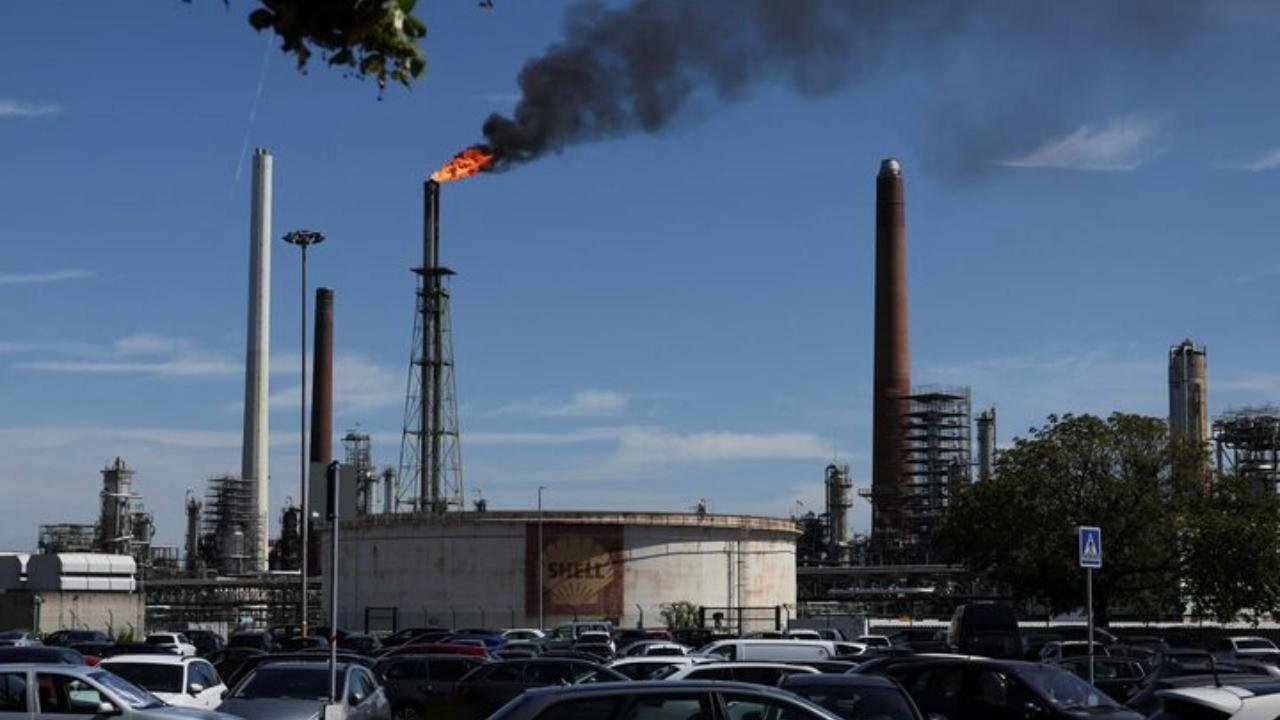
Photo: Reuters
What used to be a once-in-a-decade event is now a recurring summer headline. From the American Southwest to Southern Europe, South Asia to the Middle East, temperatures are breaching 45–50°C (113–122°F) with alarming frequency. But the bigger story is what follows: overloaded transformers, grid failures, and cities plunged into hours—or even days—of darkness.
In India, states like Uttar Pradesh and Bihar have experienced blackouts stretching over 8 to 10 hours in 2025, despite near-record coal usage. In Texas, demand hit an all-time high in June 2025, pushing ERCOT (the state’s power manager) to issue repeated emergency alerts. Greece and Italy also faced rotating outages this summer, with fire departments stretched thin due to overheated power lines sparking wildfires.
These aren’t isolated flukes. This is infrastructure being outpaced by a warming world.
Here’s the technical breakdown: power grids are designed to operate within a certain temperature band. Transformers, transmission lines, and substations all have thermal limits. When ambient temperatures rise, efficiency drops—lines sag, resistance increases, and transformers begin to overheat.
Air conditioning, ironically, becomes the tipping point. In heatwaves, AC units drive up peak electricity demand by as much as 60%, particularly in urban centers. The result? Utilities are forced into load shedding—deliberately cutting power in certain areas to prevent a full-scale collapse.
In China, where rapid industrial expansion meets unforgiving heat, factories are increasingly told to power down during summer surges. In South Korea, government advisories now include “grid survival” tips for citizens during heat spikes.
The takeaway? Our grid wasn’t built for this century’s climate—let alone the next one.
Urban centers are the most vulnerable. Skyscrapers, tech parks, hospitals, data centers—all need continuous power. But cities are also heat islands, where trapped heat makes temperatures feel 5–8°C hotter than surrounding areas. This amplifies the pressure on both the people and the systems serving them.
In Cairo, this summer’s extended heatwave led to multiple transformer explosions across the city. In Bangkok, the government has urged citizens to reduce energy consumption between 2 PM and 6 PM to prevent forced outages. And in Los Angeles, an entire grid section was lost for nearly 12 hours in June due to a cooling system fire caused by a blown capacitor.
It’s not just inconvenience. In some areas, especially among the elderly and low-income communities, it’s a public health emergency.
Upgrading the grid is urgent—but expensive. Transitioning to smart grids (which use real-time data to balance load), investing in heat-resilient transformers, expanding distributed energy (like rooftop solar), and integrating battery storage systems are all part of the toolkit.
In Australia, for instance, a new initiative ties rooftop solar panels with neighborhood-scale battery systems that can provide backup even during mainline failures. Germany and Japan are doubling down on decentralizing energy to avoid large single-point failures. But progress is uneven.
Developing nations, which are also the hardest hit by climate shifts, often lack the funding or technical capacity to scale these changes quickly. Without support, they’re heading into a hotter future with brittle systems—and rising risks.
Heatwaves are no longer just weather events—they're infrastructure stress tests. And so far, we're failing. As the planet warms and cities expand, the very systems we depend on to survive are being tested at their limits. The time to redesign, reinforce, and reimagine our power grids isn’t tomorrow. It’s right now.
This article has been created exclusively for Newsible Asia for informational and editorial purposes. All facts, insights, and viewpoints are based on publicly available data and current global developments in the energy and climate sectors.










PM Modi Pays Tribute to Mahatma Gandhi, Urges People to Support Khadi
PM Modi pays tribute to Mahatma Gandhi on Gandhi Jayanti and urges citizens to support Khadi and the

Amazon Seeks to Offload $8 Billion in Nvidia Chips to Investors
Amazon plans to move $8 billion in Nvidia chips to investors, using a new financing model to strengt

Samsung Raises Galaxy S26 Prices as Memory Chip Costs Rise
Samsung raises Galaxy S26 prices in South Korea as rising memory chip costs put pressure on smartpho

Lewis Hamilton Calls Singapore Grand Prix One of F1's Toughest Races
Lewis Hamilton discusses the demanding Singapore Grand Prix and brings Plus44 and Almave to Singapor

Denmark's Pandora Opens World's Largest Jewellery Factory in Vietnam
Pandora opens its largest jewellery factory in Vietnam, expanding global production, strengthening s

Gautam Gambhir Questions Batting-Friendly Pitches After India's Record ODI Chase
Gautam Gambhir questions batting-friendly ODI pitches after India’s record chase, calling for a bett

