
You have not yet added any article to your bookmarks!
Join 10k+ people to get notified about new posts, news and tips.
Do not worry we don't spam!
Post by : Shweta
The federal government of Canada is on the brink of a significant carbon pricing deal with Alberta that could redefine the nation's energy policies. Reports suggest this agreement would see Alberta's industrial carbon price rise to $130 per tonne by 2040, providing a more gradual timeline compared to previous national climate targets.
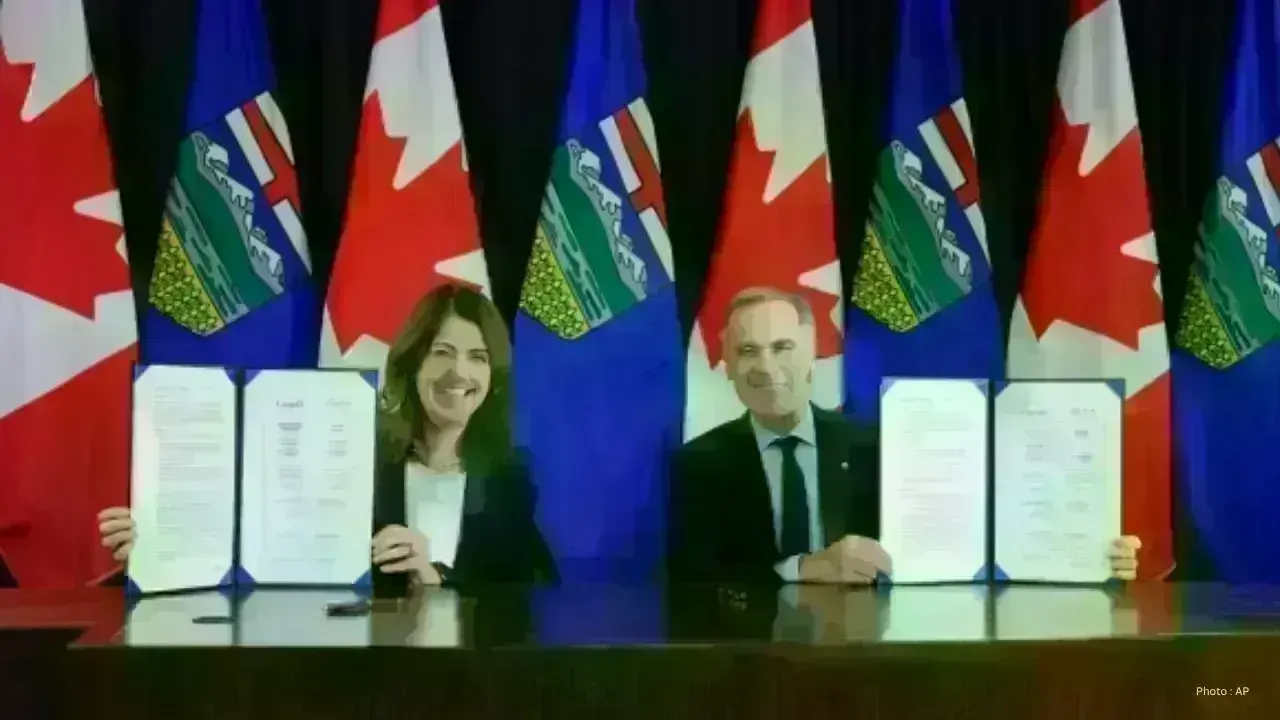
Prime Minister Mark Carney is expected to announce the details in Calgary, alongside Alberta Premier Danielle Smith. This negotiation appears to be a crucial political compromise addressing the environmental goals of Ottawa and the needs of Alberta's oil and gas sector.
Under this potential framework, the carbon price for Alberta's industrial sector would increase from approximately C$95 per tonne to C$100 by next year. It would then progressively rise until reaching C$130 per tonne around 2040, followed by an annual increment of about 1.5 percent. This slower increase has been argued to keep Canadian energy companies competitive while still fostering a reduction in emissions over the long term.
The prospect of this agreement follows Alberta's decision to freeze its industrial carbon pricing system in 2025. Experts have previously mentioned that insufficient market prices for carbon credits have hindered investments in cleaner technologies. Currently, carbon credits in Alberta trade between C$20 and C$40 per tonne, which many climate experts claim is inadequate for encouraging significant emission reductions.
Federal officials suggest the new deal could facilitate important energy infrastructure projects, such as Alberta's proposed crude oil pipeline to British Columbia's coast. Approval for these expansions may depend on stronger commitments to reduce carbon emissions through technologies like carbon capture and storage.
However, environmental advocates swiftly criticized the slower timeline upon the deal's details becoming public. Many have pushed for the C$130-per-tonne target to be reached by 2030, arguing that delaying aggressive carbon pricing undermines Canada's climate objectives and lessens pressure on major polluters.
Online debates have erupted regarding the agreement, with many Canadians questioning the concessions made to Alberta's oil industry. While some argue the slower increase may hinder effective climate action, others view the compromise as essential for safeguarding jobs and investments amid volatile global economic conditions.
Political analysts suggest these negotiations highlight the complex balance Ottawa must strike between environmental initiatives and economic growth. As Canada's top oil-producing province, Alberta has been a point of contention between federal and provincial governments regarding carbon pricing over the years. The government of Prime Minister Carney seems to be pursuing an approach that favors industrial growth while also addressing long-term emissions reduction.
If finalized, this agreement might be recognized as one of the most significant climate-policy compromises since the introduction of the federal carbon pricing system. However, further discussions are expected among environmental groups, industry leaders, and provincial governments to ascertain whether the plan strikes the right balance in tackling economic and environmental issues.










PM Modi Pays Tribute to Mahatma Gandhi, Urges People to Support Khadi
PM Modi pays tribute to Mahatma Gandhi on Gandhi Jayanti and urges citizens to support Khadi and the

Amazon Seeks to Offload $8 Billion in Nvidia Chips to Investors
Amazon plans to move $8 billion in Nvidia chips to investors, using a new financing model to strengt

Samsung Raises Galaxy S26 Prices as Memory Chip Costs Rise
Samsung raises Galaxy S26 prices in South Korea as rising memory chip costs put pressure on smartpho

Lewis Hamilton Calls Singapore Grand Prix One of F1's Toughest Races
Lewis Hamilton discusses the demanding Singapore Grand Prix and brings Plus44 and Almave to Singapor

Denmark's Pandora Opens World's Largest Jewellery Factory in Vietnam
Pandora opens its largest jewellery factory in Vietnam, expanding global production, strengthening s

Gautam Gambhir Questions Batting-Friendly Pitches After India's Record ODI Chase
Gautam Gambhir questions batting-friendly ODI pitches after India’s record chase, calling for a bett

