
You have not yet added any article to your bookmarks!
Join 10k+ people to get notified about new posts, news and tips.
Do not worry we don't spam!
Post by : Rameen Ariff
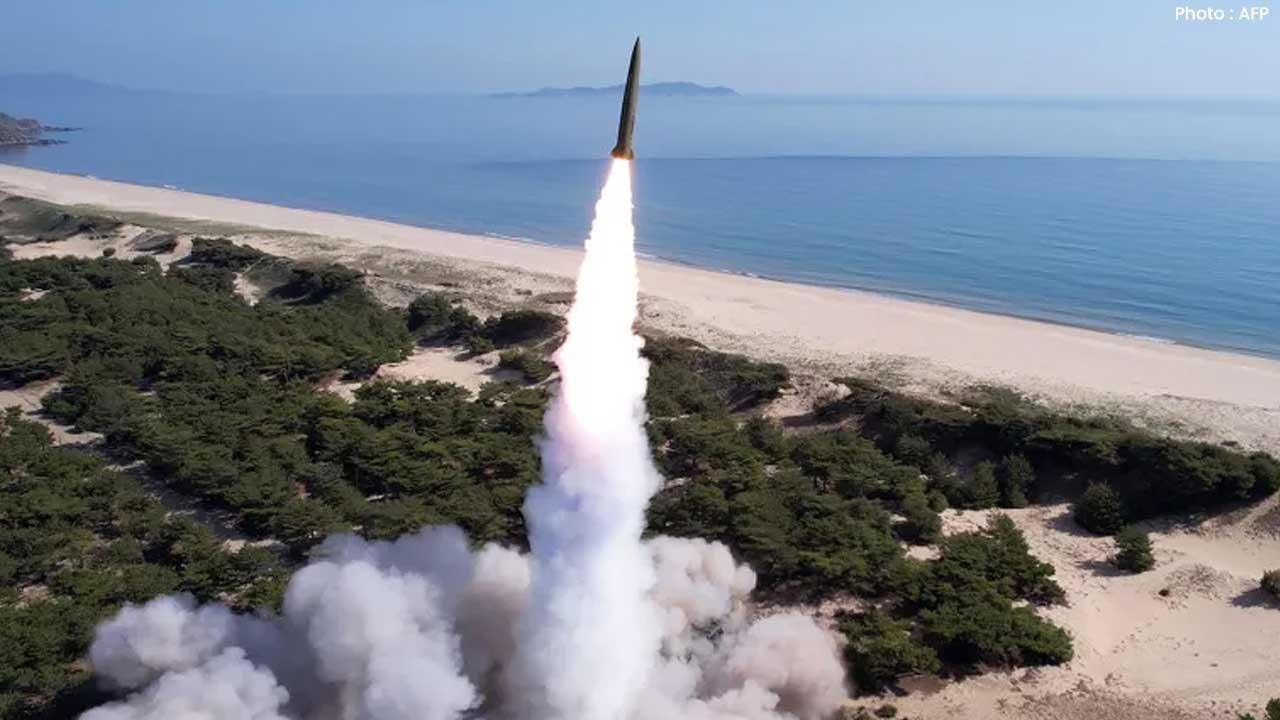
North Korea has once again turned the spotlight on itself by successfully testing hypersonic missiles, heralded by state media as part of a “state-of-the-art weapon system.” The launch occurred south of Pyongyang, with both projectiles reportedly hitting their designated targets in the nation’s northeast. According to the Korean Central News Agency (KCNA), the purpose of this test was to bolster national defense capabilities and illustrate North Korea's ongoing advancements in hypersonic missile technology.
This latest missile test unfolds just a week prior to the APEC Summit, where global leaders, including US President Donald Trump, are expected to convene in South Korea. The timing has ignited international concern, as analysts suggest this could be a calculated display of power. It serves as a clear indication of Pyongyang's commitment to showcasing its military strength on the international stage, amid ongoing diplomatic tensions in the area.
The hypersonic missile testing underscores a strategic attempt by North Korea to highlight its developing technological prowess. Hypersonic missiles can travel at speeds exceeding five times the speed of sound and possess the ability to maneuver during flight, making them challenging to detect and intercept. Such attributes position these weapons among the most advanced and formidable in modern warfare. Officials from North Korea have articulated that the primary aim of the hypersonic missile test was to enhance “sustainability and effectiveness of strategic deterrence against possible adversaries,” emphasizing the nation’s focus on fortifying its defense capabilities.
Interestingly, leader Kim Jong Un did not oversee this hypersonic missile launch, a situation that has piqued the interest of political analysts. Observers speculate that his absence may have been a strategic choice, allowing North Korea to demonstrate its military innovations without appearing excessively provocative just before the APEC meeting. Yang Moo-jin, a former president of the University of North Korean Studies in Seoul, pointed out that this tactic might serve to “mellow the political impact” while still affirming the nation's defensive capabilities.
Despite Kim’s absence, this hypersonic missile test sends a resolute message to both regional and global powers. It underlines Pyongyang’s unwavering commitment to advancing its weaponry systems, regardless of international sanctions or diplomatic isolation. South Korea’s military confirmed the detection of this launch, marking it as the first such event in months, which further escalates regional tensions.
This development occurs at a time when the world is already grappling with the stark realities of hypersonic weaponry being deployed by other nations. Russia has utilized such missiles in Ukraine while Iran has employed them against Israel. Following its latest test, North Korea joins the ranks of nations capable of navigating next-generation hypersonic technology, significantly altering the regional security landscape.
The hypersonic missile launch, coinciding closely with the APEC Summit, serves as a bold statement of defiance. It reinforces North Korea’s commitment to military development and its readiness to project strength amid international scrutiny. The country continues to assert that its activities are purely defensive, designed to mitigate perceived threats from the United States and its allies.
Though state media have withheld details on the missile’s speed, range, or trajectory, the symbolic importance of this launch is clear. The hypersonic missile test signifies an ongoing arms race in Asia and highlights the delicate equilibrium of peace in the region. As world leaders gather in Seoul for the forthcoming summit, the international community is poised to observe how this latest escalation will shape regional diplomacy and security discussions.









Michael Bracewell Chooses Casual Contract, Targets BBL Opportunity
Michael Bracewell moves to a casual contract as he eyes a BBL opportunity while remaining available

Tuchel Says Alex Scott Can Challenge Declan Rice for England Midfield Spot
Thomas Tuchel says Alex Scott can challenge Declan Rice for an England midfield place after his impr

Air Quality Turns Unhealthy in Central and Western Singapore Amid Haze
Singapore haze pushes PSI above 100 in central and western areas as smoke from regional hotspots rai

PM Modi Pays Tribute to Mahatma Gandhi, Urges People to Support Khadi
PM Modi pays tribute to Mahatma Gandhi on Gandhi Jayanti and urges citizens to support Khadi and the

Amazon Seeks to Offload $8 Billion in Nvidia Chips to Investors
Amazon plans to move $8 billion in Nvidia chips to investors, using a new financing model to strengt

Samsung Raises Galaxy S26 Prices as Memory Chip Costs Rise
Samsung raises Galaxy S26 prices in South Korea as rising memory chip costs put pressure on smartpho

