
You have not yet added any article to your bookmarks!
Join 10k+ people to get notified about new posts, news and tips.
Do not worry we don't spam!
Post by : Badri Ariffin
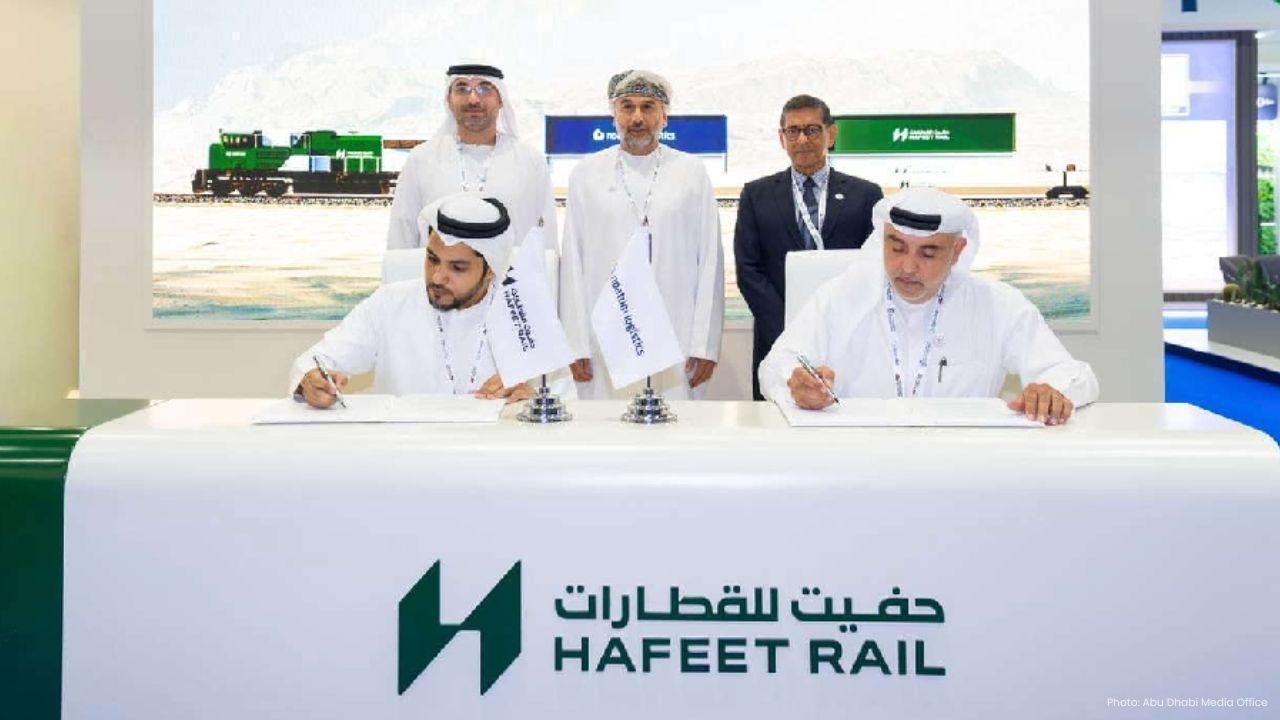
Noatum Logistics, part of AD Ports Group, and Hafeet Rail, developer of the UAE-Oman cross-border railway, have signed a preliminary agreement to launch a dedicated rail freight service linking Abu Dhabi and Sohar. The announcement, made during the Global Rail 2025 exhibition in Abu Dhabi, marks the first direct rail connection between the two Gulf hubs, aimed at improving trade and strengthening supply chains.
Daily High-Capacity Freight Service Planned
Under the agreement, the rail service will run seven container trains per week, each carrying 276 twenty-foot equivalent units (TEUs). The trains will accommodate 20-foot, 40-foot, and 45-foot containers, with an annual throughput of around 193,200 TEUs. This high-capacity link is expected to transport a variety of goods, including general cargo, manufactured products, food items, pharmaceuticals, and agrifood supplies, ensuring flexibility and reliability from day one.
Strengthening Regional Supply Chains
Samir Chaturvedi, CEO of Noatum Logistics, described the rail link as a milestone that “connects two of the region’s most strategic hubs via rail for the first time.” He highlighted that the partnership would provide customers with a cost-effective and sustainable transport option while reinforcing regional supply chains and opening new business opportunities between the UAE and Oman.
Hafeet Rail’s Role in Regional Logistics
Ahmed Al Musawa Al Hashemi, CEO of Hafeet Rail, emphasized that the dedicated rail service would provide efficient and reliable cross-border container transport. He stated that the project will boost trade, support sustainable growth, and position Hafeet Rail as a central enabler of regional logistics transformation. The collaboration is expected to play a key role in integrating the UAE and Oman into a broader logistics ecosystem.
Sustainability Benefits of Rail Freight
The new rail corridor offers a greener alternative to road transport, reducing fuel consumption and lowering carbon emissions per tonne of freight. Rail is an efficient mode for moving high-volume and bulk cargo over medium to long distances. The system’s high load capacity and lower fuel intensity support environmental goals while improving operational efficiency and cost-effectiveness for businesses.
Building on Existing Operations
Noatum Logistics’ current rail operations, including the Khalifa Port–Fujairah Terminals shuttle launched in late 2024, provide a strong foundation for the cross-border service. The new Abu Dhabi–Sohar link will expand the network’s reach, facilitating seamless movement of goods between Emirati and Omani markets and enhancing the region’s overall logistics capabilities.
Once operational, the dedicated rail corridor will serve as a high-capacity trade artery connecting two strategic logistics hubs in the Arabian Peninsula. The partnership reflects both countries’ commitment to economic diversification, improved connectivity, and reduced environmental impact. By combining Hafeet Rail’s infrastructure expertise with Noatum Logistics’ freight management skills, the project sets a new standard for sustainable and efficient trade in the Gulf region.










PM Modi Pays Tribute to Mahatma Gandhi, Urges People to Support Khadi
PM Modi pays tribute to Mahatma Gandhi on Gandhi Jayanti and urges citizens to support Khadi and the

Amazon Seeks to Offload $8 Billion in Nvidia Chips to Investors
Amazon plans to move $8 billion in Nvidia chips to investors, using a new financing model to strengt

Samsung Raises Galaxy S26 Prices as Memory Chip Costs Rise
Samsung raises Galaxy S26 prices in South Korea as rising memory chip costs put pressure on smartpho

Lewis Hamilton Calls Singapore Grand Prix One of F1's Toughest Races
Lewis Hamilton discusses the demanding Singapore Grand Prix and brings Plus44 and Almave to Singapor

Denmark's Pandora Opens World's Largest Jewellery Factory in Vietnam
Pandora opens its largest jewellery factory in Vietnam, expanding global production, strengthening s

Gautam Gambhir Questions Batting-Friendly Pitches After India's Record ODI Chase
Gautam Gambhir questions batting-friendly ODI pitches after India’s record chase, calling for a bett

