
You have not yet added any article to your bookmarks!
Join 10k+ people to get notified about new posts, news and tips.
Do not worry we don't spam!
Post by : Saif Rahman
Amid escalating political and military tensions between Taiwan and China, President Lai Ching-te observes his second anniversary in office. The Taiwanese government grapples with significant challenges related to security, diplomacy, internal politics, and economic progress as regional pressures intensify.
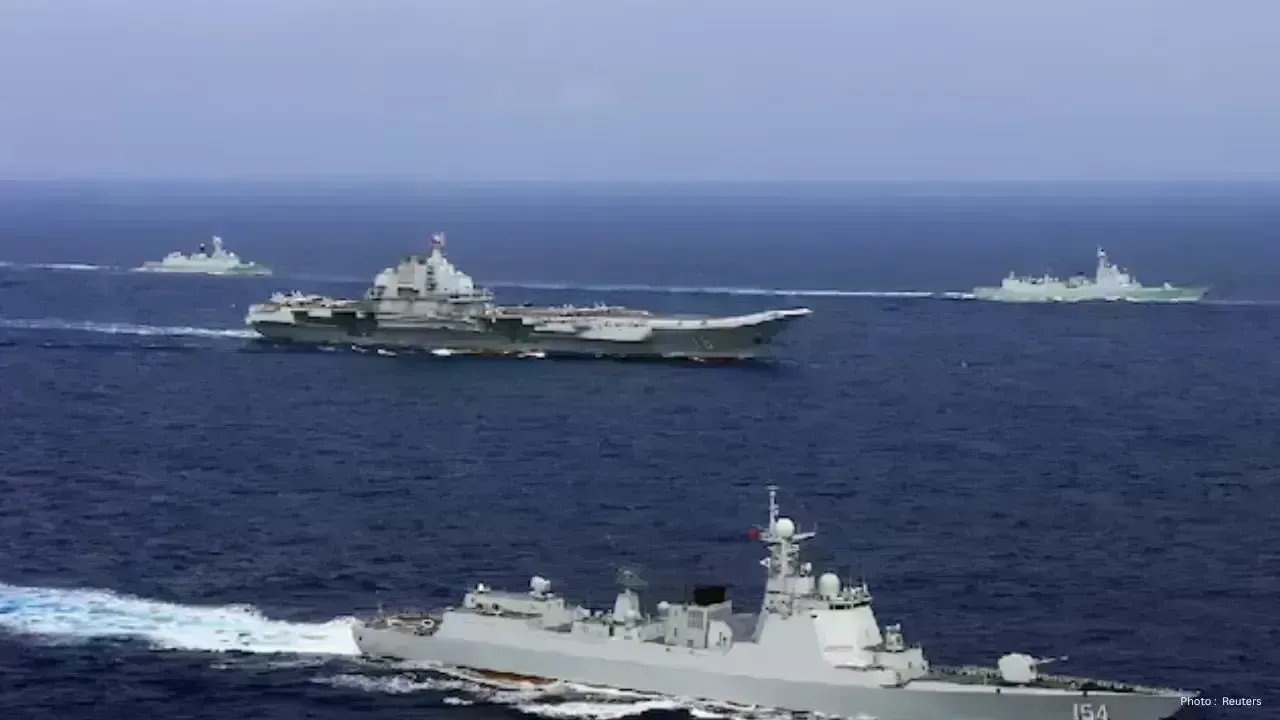
Prior to his public address, Taiwan's leadership firmly condemned China's growing military maneuvers near the island. Officials in Taiwan characterized these actions as major threats to both regional peace and stability within the Indo-Pacific. Over the past year, the increase in Chinese military aircraft, naval presence, and military drills near Taiwan has raised alarms domestically and internationally.
China maintains its stance that Taiwan is a part of its territory, frequently asserting that it could resort to military action to assert control over the island. Conversely, Taiwan rejects these claims, insisting its destiny should be in the hands of its citizens. President Lai continues to uphold Taiwan’s democratic values and sovereignty while advocating for peaceful engagement with Beijing.
Since assuming office in 2024, Lai has encountered considerable domestic and international pressures. His administration has prioritized bolstering Taiwan's defense capabilities and fostering closer ties with democratic nations, especially the United States. Collaborations in technology, trade, semiconductor sectors, and security have also intensified.
Nonetheless, internal political challenges persist as opposition parties dominate parliament, obstructing various government initiatives. Disagreements over defense funding, economic strategies, and relations with China have further exacerbated tensions within Taiwan's political landscape.
International recognition remains a pivotal matter for Taiwan, with China exerting pressure on nations and global entities to restrict Taiwan's engagement. Recently, Taiwan was once again omitted from the World Health Assembly due to China's opposition, despite backing from countries arguing for Taiwan's role in global health initiatives.
Experts suggest that the forthcoming years will be crucial for the future of Taiwan. The island is a leading producer of advanced semiconductors, positioning it as a vital player in the global economy and technology sectors. Consequently, tensions surrounding Taiwan have ramifications beyond Asia, influencing international markets and geopolitical dynamics.
The second anniversary of President Lai encapsulates the challenging balance Taiwan strives to uphold—ensuring its democracy and security while avoiding direct confrontation with China. Many citizens of Taiwan hope for sustained peace and stability, although increasing military activities and political strains keep regional stress levels elevated.
#Global News #Global Updates #Middle East #Middle East Crisis










PM Modi Pays Tribute to Mahatma Gandhi, Urges People to Support Khadi
PM Modi pays tribute to Mahatma Gandhi on Gandhi Jayanti and urges citizens to support Khadi and the

Amazon Seeks to Offload $8 Billion in Nvidia Chips to Investors
Amazon plans to move $8 billion in Nvidia chips to investors, using a new financing model to strengt

Samsung Raises Galaxy S26 Prices as Memory Chip Costs Rise
Samsung raises Galaxy S26 prices in South Korea as rising memory chip costs put pressure on smartpho

Lewis Hamilton Calls Singapore Grand Prix One of F1's Toughest Races
Lewis Hamilton discusses the demanding Singapore Grand Prix and brings Plus44 and Almave to Singapor

Denmark's Pandora Opens World's Largest Jewellery Factory in Vietnam
Pandora opens its largest jewellery factory in Vietnam, expanding global production, strengthening s

Gautam Gambhir Questions Batting-Friendly Pitches After India's Record ODI Chase
Gautam Gambhir questions batting-friendly ODI pitches after India’s record chase, calling for a bett

