
You have not yet added any article to your bookmarks!
Join 10k+ people to get notified about new posts, news and tips.
Do not worry we don't spam!
Post by : Saif Rahman
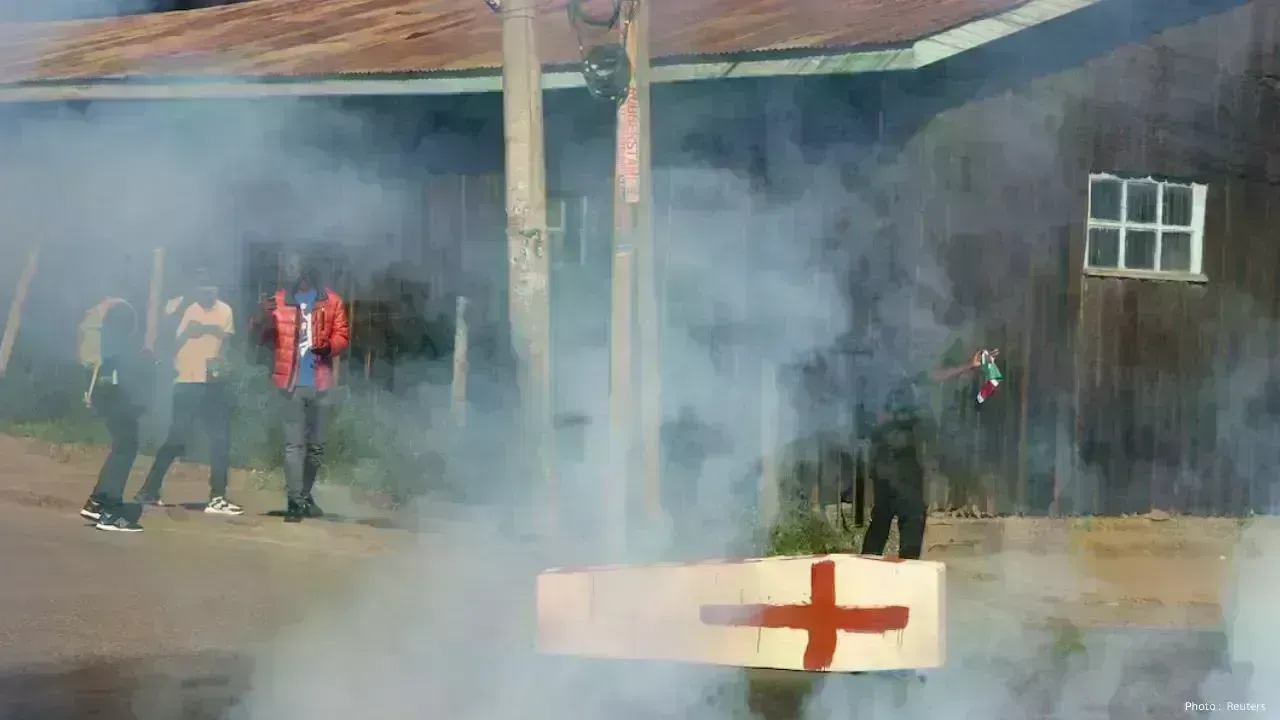
In a dramatic turn of events, Kenyan police employed tear gas to disperse protesters opposing the construction of a US-associated Ebola quarantine and treatment center. Demonstrators expressed their worries about safety, transparency, and potential health hazards involved with the project.
The demonstration unfolded in a locality earmarked for a facility designed to address Ebola cases and similar health emergencies. While governmental representatives assert that this center aims to bolster disease management and emergency responses, community members are filled with apprehension and ambiguity regarding its implications for their safety.
Reports indicate that large crowds assembled to voice their disapproval, claiming insufficient consultation before the proposal. They sought clarity on operational aspects, safety measures, and any potential risks posed to surrounding neighborhoods.
Security personnel were dispatched as tensions heightened during the protest. As the situation escalated, officers resorted to tear gas to subdue the gathering, instigating panic among attendees who fled to escape the chaos.
Authorities justified their actions as essential for maintaining public order, yet the use of force amplified critiques about the disconnect between government actions and citizen anxieties regarding health-related projects.
This contentious Ebola facility forms part of broader initiatives aimed at enhancing disease readiness in the region. Historically, Ebola outbreaks have taken a heavy toll in Africa, thus underscoring the necessity for timely detection and isolation capabilities to mitigate potential viral spreads.
Proponents of the initiative contend that such specialized treatment centers are crucial for saving lives in emergencies, enabling quicker responses during outbreaks. They advocate for international collaboration in upgrading health infrastructure as a vital component of global health security.
Conversely, local opposition underscores the necessity for fostering trust and effective communication. Residents frequently express concerns over stigma, security measures, and adherence to safety protocols. Misinformation can breed resistance, even when initiatives are beneficial.
Experts stress that engaging communities is pivotal for successful public health efforts. Transparent communication and inclusive decision-making encourage public support and cooperation in crises. Absent this engagement, even well-meaning health projects can encounter significant backlash.
The events in Kenya mirror a common challenge for governments tackling infectious diseases: balancing urgent health priorities against citizen worries, and ensuring comprehensive safety explanations are well-received.
The dynamics involving international partnerships in healthcare projects add complexity. While global alliances can provide vital expertise and resources, they may also fuel local concerns about oversight and long-term consequences.
The controversy surrounding the US-supported facility has intensified local sensitivities, as some residents fear the facility may engage in risky medical practices without adequate safeguards. Government officials, however, assure that stringent protocols will be observed to protect public health.
The police's deployment of tear gas has ignited a debate on management strategies during protests. Human rights advocates highlight the significance of non-violent measures and dialogue when citizens present concerns over projects affecting their lives.
Simultaneously, security personnel justify the necessity of order when demonstrations become hazardous. The friction between law enforcement and public expression persists within many democratic societies.
This incident has polarized local sentiments, as some continue to reject the project, advocating for its postponement until additional consultations occur. Others, however, view the potential health advantages favorably, given proper management and safety measures.
The Kenyan government now faces the daunting task of rebuilding community trust while advancing its health objectives. Transparency, clear communication, and local participation will be crucial in navigating this dispute.
The clash between public protest and police action highlights how health-related infrastructure initiatives can stir controversy when public knowledge is inadequate. As Kenya strives to enhance its healthcare responsiveness, achieving harmony among safety, communication, and community trust will remain vital for future success.










PM Modi Pays Tribute to Mahatma Gandhi, Urges People to Support Khadi
PM Modi pays tribute to Mahatma Gandhi on Gandhi Jayanti and urges citizens to support Khadi and the

Amazon Seeks to Offload $8 Billion in Nvidia Chips to Investors
Amazon plans to move $8 billion in Nvidia chips to investors, using a new financing model to strengt

Samsung Raises Galaxy S26 Prices as Memory Chip Costs Rise
Samsung raises Galaxy S26 prices in South Korea as rising memory chip costs put pressure on smartpho

Lewis Hamilton Calls Singapore Grand Prix One of F1's Toughest Races
Lewis Hamilton discusses the demanding Singapore Grand Prix and brings Plus44 and Almave to Singapor

Denmark's Pandora Opens World's Largest Jewellery Factory in Vietnam
Pandora opens its largest jewellery factory in Vietnam, expanding global production, strengthening s

Gautam Gambhir Questions Batting-Friendly Pitches After India's Record ODI Chase
Gautam Gambhir questions batting-friendly ODI pitches after India’s record chase, calling for a bett

