
You have not yet added any article to your bookmarks!
Join 10k+ people to get notified about new posts, news and tips.
Do not worry we don't spam!
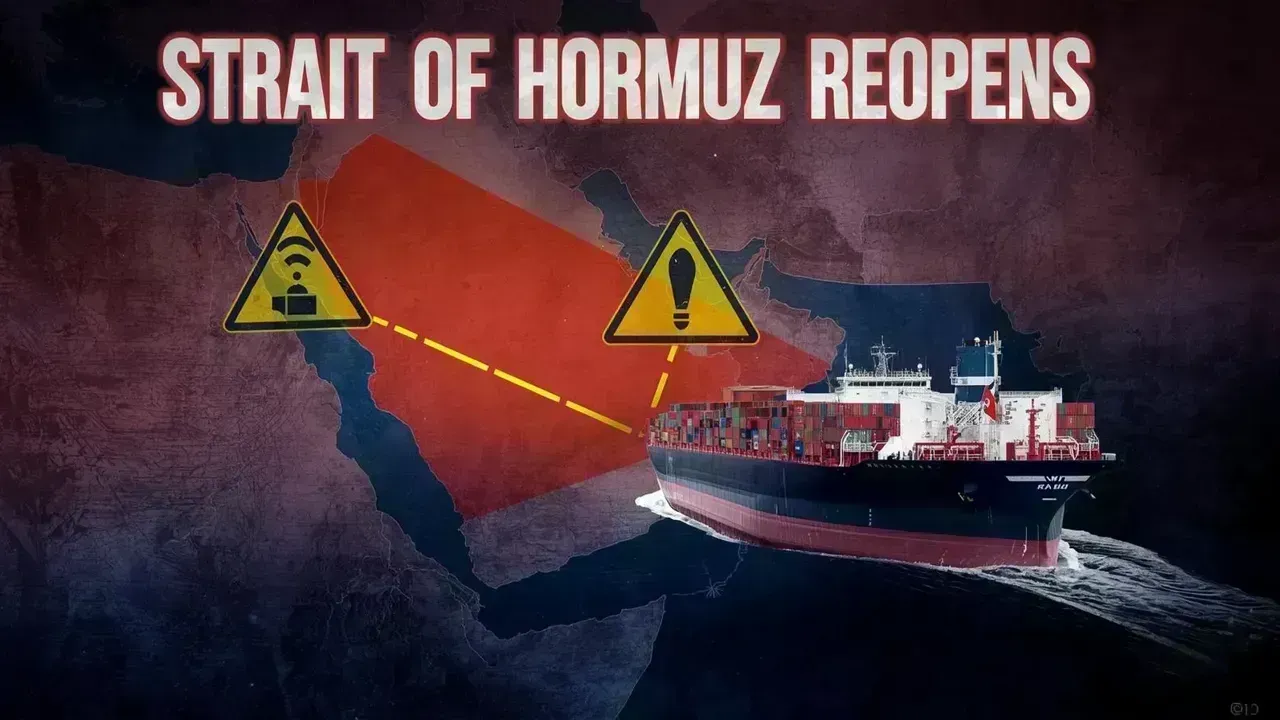
Post by : Samjeet Ariff
A Complex Reopening with New Regulations
The recent announcement regarding Iran's reopening of the Strait of Hormuz has instantly garnered global attention. While this might seem like a positive development for international trade and energy markets, it is essential to note that this reopening comes with stringent new regulations that change the operational dynamics of this vital route.
Countries that depend on oil imports, such as India, find that any alterations in this area have immediate economic consequences. The Strait of Hormuz isn’t just any shipping lane; it’s a crucial chokepoint in the global energy supply chain, with nearly 20% of the world's oil traversing this waterway that links major oil-producing countries in the Persian Gulf to the global market.
Thus, while the strait may technically be “open,” the introduction of these new regulations complicates the situation considerably.
To grasp the importance of this recent shift, it’s necessary to highlight why the Strait of Hormuz is pivotal on a global scale.
This narrow chokepoint connects the Persian Gulf with the Gulf of Oman and eventually to international waters. Nations like Saudi Arabia, the UAE, Kuwait, and Iraq rely on it for oil exports. Disruptions in this area have ripple effects on global supply chains, fuel prices, and economic stability.
Even minor constraints could lead to:
The stability of this route is vital for both major economies and emerging markets.
In the past few weeks, increasing tensions have raised alarms regarding the safety of shipping routes, with reports of disruptions and a heavier military presence creating uncertainty for global shipping firms.
Iran’s choice to reopen the strait appears part of a wider strategy to reduce tensions and allow commercial operations to restart. However, this decision reflects a controlled approach, with Iran maintaining significant oversight over maritime movements.
A key change dictates that ships can no longer navigate freely through the strait. Instead, they must secure prior consent from Iranian authorities before their passage.
This approval process is managed by forces associated with the Islamic Revolutionary Guard Corps, who play an essential role in regional oversight.
This regulation effectively hands control of the strait to Iran, meaning access is now contingent rather than automatic, causing potential delays in scheduling.
Another critical stipulation is that ships are mandated to follow designated routes sanctioned by Iranian authorities, which limits their navigation options.
Rather than pursuing the most efficient course, vessels must:
This shift enhances monitoring and control. Reports indicate that some shipping lines are exercising caution, leading certain ships to hesitate or alter their planned courses.
According to the new guidelines, vessels must maintain constant contact with Iranian maritime entities throughout their journey.
This entails:
While this might enhance oversight, it reduces the autonomy of international shipping operations. Companies will need to adjust to new protocols that could affect their efficiency and costs.
The reopening mainly pertains to commercial vessels, but these are still subject to scrutiny. Military vessels and some flagged ships may encounter stricter limitations or restricted access.
Iran has hinted that the situation could evolve based on geopolitical changes, suggesting that the strait may face renewed limitations if tensions escalate.
This ambiguity further complicates the landscape for global traders and energy markets.
The response to these new conditions has been more cautious than celebratory.
While some vessels are beginning to navigate again, overall traffic is not back to standard levels. Shipping companies are assessing risks meticulously prior to engaging routes through the strait.
Oil markets exhibit a sharp response to this situation. Even the thought of disruption can sway prices, as traders weigh potential supply hurdles.
This spells continued volatility for oil-importing nations, necessitating strategic planning.
Countries like India, which significantly rely on oil imports, closely track developments in the Strait of Hormuz.
Any disruption could:
Similar issues may arise for other energy-import-dependent economies. Changes in this region can trigger worldwide repercussions.
This is the pressing question on many experts’ minds.
Although Iran has proclaimed the strait is open, the conditions imposed suggest the opposite. Rather than functioning as an unregulated international waterway, it now resembles a closely managed corridor.
Shipping is permitted, but solely within the framework of specific regulations and oversight.
This distinction is crucial as it influences responses from businesses, governments, and markets alike.
The fate of the Strait of Hormuz is largely contingent on geopolitical conditions.
If tensions diminish, restrictions may gradually lessen, paving the way for more normalized operations. Conversely, escalating conflicts could rapidly alter the course of events.
Monitoring this uncertainty will remain critical for global markets.
Iran’s decision to reopen the Strait of Hormuz is a significant move, but it is accompanied by notable limitations.
The establishment of new regulations illustrates that while access is restored, oversight remains stringent. This situation lends a sense of stability but not complete security for global trade and energy markets.
Recognizing these changes is vital for anyone observing international dynamics, as the implications from this region extend well beyond its geographical bounds.
This article is intended for informational purposes and derives from recent news sources and available updates. Developments may alter quickly in response to geopolitical shifts.
#Global News #World Breaking News #Strait of Hormuz #Global Economy #Global Trade










PM Modi Pays Tribute to Mahatma Gandhi, Urges People to Support Khadi
PM Modi pays tribute to Mahatma Gandhi on Gandhi Jayanti and urges citizens to support Khadi and the

Amazon Seeks to Offload $8 Billion in Nvidia Chips to Investors
Amazon plans to move $8 billion in Nvidia chips to investors, using a new financing model to strengt

Samsung Raises Galaxy S26 Prices as Memory Chip Costs Rise
Samsung raises Galaxy S26 prices in South Korea as rising memory chip costs put pressure on smartpho

Lewis Hamilton Calls Singapore Grand Prix One of F1's Toughest Races
Lewis Hamilton discusses the demanding Singapore Grand Prix and brings Plus44 and Almave to Singapor

Denmark's Pandora Opens World's Largest Jewellery Factory in Vietnam
Pandora opens its largest jewellery factory in Vietnam, expanding global production, strengthening s

Gautam Gambhir Questions Batting-Friendly Pitches After India's Record ODI Chase
Gautam Gambhir questions batting-friendly ODI pitches after India’s record chase, calling for a bett

