
You have not yet added any article to your bookmarks!
Join 10k+ people to get notified about new posts, news and tips.
Do not worry we don't spam!
Post by : Meena Ariff
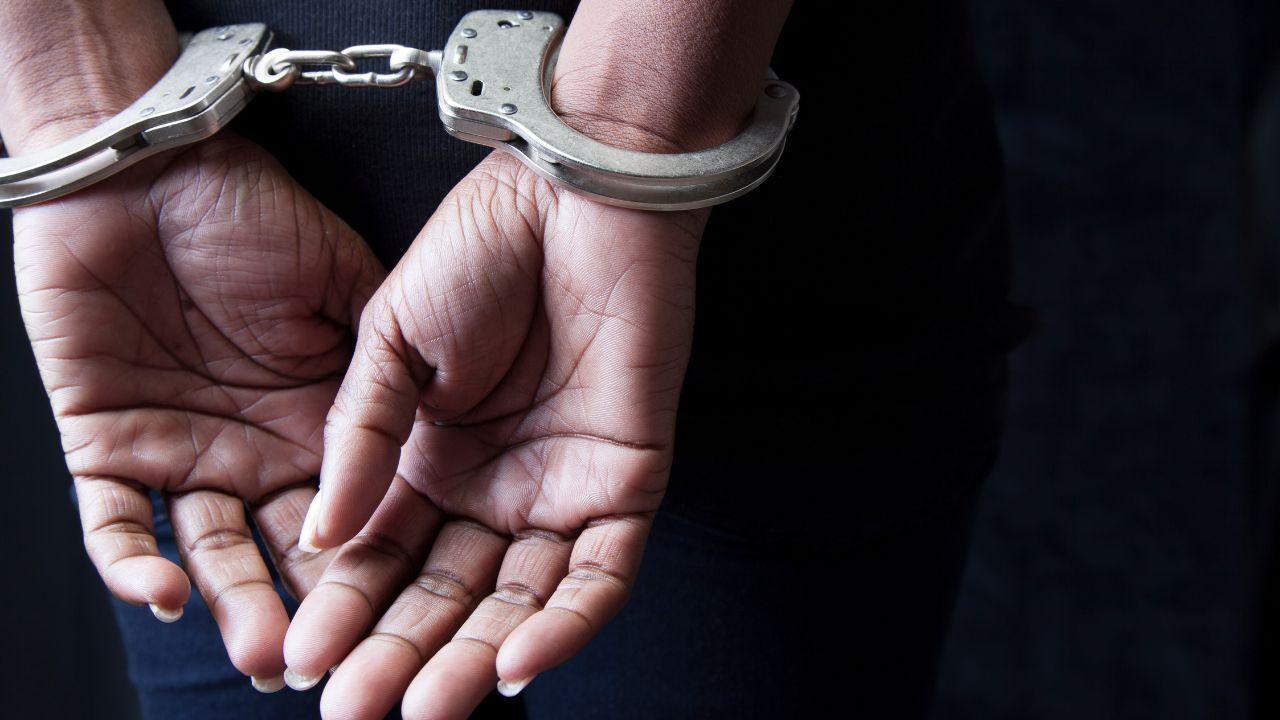
Federal agents in Washington, D.C., arrested a 50-year-old woman from Indiana over the weekend after she allegedly issued a series of violent threats against former U.S. President Donald Trump. The woman, identified as Nathalie Rose Jones of Lafayette, Indiana, is accused of posting threatening messages online that called for Trump’s removal from office and went so far as to suggest killing him.
Authorities confirmed that Jones’s social media activity escalated from harsh political criticism to explicit threats of violence, forcing federal agencies to act swiftly.
From Criticism to Threats on Social Media
According to investigators, Jones used her Instagram and Facebook accounts to express her anger toward Trump and his administration. She repeatedly called Trump a “terrorist” and described his government as a “dictatorship.” Her posts also focused on her anger about the handling of the COVID-19 pandemic, which she blamed on Trump and his policies.
While many Americans have criticized political leaders online, officials say Jones’s comments crossed the line. What started as critical language developed into detailed threats of kidnapping and murder.
In one Facebook post dated August 6, Jones allegedly wrote a graphic message in which she threatened to disembowel Trump and kill him. The post, according to investigators, was even directed at the FBI. In another post, addressed to the U.S. Secretary of Defence, she again called Trump a terrorist and demanded his removal from power.
The First Interview With Secret Service
On August 15, Jones agreed to sit for a voluntary interview with the U.S. Secret Service, the agency responsible for protecting presidents, former presidents, and other top officials. During the conversation, she did not back away from her views.
She referred to Trump as both a “Nazi” and a “terrorist.” Even more troubling, she admitted to being willing to kill him, claiming that she possessed a “bladed object” which she would use to “carry out her mission.” According to federal documents, she told the agents that her motive was to “avenge all lives lost during the COVID-19 pandemic.”
Despite these alarming admissions, she was not arrested at that moment. Jones informed agents that she planned to travel to Atlanta the following day. Authorities continued to monitor her closely.
Protest Near the White House
The very next day, Jones appeared at a protest near the White House in Washington, D.C. Her presence in such proximity to the seat of government raised further concern. After the demonstration ended, she was again approached by federal agents for questioning.
This second interview revealed even more confirmation. Jones admitted that the threatening Facebook and Instagram accounts were hers. She acknowledged writing the posts herself but attempted to soften her responsibility, saying she did not truly plan to carry out the threats.
By that time, officials had gathered enough evidence and decided that her actions posed a serious risk. Jones was placed under arrest shortly after the second interview concluded.
Federal Officials Respond Strongly
The U.S. Secret Service made it clear that they treat every single threat against a president or former president with the utmost seriousness.
Matt McCool, the Special Agent in Charge of the Secret Service’s Washington Field Office, emphasized:
“Protecting the President of the United States is our highest priority, and every potential threat is addressed with the utmost seriousness.”
U.S. Attorney Jeanine Pirro also condemned the threats in a strong statement released online:
“Threatening the life of the President is one of the most serious crimes and one that will be met with swift and unwavering prosecution. Make no mistake — justice will be served.”
The Charges Filed Against Nathalie Rose Jones
Court records show that Jones is now facing two serious federal charges:
Threatening to take the life of, kidnap, or inflict bodily harm upon the President of the United States
Transmitting threats across state lines
These charges carry heavy potential penalties, including years in federal prison. At the time of filing, court documents did not list a defense lawyer representing Jones.
The case is being actively investigated by the U.S. Secret Service, and additional federal agencies may be assisting.
Past Cases of Threats Against Trump
This is not the first time someone has been prosecuted for making threats against Donald Trump. In September 2020, at the height of his re-election campaign, Canadian woman Pascale Ferrier, 56, was arrested after sending a letter laced with homemade ricin poison to Trump.
Ferrier, who described herself as an activist, wrote in the letter that Trump was an “ugly tyrant clown” and demanded that he abandon his campaign for another term. She was caught at the Canada-U.S. border and later pleaded guilty to biological weapons charges. She received a prison sentence for the crime.
Cases like Ferrier’s and now Jones’s highlight how threats against U.S. leaders are not rare and how seriously the law enforcement system treats them.
Why Threats Against Presidents Are So Serious
Threats directed toward the President of the United States are considered among the most severe crimes under federal law. The U.S. Code, Title 18, Section 871 makes it illegal to threaten the President, former Presidents, or those next in the line of succession.
Even if a person later claims they did not truly intend to act, the threat itself is treated as a crime because it creates risk, fear, and the possibility of inspiring others to commit violence. The Secret Service is trained to investigate each case fully, and arrests are often made quickly once credible evidence is found.
Officials stress that in today’s world of social media, threats posted online are taken just as seriously as those spoken in person or written in letters.
The Road Ahead for Jones
For Nathalie Rose Jones, her future now lies in the hands of the court system. Prosecutors will present the evidence of her social media posts, her admissions during the interviews, and her actions in Washington. If convicted, she could face a lengthy prison sentence.
While she told agents that she did not truly intend to harm Trump, the fact that she repeatedly voiced threats and even claimed to have a weapon makes her case particularly troubling for investigators.
The coming weeks will determine whether Jones will remain in custody or be released while awaiting trial. The severity of the charges suggests that prosecutors will push for strict penalties.
The arrest of Nathalie Rose Jones serves as another reminder of the heavy responsibility carried by federal agencies to protect the nation’s leaders. What might seem to some like “just words” on social media can quickly become a matter of national security when they involve direct threats against a president.







Josh Kerr and Jakob Ingebrigtsen Set for 1,500m Rivalry Rematch
Josh Kerr and Jakob Ingebrigtsen will renew their 1,500m rivalry at the Ultimate Championship in Bud

PSG Coach Luis Enrique Urges Players to Step Outside Comfort Zone
PSG coach Luis Enrique says players must leave their comfort zone and keep improving as the club tar

China’s Tiangong Sets New 400m Record at Robot Olympics
China’s Tiangong robot sets a new 400m record at the Robot Olympics, beating a South African robot i

George Russell Wins Dutch GP Sprint, Boosts Mercedes Morale
George Russell wins the Dutch GP Sprint from pole as Mercedes teammate Kimi Antonelli extends his F1

Australia 50/3 After Bangladesh Bowled Out for 64 in Second Test
Australia reached 50/3 after Bangladesh were bowled out for 64 in the second Test, with Mitchell Sta

Jordan Burroughs Returns to Wrestling with 2028 Olympic Dream
Jordan Burroughs returns to wrestling with Real American Freestyle as the Olympic champion eyes a po

