
You have not yet added any article to your bookmarks!
Join 10k+ people to get notified about new posts, news and tips.
Do not worry we don't spam!
Post by : Rameen Ariff
India is stepping into the global Small Modular Reactor (SMR) race as the country works to boost its nuclear energy capacity, with Russia already advancing its own projects. In an exclusive conversation with Newsible Asia, Dr Alexander Volgin, Director of Projects (South Asia) at Russia's state nuclear corporation Rosatom, highlighted the promise of SMRs and the potential for collaboration with India.
Compact, Modular, and Efficient
SMRs are compact, factory-built nuclear reactors that typically generate less than 300 megawatts of electricity. Unlike conventional nuclear plants, which require sprawling sites, Russian SMRs can fit within 15-17 hectares and integrate all essential components, including pumps, steam generators, and nuclear fuel, into a single unit. Each SMR can produce 55 MW of electricity and up to 200 MW of thermal energy. The fuel is enriched up to 20%—higher than traditional reactors but within safe limits.
“These reactors are small, modular, and transportable by train. They are ideal for remote areas, islands, or locations currently relying on diesel power,” Dr Volgin explained.
Global SMR Race: China, Russia, and India
Russia has already started constructing a land-based SMR in Yakutia and plans to supply six units to Uzbekistan. China has commissioned a 100 MW land-based SMR as a test unit. Other countries, including France and the United States, are developing their own SMRs.
India is also advancing rapidly. Prime Minister Narendra Modi has set a target of 100 gigawatts of nuclear energy by 2070 as part of the nation’s net-zero goal. The Bharat Small Modular Reactor, developed by the Bhabha Atomic Research Centre (BARC), Mumbai, is India’s step into compact, flexible, and sustainable nuclear energy.
India-Russia Cooperation
Rosatom has expressed willingness to collaborate with India on SMRs. “If the Department of Atomic Energy and BARC invite us, we will be pleased to cooperate,” said Dr Volgin. Rosatom is also exploring localisation of supply chains in India to support domestic development. With India opening its nuclear sector to private players, such as the recent NPCIL-NTPC joint venture, opportunities for partnerships in SMR technology are growing.
Safety and Sustainability
Safety remains a priority. With over 400 reactor-years of experience on Russian icebreakers and no accidents reported, Rosatom ensures SMRs are safe by design, combining passive and active safety systems. These reactors are also environmentally sustainable, capable of providing energy for five to six years without refuelling.
A Modular Future for India
While SMRs may have a higher per-unit electricity cost than large-scale nuclear plants, their lower capital cost, fast deployment, and flexibility make them ideal for powering AI-driven data centres, industrial zones, and remote islands.
“India is huge, and industries need green energy. There is room for Bharat SMRs, large-scale nuclear units, and floating reactors,” Dr Volgin added. Small reactors from India’s private sector could play a critical role in achieving the 100 GW nuclear energy target and supporting the country’s sustainable growth.
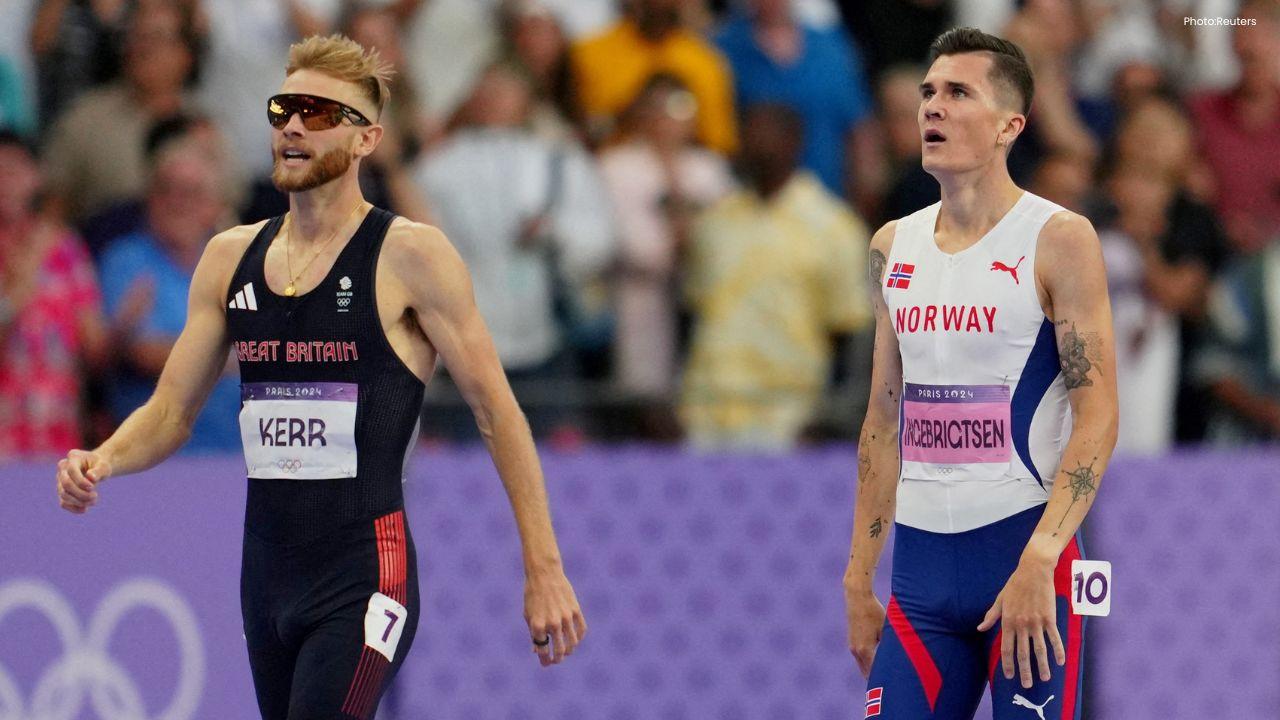




Josh Kerr and Jakob Ingebrigtsen Set for 1,500m Rivalry Rematch
Josh Kerr and Jakob Ingebrigtsen will renew their 1,500m rivalry at the Ultimate Championship in Bud

PSG Coach Luis Enrique Urges Players to Step Outside Comfort Zone
PSG coach Luis Enrique says players must leave their comfort zone and keep improving as the club tar

China’s Tiangong Sets New 400m Record at Robot Olympics
China’s Tiangong robot sets a new 400m record at the Robot Olympics, beating a South African robot i

George Russell Wins Dutch GP Sprint, Boosts Mercedes Morale
George Russell wins the Dutch GP Sprint from pole as Mercedes teammate Kimi Antonelli extends his F1

Australia 50/3 After Bangladesh Bowled Out for 64 in Second Test
Australia reached 50/3 after Bangladesh were bowled out for 64 in the second Test, with Mitchell Sta

Jordan Burroughs Returns to Wrestling with 2028 Olympic Dream
Jordan Burroughs returns to wrestling with Real American Freestyle as the Olympic champion eyes a po

