You have not yet added any article to your bookmarks!
Join 10k+ people to get notified about new posts, news and tips.
Do not worry we don't spam!
Post by : Anis Farhan
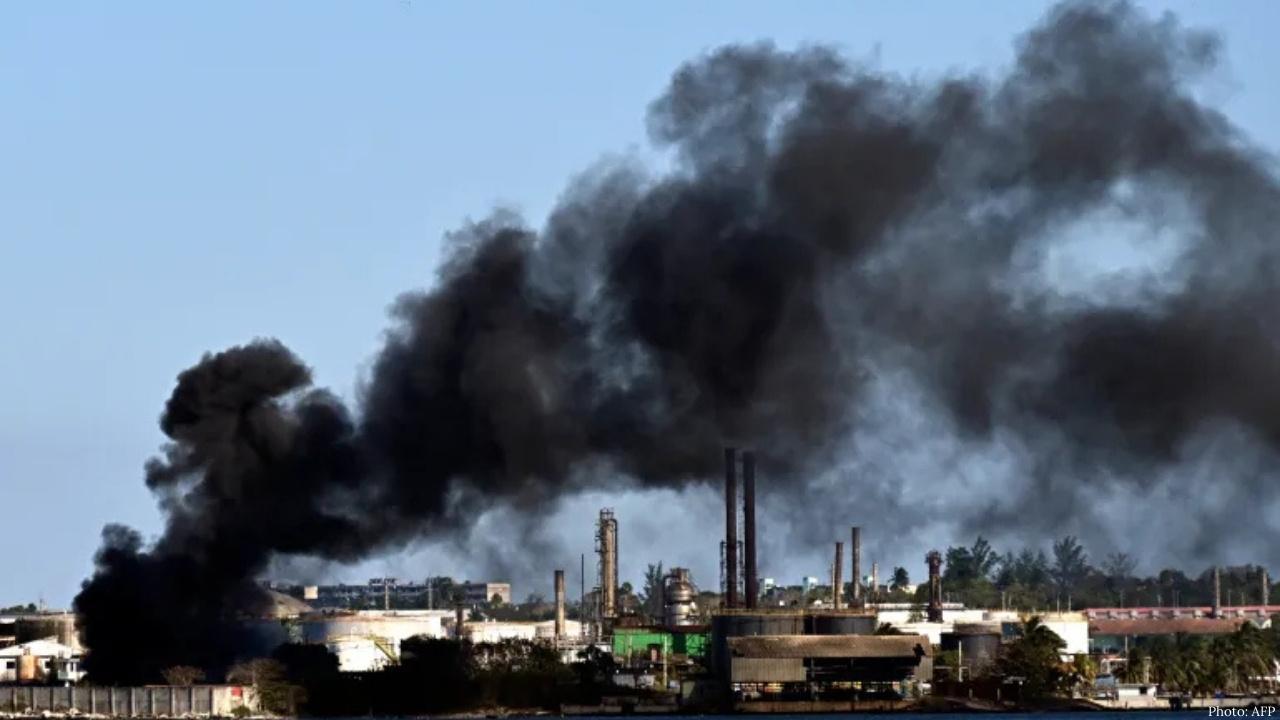
A fire broke out at the Ñico López oil refinery in Havana, Cuba’s capital, on the afternoon of February 13, 2026, at a time when the island nation is struggling under a deep and rapidly intensifying fuel crisis. Flames and thick black smoke were seen rising above the refinery, adding a dramatic note to an already turbulent situation marked by fuel shortages, rationing, and disruptions to essential public services.
The blaze — which local authorities said was brought under control relatively quickly — highlights how fragile Cuba’s energy infrastructure has become amid ongoing geopolitical pressure, disruptions in crude oil imports and mounting economic strain. It underscored the vulnerabilities of a system heavily reliant on a limited number of oil supply sources in a time of regional tension.
On the afternoon of February 13, rapid response teams were mobilised after a fire broke out in a section of the Ñico López oil refinery located in Havana Bay, one of the island’s primary facilities for processing fuel. Thick plumes of dark smoke were reported over the capital city, visible from several parts of Havana.
Firefighters and refinery personnel succeeded in containing the blaze before it spread further or affected large fuel storage tanks, officials said. Emergency crews worked to ensure that the fire did not escalate, and there were no immediate reports of injuries from the incident. The exact cause of the fire remained under investigation at the time of reporting.
Cuba’s Energy Ministry confirmed that operations at the facility would continue normally after the fire was brought under control, noting that the conflagration was confined to a specific warehouse area where obsolete products were stored. Authorities emphasised that essential refinery functions were not halted due to the incident.
The swift containment mitigated what could have been a significantly more damaging outcome in the midst of severe fuel scarcity — but the fire still amplified concerns over the stability of Cuba’s energy supply chain.
Cuba has been embroiled in a fuel crisis driven largely by reductions in external oil supplies — especially from Venezuela, its longtime source of discounted crude. The disruption stemmed from broader geopolitical tensions, including U.S. pressure on Venezuelan exports and sanctions affecting countries that supply oil to Cuba, which have combined to severely restrict access to fuel, electricity and essential services.
Fuel rationing is now widespread, and energy shortages have affected multiple sectors, including transportation, aviation and healthcare. International airlines have had to adapt flight operations, while domestic fuel cuts have led to the shortening of workweeks, suspended classes, and rationed electricity in an effort to manage dwindling stocks.
This current energy squeeze builds on ongoing challenges, such as a series of large-scale electricity blackouts that began years earlier, driven by a combination of fuel constraints, ageing infrastructure, and the broader economic context facing Cuba. These outages have triggered periodic protests and public dissatisfaction over power and services throughout 2024 and 2025.
Cuba’s fuel deficits have directly affected the transport sector. Jet fuel shortages have forced airlines to cancel flights and reroute planes to nearby countries for refuelling. Some carriers have suspended operations into Cuban airports entirely because of the lack of fuel.
At the same time, domestic mobility has suffered. As fuel becomes more scarce, many residents are relying increasingly on electric vehicles and electric trike-style transport, particularly in urban centres like Havana, as traditional petrol supplies dry up.
Critical services such as healthcare, water supply and public transport have felt acute pressure. Clinics and hospitals are operating with limited energy reserves for equipment and power, while rationing has disrupted utility services, contributing to a broader humanitarian strain. United Nations officials and humanitarian analysts have warned that prolonged fuel scarcity could deepen difficulties related to food distribution and essential service provision.
Cuba’s deteriorating energy situation has drawn international attention, especially from neighbouring and allied countries. Mexico recently dispatched humanitarian cargo to the island to aid amid the broader crisis, a gesture pointing to growing regional concern over Cuba’s situation.
Authorities in Cuba have criticised external pressures — particularly from the United States — as part of what they describe as an attempt to destabilise the Cuban economy. Government officials in Havana have decried sanctions and restricted oil imports as disproportionate and harmful to civilian life and essential services.
As oil sources have dwindled, broader geopolitical tensions have shaped the crisis. The U.S. campaign to limit oil supplies to Cuba coincides with political maneuvering involving Venezuela’s oil industry and heightened sanctions affecting countries that might supply Cuba — further tightening the energy tap for the island nation.
Meanwhile, some external actors have signalled intentions to provide assistance — including moves by Russia to ship oil to Cuba labeled as humanitarian aid, though these efforts carry complex implications due to potential external reaction and geopolitical backlash.
With domestic refining capacity already stretched and external supplies limited, Cuba faces continued uncertainty over fuel availability. Experts warn that persistent shortages could heighten economic strain, impact food distribution, and extend travel disruptions.
As government authorities balance rationing measures with emergency imports and temporary fixes, the ability to stabilise energy infrastructure like the Ñico López refinery remains critical. The recent fire underlines how fragile the situation has become for Cuba’s energy sector.
The broader implications for Cuba’s citizens include risks to livelihoods, critical public services and overall economic stability. Prolonged fuel shortages and constrained mobility could accelerate public dissatisfaction and inhibit operations in sectors reliant on reliable energy access.
International agencies and aid organisations continue to assess the unfolding crisis, warning that without substantial internal reform or significant replenishment of fuel supplies, Cuba’s social and economic stresses may intensify.
The February 13 fire at the Ñico López refinery — though contained — has arrived at a particularly vulnerable moment for Cuba. Overlapping economic pressures, reduced fuel imports, infrastructure fragility and external geopolitical tensions have compounded the island’s energy crisis. The refinery blaze reinforced how essential robust energy infrastructure is to Cuba’s social and economic functions.
As the government attempts to manage rationing, prevent service collapses and secure alternative supplies, Cuban citizens face a challenging period ahead. The combined impacts of fuel scarcity and infrastructure setbacks make the path to stability uncertain, underscoring the deep interconnectedness of energy, economy and daily life in the country.
This article is based on verified news reports and official statements regarding the fire at the Ñico López oil refinery and the broader fuel crisis in Cuba. Content has been independently written and does not reproduce copyrighted material from the original source articles.








George Russell Wins Dutch GP Sprint, Boosts Mercedes Morale
George Russell wins the Dutch GP Sprint from pole as Mercedes teammate Kimi Antonelli extends his F1

Australia 50/3 After Bangladesh Bowled Out for 64 in Second Test
Australia reached 50/3 after Bangladesh were bowled out for 64 in the second Test, with Mitchell Sta

Jordan Burroughs Returns to Wrestling with 2028 Olympic Dream
Jordan Burroughs returns to wrestling with Real American Freestyle as the Olympic champion eyes a po

Lamborghini Catches Fire on Singapore's ECP, Causing Heavy Traffic
A Lamborghini caught fire on Singapore's ECP, causing heavy traffic and bus delays. No injuries were

Bangkok Airport Duty-Free Area Flooded by Pipe Burst
A burst water pipe flooded the duty-free shopping area at Bangkok's Suvarnabhumi Airport on July 16,

Nine Monks Killed in Thailand Pickup Truck Tragedy
An 11-year-old boy driving a pickup truck crashed into monks during a pilgrimage in northeastern Tha