
You have not yet added any article to your bookmarks!
Join 10k+ people to get notified about new posts, news and tips.
Do not worry we don't spam!
Post by : Badri Ariffin
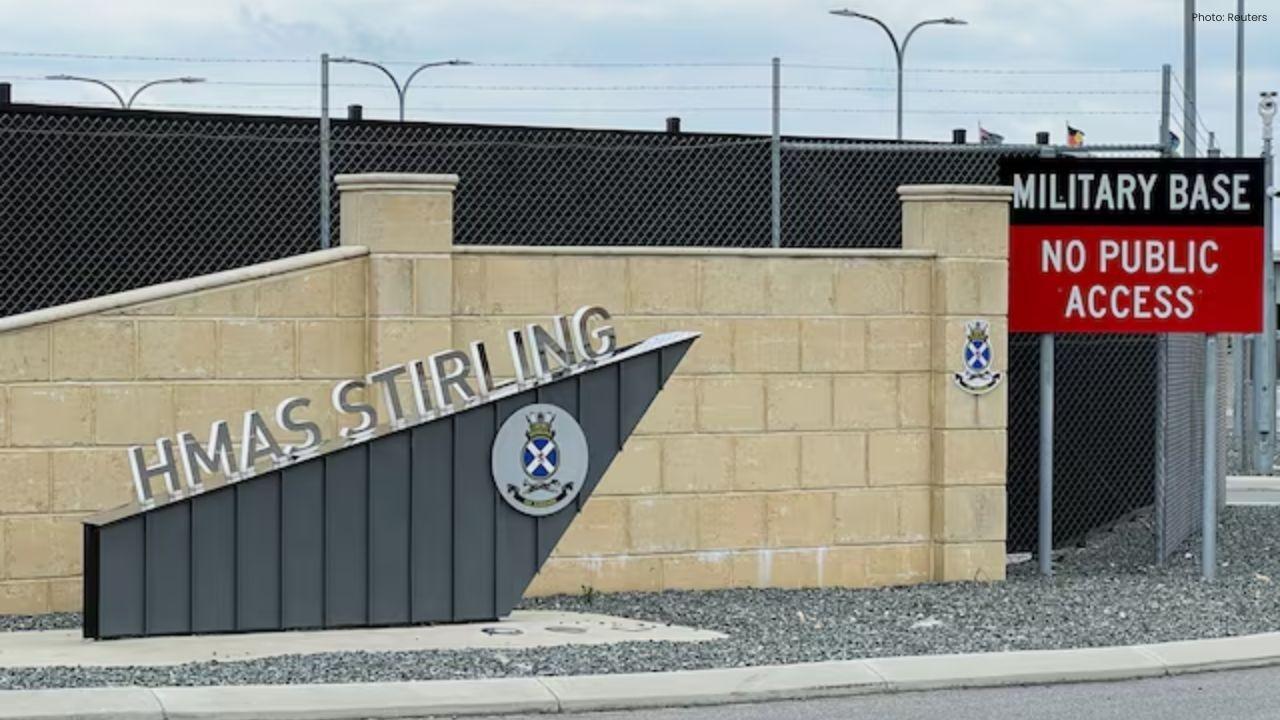
Located on Australia's west coast, the AUKUS submarine base is poised to become a pivotal digital hub. Recent undersea internet cables from Google and local operator SUBCO are quietly linking to HMAS Stirling — the future station of U.S. nuclear-powered submarines.
Documents accessed by Reuters indicate that three powerful cables will connect Australia to Africa and Asia, landing close to the naval base in Rockingham, south of Perth. This development reflects Canberra and Washington’s tightening collaboration under the AUKUS pact, reinforcing their digital and military capabilities amidst escalating tensions with China.
SUBCO has confirmed a high-capacity cable designed to connect Australia’s coasts will include a discreet link to HMAS Stirling, although filings only indicate a landing point in Perth, around 60 kilometers north of the base. Bevan Slattery, the firm’s founder, emphasized the importance of this network for regional security and Australia's growing AI infrastructure.
Google's ambitions extend further, as the tech giant plans two critical routes out of Western Australia — one directed towards Christmas Island and another across the Indian Ocean to Africa, both landing at Madora Bay, in proximity to the AUKUS base. This positions the base at a vital junction for global data exchange.
The improved connectivity is expected to boost secure communications among Australia, the U.S., and allied nations. Approximately 1,000 U.S. Navy personnel will begin relocating to Rockingham and nearby Mandurah next year in preparation for the arrival of four Virginia-class submarines starting in 2027.
Experts highlight a dual benefit from the expansion of subsea networks — they enable quicker and more reliable data for military and commercial use but also raise the risk of potential sabotage. Australia’s navy has warned that while these cables serve as the country's digital backbone, they also present significant vulnerabilities.
Despite progress, Australia's environmental regulator has paused the assessment of Google’s Western Australian cable projects to review potential impacts on marine ecosystems. Google asserts its commitment to adhering to all environmental and security standards.
The subtle installation of these cables signifies more than just a technological advancement — it illustrates Australia’s ascending role within a new digital and defense landscape in the Indo-Pacific.







Hyundai raises profit target, expands hybrid lineup in the US
Hyundai hybrid cars get a major boost as the automaker raises its profit margin target and plans new

Josh Kerr and Jakob Ingebrigtsen Set for 1,500m Rivalry Rematch
Josh Kerr and Jakob Ingebrigtsen will renew their 1,500m rivalry at the Ultimate Championship in Bud

PSG Coach Luis Enrique Urges Players to Step Outside Comfort Zone
PSG coach Luis Enrique says players must leave their comfort zone and keep improving as the club tar

China’s Tiangong Sets New 400m Record at Robot Olympics
China’s Tiangong robot sets a new 400m record at the Robot Olympics, beating a South African robot i

George Russell Wins Dutch GP Sprint, Boosts Mercedes Morale
George Russell wins the Dutch GP Sprint from pole as Mercedes teammate Kimi Antonelli extends his F1

Australia 50/3 After Bangladesh Bowled Out for 64 in Second Test
Australia reached 50/3 after Bangladesh were bowled out for 64 in the second Test, with Mitchell Sta

