
You have not yet added any article to your bookmarks!
Join 10k+ people to get notified about new posts, news and tips.
Do not worry we don't spam!
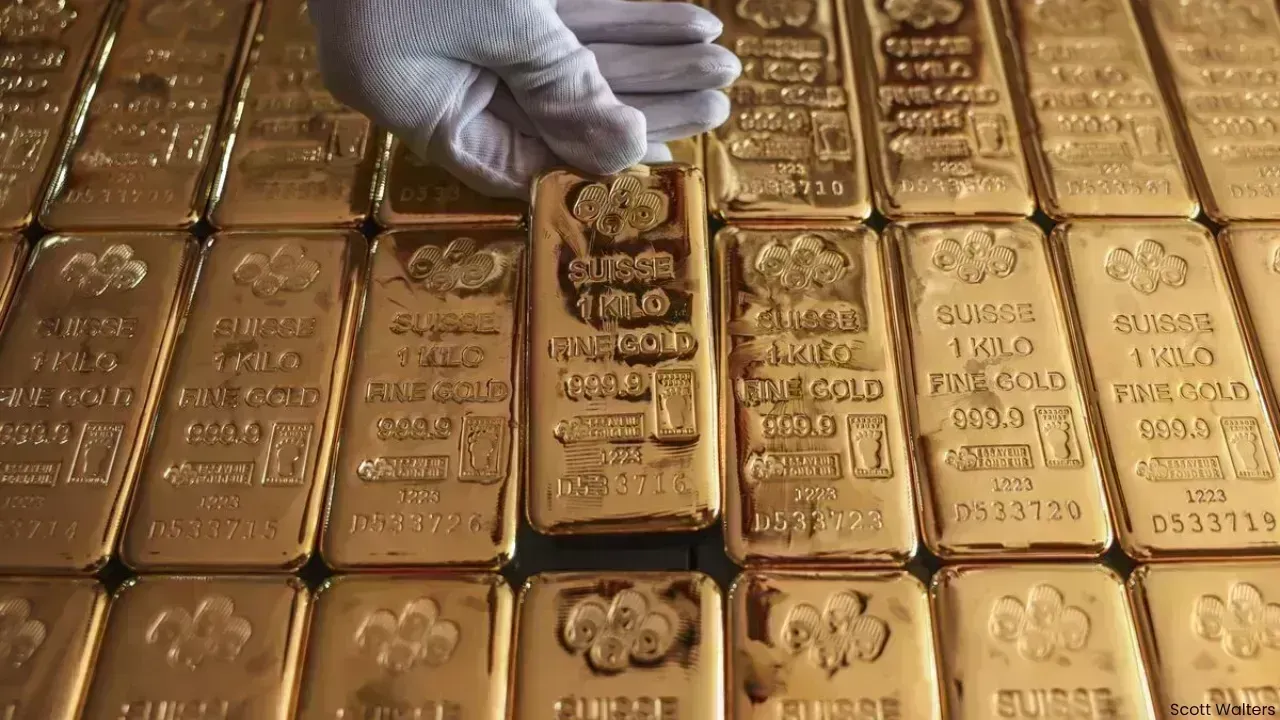
Post by : Abhinav Rana
Photo : X / Scott Walters
After two days of decline, Dubai’s gold market has rebounded significantly, reflecting a resurgence in investor confidence as geopolitical anxieties in the Middle East wane. In a region where gold influences both culture and economics, even minor price fluctuations can have substantial implications. This recent rise showcases a delicate interplay between cautious optimism and risk perception as global markets react to changing dynamics surrounding the Iranian situation and potential diplomatic progress.
The increase in gold prices arrives at a moment when broader financial indicators suggest diminishing immediate risks. Softening oil prices amid optimistic expectations for dialogue between the U.S. and Iran have alleviated inflation concerns and reestablished investor sentiment. As a classic safe-haven asset, gold tends to excel during uncertain times, yet it is also highly responsive to macroeconomic shifts, including currency fluctuations and energy costs.
Moreover, the weaker U.S. dollar has bolstered gold's upward trajectory, making it more appealing to international investors. A combination of declining oil prices, gentle currency dynamics, and persistent geopolitical uncertainty has forged a favorable climate for gold's recovery, especially in vital trading hubs like Dubai.
Dubai stands as a pivotal gold trading hub, linking markets across Asia, Europe, and Africa. Nonetheless, recent geopolitical challenges have disrupted customary trading patterns, with air travel restrictions and logistical issues affecting bullion transportation between regions.
Despite these challenges, the resilience of Dubai’s gold market has been noteworthy. The price uptick highlights just how swiftly market sentiment can transform in such a fluid setting, particularly when international investors adjust their expectations in light of changing geopolitical landscapes. Dubai’s ability to sustain liquidity and trading activity under pressure affirm its importance in the global commodities ecosystem.
The dynamics of gold are intertwined with global transport infrastructures, especially air cargo networks vital for high-value commodities. Ongoing tensions in the Middle East have already resulted in flight disruptions and increased insurance rates, impacting gold shipments as well as the broader logistics realm.
For the transport and supply chain sectors, this scenario highlights the vulnerability of global trade routes under geopolitical strain. With tensions easing, the gradual restoration of transportation operations could further uplift gold markets by improving supply chain efficiency. Conversely, any resurgence in conflict could reintroduce volatility into the logistics sectors, causing price fluctuations.
This interrelatedness between commodities and transport systems points to a significant trend: geopolitical developments increasingly affect global mobility frameworks, making adaptability essential for industry participants.
Gold’s recent upswing also mirrors a broader transition in investor attitudes. While decreased tensions provide some relief, uncertainty continues to characterize the current market environment. Investors find themselves navigating a complex landscape where immediate optimism is tempered by long-term caution.
Central banks and institutional investors persist in viewing gold as a safeguard against geopolitical turbulence, a trend that has intensified amidst growing global uncertainties. This sustained demand forms a robust foundation for gold prices, despite transient fluctuations arising from news and economic indicators.
As developments in the Middle East unfold, Dubai’s gold market is likely to remain highly responsive to economic and geopolitical changes. The recent price rise may be indicative of a more stable period ahead, although volatility will likely endure as markets adjust to new regional developments.
For sectors tied to transportation, logistics, and international trade, the message is clear: resilience and adaptability will be crucial in navigating this unpredictable landscape. The dynamic interplay between geopolitical events, commodity markets, and transport systems will continue to drive global trade patterns.
In essence, Dubai’s gold revival signifies more than just a price correction; it reflects how rapidly global sentiment can shift and the deeply woven nature of today’s economic systems amid both risks and opportunities.
#Dubai gold rate #Dubai Gold #Gold Prices #Middle East Economy #Commodity Markets #Global Trade










PM Modi Pays Tribute to Mahatma Gandhi, Urges People to Support Khadi
PM Modi pays tribute to Mahatma Gandhi on Gandhi Jayanti and urges citizens to support Khadi and the

Amazon Seeks to Offload $8 Billion in Nvidia Chips to Investors
Amazon plans to move $8 billion in Nvidia chips to investors, using a new financing model to strengt

Samsung Raises Galaxy S26 Prices as Memory Chip Costs Rise
Samsung raises Galaxy S26 prices in South Korea as rising memory chip costs put pressure on smartpho

Lewis Hamilton Calls Singapore Grand Prix One of F1's Toughest Races
Lewis Hamilton discusses the demanding Singapore Grand Prix and brings Plus44 and Almave to Singapor

Denmark's Pandora Opens World's Largest Jewellery Factory in Vietnam
Pandora opens its largest jewellery factory in Vietnam, expanding global production, strengthening s

Gautam Gambhir Questions Batting-Friendly Pitches After India's Record ODI Chase
Gautam Gambhir questions batting-friendly ODI pitches after India’s record chase, calling for a bett

