
You have not yet added any article to your bookmarks!
Join 10k+ people to get notified about new posts, news and tips.
Do not worry we don't spam!
Post by : Shweta
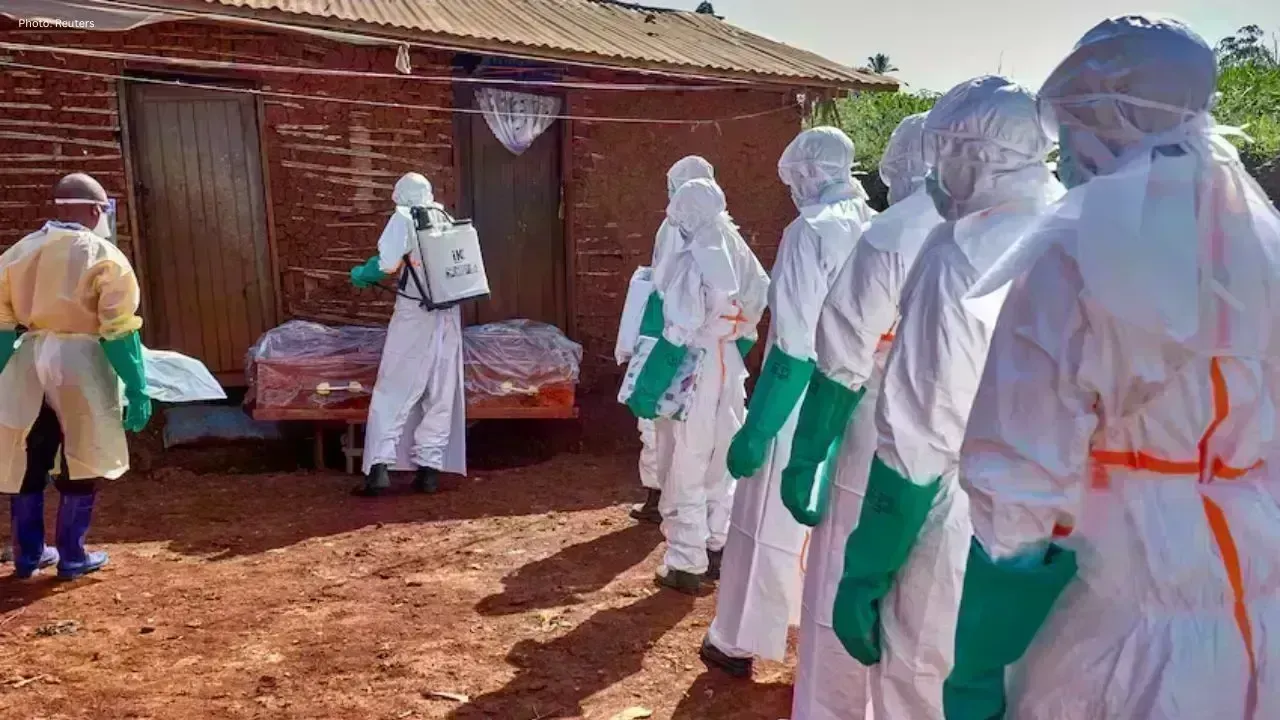
In light of the escalating Ebola virus outbreak in central Africa, Canada has rolled out more stringent travel and immigration protocols to protect public health. The government has taken this preventive measure following alarming updates from the World Health Organization, indicating a rapid spread of the virus in affected regions.
Newly enforced emergency guidelines dictate that travelers arriving from Ebola-impacted nations, such as the Democratic Republic of Congo, Uganda, and South Sudan, must undergo a mandatory 21-day self-isolation. Canadian health authorities report that this quarantine matches the Ebola virus's incubation period, aimed at minimizing transmission risks. Any individual exhibiting symptoms during airport screenings will be swiftly directed for medical evaluation and potential isolation.
The Public Health Agency of Canada stated that these temporary measures will come into effect at the end of May and will remain in place until at least August 29. However, there is a possibility of extension should the international outbreak escalate. Officials confirmed that accommodations will be available for those who lack a safe location to isolate upon arrival in Canada.
Additionally, a number of immigration processes concerning the affected regions have been put on hold. Immigration officials announced a suspension of definitive decisions on applications for temporary visas, work permits, study permits, permanent residency, and electronic travel authorizations for individuals from Congo, Uganda, and South Sudan. They clarified that this is a temporary safety precaution, not a complete ban on immigration.
Health Minister Marjorie Michel emphasized the urgency of these decisions, noting the anticipated rise in international travel during the summertime, particularly with the forthcoming FIFA World Cup events in North America. She cautioned that even a single imported Ebola case could lead to significant public concern and strain on the healthcare system.
The World Health Organization reports that the current outbreak, associated with the Bundibugyo strain, has resulted in numerous infections and over 220 deaths across affected African regions. WHO has heightened the global risk level for the outbreak, suggesting it could persist for several months if more robust containment strategies are not enacted.
Canadian authorities have insisted that there are no confirmed cases of Ebola in Canada or elsewhere in North America at this time. However, the country is enhancing border inspections, closely monitoring international travelers, and collaborating with global health organizations to track the virus's spread. Officials also reminded travelers of their obligation to report any potential exposure to Ebola under Canada’s Quarantine Act.
These latest regulations connect to similar measures adopted by the United States and the Bahamas, reflecting a proactive approach to avoid a recurrence of previous international Ebola crises.










PM Modi Pays Tribute to Mahatma Gandhi, Urges People to Support Khadi
PM Modi pays tribute to Mahatma Gandhi on Gandhi Jayanti and urges citizens to support Khadi and the

Amazon Seeks to Offload $8 Billion in Nvidia Chips to Investors
Amazon plans to move $8 billion in Nvidia chips to investors, using a new financing model to strengt

Samsung Raises Galaxy S26 Prices as Memory Chip Costs Rise
Samsung raises Galaxy S26 prices in South Korea as rising memory chip costs put pressure on smartpho

Lewis Hamilton Calls Singapore Grand Prix One of F1's Toughest Races
Lewis Hamilton discusses the demanding Singapore Grand Prix and brings Plus44 and Almave to Singapor

Denmark's Pandora Opens World's Largest Jewellery Factory in Vietnam
Pandora opens its largest jewellery factory in Vietnam, expanding global production, strengthening s

Gautam Gambhir Questions Batting-Friendly Pitches After India's Record ODI Chase
Gautam Gambhir questions batting-friendly ODI pitches after India’s record chase, calling for a bett

