You have not yet added any article to your bookmarks!
Join 10k+ people to get notified about new posts, news and tips.
Do not worry we don't spam!
Post by : Sameer Farouq
The United Kingdom has returned its first migrant to France under a new border agreement signed earlier this year. The deal, called the “one in, one out” scheme, was agreed in July between British Prime Minister Keir Starmer and French President Emmanuel Macron.
Under this pilot project, migrants who enter Britain illegally in small boats will be sent back to France. In exchange, Britain will accept the same number of asylum seekers who have family ties in the UK and who apply through legal routes.
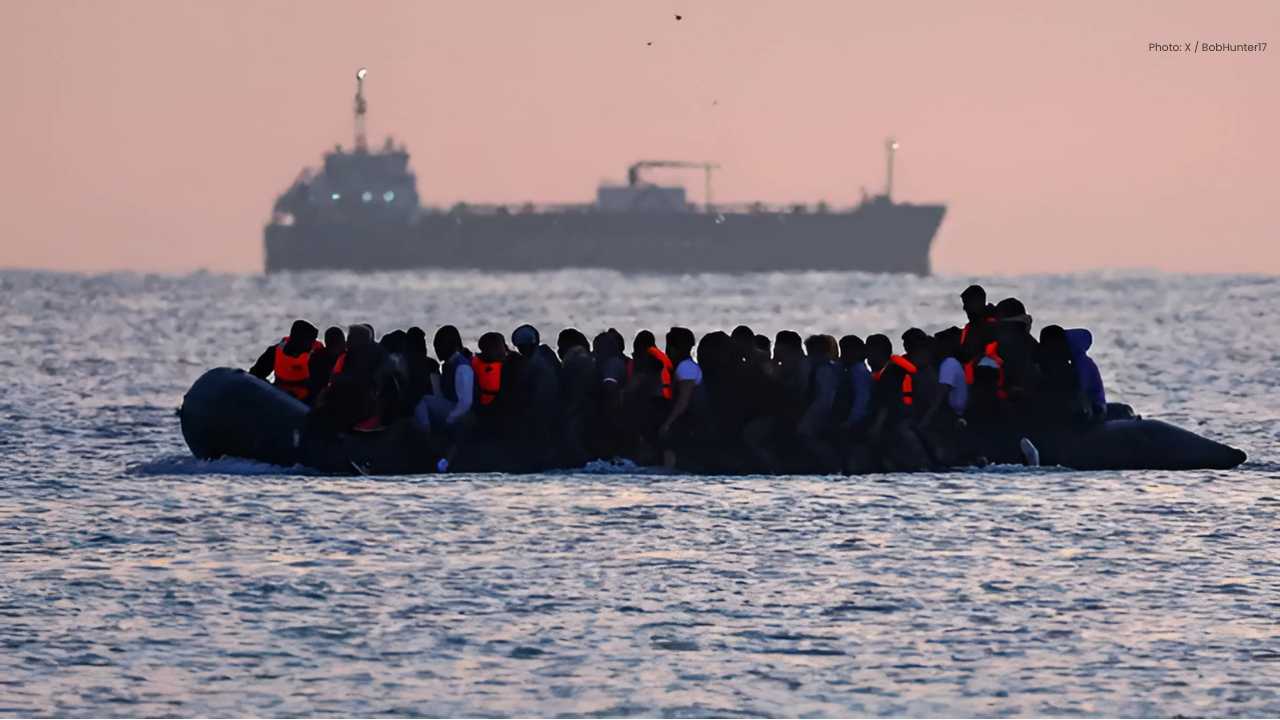
The move comes as the UK government faces increasing political and public pressure to stop the dangerous small boat crossings across the English Channel. So far in 2025, more than 30,000 people have attempted the journey.
Britain’s Home Office confirmed that a man who arrived by small boat in August was the first person returned to France under the deal. He was flown out of the UK on a commercial flight. Officials added that more flights are planned for this week and the next.
Home Secretary Shabana Mahmood welcomed the action, saying: “This is an important first step to securing our borders. It sends a message to people crossing in small boats: if you enter the UK illegally, we will seek to remove you.”
While one migrant has been removed, Britain is also preparing to welcome new arrivals through the legal side of the agreement. According to the government, the first asylum seekers with family links in Britain are expected to arrive from France in the coming days.
Officials say this shows the government’s commitment to creating a “fair but firm” asylum system – closing unsafe routes while keeping safe and legal ones open.
The rollout of the policy has not been smooth. Several asylum seekers and campaign groups have challenged the scheme in court.
On Tuesday, London’s High Court temporarily stopped the removal of one asylum seeker until a full legal hearing can take place. Lawyers argued that sending people back before their cases are properly heard could risk serious harm.
Despite this, Mahmood stressed that she would not allow the system to be blocked by what she called “last-minute, vexatious attempts” to delay deportations. She also said the government is reviewing modern slavery laws to stop them being misused by people hoping to avoid removal.
Human rights and refugee organisations have strongly criticised the new plan. They argue that branding last-minute claims as “vexatious” is unfair because many asylum seekers reveal sensitive details about their cases late in the process, often due to trauma or fear.
Kolbassia Haoussou, from the group Freedom from Torture, said: “If the government cares about justice, it must build an asylum system based on safety, compassion and access to legal support, not suspicion and stigma.”
Campaigners warn that the deal risks treating asylum seekers as numbers rather than people with real stories and urgent needs.
The UK has struggled for years to manage small boat crossings across the Channel. Each year, thousands attempt the dangerous journey, often risking their lives in overcrowded and unsafe dinghies.
The government hopes the “one in, one out” agreement will reduce illegal crossings by showing there is no benefit to entering the UK without permission. At the same time, it provides a legal route for those with genuine family ties, aiming to balance border control with compassion.
The coming weeks will be crucial in testing whether the scheme works. More removals are planned, and the first legal arrivals are due to land in the UK soon. But with legal battles already underway and campaign groups demanding a more humane system, the government faces a tough road ahead.
Prime Minister Starmer has promised to “take back control” of Britain’s borders while respecting international obligations. Whether this new deal with France delivers on both promises remains to be seen.
The return of the first migrant to France marks the official start of Britain’s new border strategy. It is a symbolic moment for the government, showing its determination to crack down on illegal crossings.
But as legal challenges and campaigners push back, the debate over how Britain should treat asylum seekers is far from over. The next few months will show whether the “one in, one out” plan becomes a lasting solution or just another controversial step in the long-running migration crisis.






Australia 50/3 After Bangladesh Bowled Out for 64 in Second Test
Australia reached 50/3 after Bangladesh were bowled out for 64 in the second Test, with Mitchell Sta

Jordan Burroughs Returns to Wrestling with 2028 Olympic Dream
Jordan Burroughs returns to wrestling with Real American Freestyle as the Olympic champion eyes a po

Lamborghini Catches Fire on Singapore's ECP, Causing Heavy Traffic
A Lamborghini caught fire on Singapore's ECP, causing heavy traffic and bus delays. No injuries were

Bangkok Airport Duty-Free Area Flooded by Pipe Burst
A burst water pipe flooded the duty-free shopping area at Bangkok's Suvarnabhumi Airport on July 16,

Nine Monks Killed in Thailand Pickup Truck Tragedy
An 11-year-old boy driving a pickup truck crashed into monks during a pilgrimage in northeastern Tha

Anwar Congratulates Xi on CPC's 105th Anniversary
Malaysia reaffirms strong ties with China as PM Anwar Ibrahim sends a congratulatory letter to Presi