
You have not yet added any article to your bookmarks!
Join 10k+ people to get notified about new posts, news and tips.
Do not worry we don't spam!
Post by : Sameer Farouq
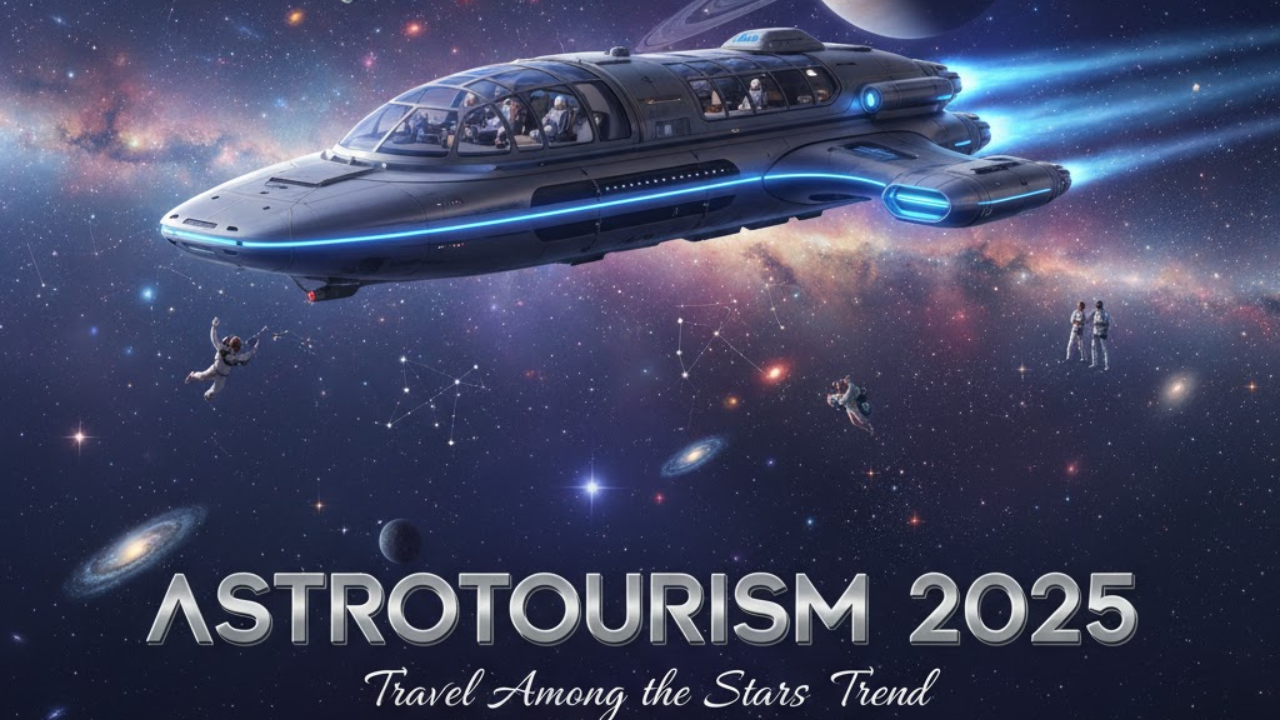
In a world of overcrowded cities and over-filtered destinations, travelers are looking up — literally. Astrotourism, the practice of traveling to places with minimal light pollution to observe the night sky, is one of 2025’s fastest-growing travel trends. It’s a mix of science, wonder, and escape — offering people the rare chance to reconnect with the cosmos in its raw, unspoiled beauty.
From desert observatories to mountain retreats, astrotourism has become a soul-enriching experience for those seeking both adventure and peace.
The modern traveler is craving silence, authenticity, and connection — and few experiences offer all three quite like stargazing. Watching the Milky Way arc across the horizon or catching a meteor shower in total darkness creates an almost spiritual sense of awe.
Astrotourism satisfies multiple desires at once: the need for mental stillness, scientific curiosity, and eco-conscious travel. It’s also fueled by climate awareness — as light pollution rises globally, people want to witness unspoiled skies before they vanish.
Some of the most spectacular astrotourism locations are tucked far from modern infrastructure — exactly where the stars shine brightest.
Atacama Desert, Chile — considered the clearest sky on Earth, with observatories like ALMA attracting global astronomers.
Ladakh, India — with high-altitude plateaus and minimal pollution, it’s a growing hotspot for cosmic travelers.
Namib Desert, Namibia — known for vast horizons and dry air ideal for naked-eye astronomy.
Mauna Kea, Hawaii — home to world-class telescopes and mystical volcanic landscapes.
Tenerife, Spain — designated as a Starlight Reserve with luxurious astro-resorts and sky safaris.
More countries are now developing Dark Sky Reserves to protect stargazing areas and boost sustainable tourism.
Astrotourism isn’t just about looking up — it’s about immersing yourself in cosmic culture. Many destinations now offer:
Night sky photography workshops led by astrophotographers.
Astronomy tours hosted by local experts.
Astro-glamping — luxury camps with skylights and telescopes for guests.
Celestial festivals celebrating meteor showers, eclipses, and solstices.
Space-inspired wellness retreats, combining yoga and stargazing meditation.
These experiences merge science with soul — turning travel into a journey through both space and self.
Ironically, the beauty of astrotourism lies in its simplicity — minimal infrastructure, low energy use, and respect for the environment. Travelers seeking dark-sky destinations often support eco-lodges, local communities, and conservation efforts.
By protecting natural darkness, these regions also protect nocturnal ecosystems and wildlife that depend on it. This makes astrotourism one of the rare travel trends that’s both eco-positive and educational.
There’s something deeply humbling about gazing at the universe — it puts life into perspective. Many travelers describe astrotourism as an “anti-burnout therapy.” Looking at the stars triggers a state of awe, reducing stress and promoting mindfulness.
It’s more than sightseeing; it’s soul healing through stillness. In a world drowning in screens, the night sky feels like a natural reset button — infinite, silent, and timeless.
With growing interest, many destinations are investing in advanced observatories, stargazing trails, and light pollution control. Private space companies are also fueling cosmic curiosity — offering near-space experiences like zero-gravity flights and stratospheric balloon rides.
Future astrotourism will likely combine virtual sky mapping, AR-assisted constellations, and AI-guided celestial tours, allowing even beginners to connect deeply with the universe.
Disclaimer: This article is for informational purposes only. Always check local regulations, weather conditions, and safety guidelines before visiting remote or high-altitude stargazing sites. Travel responsibly and respect local ecosystems and dark-sky rules.










PM Modi Pays Tribute to Mahatma Gandhi, Urges People to Support Khadi
PM Modi pays tribute to Mahatma Gandhi on Gandhi Jayanti and urges citizens to support Khadi and the

Amazon Seeks to Offload $8 Billion in Nvidia Chips to Investors
Amazon plans to move $8 billion in Nvidia chips to investors, using a new financing model to strengt

Samsung Raises Galaxy S26 Prices as Memory Chip Costs Rise
Samsung raises Galaxy S26 prices in South Korea as rising memory chip costs put pressure on smartpho

Lewis Hamilton Calls Singapore Grand Prix One of F1's Toughest Races
Lewis Hamilton discusses the demanding Singapore Grand Prix and brings Plus44 and Almave to Singapor

Denmark's Pandora Opens World's Largest Jewellery Factory in Vietnam
Pandora opens its largest jewellery factory in Vietnam, expanding global production, strengthening s

Gautam Gambhir Questions Batting-Friendly Pitches After India's Record ODI Chase
Gautam Gambhir questions batting-friendly ODI pitches after India’s record chase, calling for a bett

