You have not yet added any article to your bookmarks!
Join 10k+ people to get notified about new posts, news and tips.
Do not worry we don't spam!
Post by : Anis Farhan
Artificial intelligence has moved from the periphery of technology into the center of business, government, and everyday life. From generative AI tools shaping education and healthcare to predictive algorithms driving logistics and finance, AI is rapidly becoming a pillar of economic competitiveness. Nowhere is this more evident than in Asia, where governments and private investors are pouring billions into building AI-ready ecosystems. Yet beneath the hype lies a growing concern: the infrastructure required to support this AI revolution, particularly data centers, may not be scaling quickly enough.
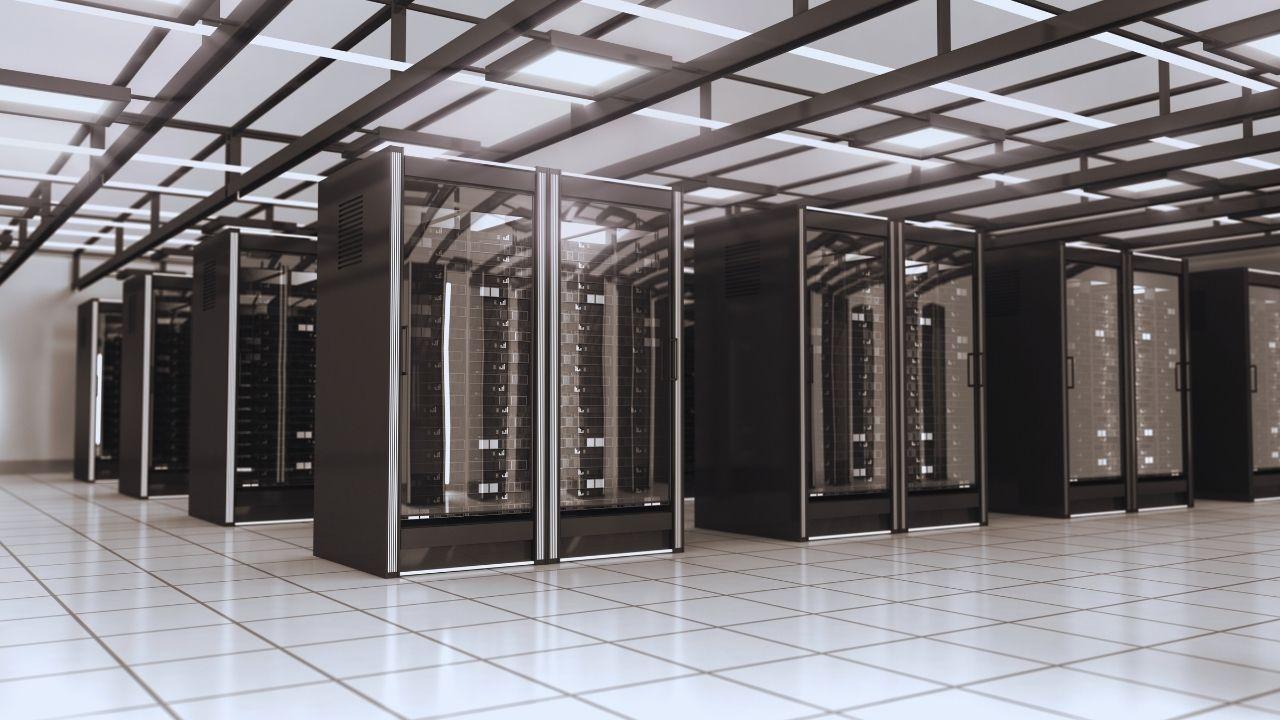
Data centers form the beating heart of the AI ecosystem. They host the servers that process massive datasets, power machine learning algorithms, and enable real-time insights. But unlike previous waves of digital growth, AI brings unprecedented demands—consuming more computing power, electricity, and cooling than traditional workloads. While Asia is experiencing a data center boom, the question is whether this expansion can truly keep pace with the region’s soaring AI appetite.
The speed of AI adoption in Asia has been staggering. Countries like China, Singapore, Japan, and India are racing to integrate AI across industries. Manufacturing hubs are deploying AI-driven robotics, financial institutions are leveraging predictive analytics, and cities are experimenting with smart systems for traffic, healthcare, and utilities. According to regional forecasts, Asia-Pacific’s AI market is expected to exceed hundreds of billions of dollars within the decade.
However, AI’s promise comes at a price. Training advanced models, especially large language models (LLMs), requires vast clusters of GPUs and accelerators running continuously for weeks or months. This intensity translates into astronomical energy consumption and computational strain. For perspective, training just one advanced model can consume as much electricity as hundreds of households use in a year. Multiply that by the growing number of companies experimenting with AI, and the scale of demand becomes clear.
In response, Asia has become one of the fastest-growing regions for data center construction. Singapore, once the region’s leading hub, continues to expand cautiously after earlier moratoriums on new projects due to sustainability concerns. Meanwhile, India, Indonesia, and Malaysia are emerging as rising players, attracting multinational investments to build hyperscale facilities.
China remains in a league of its own, with massive government-backed investments in AI infrastructure. The country is constructing entire “computing hubs” designed to handle AI workloads, connecting remote renewable energy bases with major urban centers through high-capacity digital highways. Japan and South Korea, leveraging their advanced tech sectors, are also pushing for next-generation data centers that can support AI training and edge computing simultaneously.
Yet despite this flurry of activity, infrastructure capacity is already lagging behind demand. Many facilities, designed in the cloud era, are not optimized for the heat and energy loads of AI clusters. Cooling systems, electricity grids, and land availability are becoming critical bottlenecks.
Perhaps the biggest obstacle is energy. AI’s hunger for power is unprecedented. Traditional cloud applications distribute computing relatively evenly, but AI clusters require immense bursts of high-density computing. This leads to extreme spikes in energy usage, stressing local grids.
In countries like India and Indonesia, where energy reliability is already a concern, data center operators are struggling to guarantee uninterrupted power. Even in advanced economies like Singapore and Japan, questions remain over how to scale energy infrastructure sustainably without undermining national carbon commitments.
Renewable energy is often cited as the solution, and many data center operators in Asia are investing heavily in solar, wind, and hydro partnerships. But renewables alone may not provide the stability required for high-intensity AI workloads. This is pushing discussions toward nuclear energy, energy storage, and cross-border power-sharing grids—initiatives that will take years, if not decades, to fully realize.
Another major hurdle is cooling. AI servers generate significantly more heat than traditional workloads, and standard cooling systems are proving inadequate. Advanced techniques such as liquid cooling, immersion cooling, and even underwater data centers are being tested in Asia.
Singapore, given its tropical climate and land scarcity, has been at the forefront of experimenting with innovative cooling models. Meanwhile, Japan has piloted underwater data centers that use natural ocean temperatures for efficiency. While these technologies hold promise, they also add to costs and complexity, making them difficult to scale rapidly.
Sustainability further complicates the picture. Governments and consumers are increasingly holding companies accountable for carbon footprints. In regions already battling climate change, data centers risk being seen as environmental liabilities unless operators integrate green practices. Thus, the AI revolution in Asia is as much an environmental challenge as it is a technological one.
AI infrastructure is not just an economic issue—it’s geopolitical. Control over computing power is becoming as strategically significant as control over oil or semiconductors. Recognizing this, Asian governments are ramping up efforts to ensure digital sovereignty.
China, wary of foreign dependence, is building self-sufficient AI computing zones and tightening regulations on foreign cloud providers. India is pushing for localized data storage and encouraging domestic players to invest in hyperscale projects. Southeast Asia, strategically positioned, is benefiting from multinational companies diversifying away from China and Taiwan, with Malaysia and Indonesia seeing record-breaking inflows of capital.
This competition creates both opportunities and risks. On one hand, it fuels rapid infrastructure growth. On the other, it risks duplication, inefficiencies, and potential cyber vulnerabilities. For smaller nations, balancing openness with sovereignty remains a delicate act.
The strain on infrastructure carries major implications for businesses. Large corporations with deep pockets can secure capacity, often locking in deals with data center providers years in advance. Smaller firms, however, may struggle to access the computing power needed to compete in AI innovation. This could exacerbate inequality between big players and emerging startups, stifling the diversity of AI ecosystems in Asia.
Cloud service providers, meanwhile, are adapting quickly. Companies like Amazon, Microsoft, Google, and regional giants such as Alibaba Cloud and Tencent Cloud are racing to expand capacity, often striking partnerships with local governments to ensure priority access to land and energy. For investors, this creates opportunities in niche areas—such as advanced cooling, renewable integration, and AI-optimized chips—that will define the next stage of infrastructure evolution.
Can Asia’s data centers catch up with AI demand? The answer lies in a multi-pronged approach:
Investment Acceleration: Continued funding for hyperscale and edge facilities across emerging markets.
Technology Innovation: Adoption of advanced cooling, modular centers, and AI-optimized designs.
Energy Transformation: Partnerships to integrate renewable energy, explore nuclear options, and enhance grid resilience.
Policy Coordination: Regional cooperation to avoid inefficiencies and encourage cross-border digital infrastructure sharing.
If managed effectively, Asia could position itself as the backbone of global AI computing. But if infrastructure constraints persist, the region risks bottlenecking its own AI ambitions, ceding ground to competitors in North America and Europe.
Asia stands at a crossroads. Its economies are embracing AI faster than almost anywhere else, driven by ambition, innovation, and necessity. Yet this enthusiasm risks colliding with hard realities of infrastructure, energy, and sustainability. The challenge is not merely building more data centers, but building the right kind—facilities that can handle AI’s hunger while aligning with broader goals of economic growth and environmental responsibility.
The AI age promises to transform Asia, but only if the foundations are strong enough to sustain it. The question now is not whether Asia will lead in AI adoption, but whether its infrastructure can withstand the weight of its own ambitions.
This article is for informational and editorial purposes only. It does not constitute financial, investment, or policy advice. Readers are encouraged to seek professional guidance before making decisions based on the topics discussed.







Jordan Burroughs Returns to Wrestling with 2028 Olympic Dream
Jordan Burroughs returns to wrestling with Real American Freestyle as the Olympic champion eyes a po

Lamborghini Catches Fire on Singapore's ECP, Causing Heavy Traffic
A Lamborghini caught fire on Singapore's ECP, causing heavy traffic and bus delays. No injuries were

Bangkok Airport Duty-Free Area Flooded by Pipe Burst
A burst water pipe flooded the duty-free shopping area at Bangkok's Suvarnabhumi Airport on July 16,

Nine Monks Killed in Thailand Pickup Truck Tragedy
An 11-year-old boy driving a pickup truck crashed into monks during a pilgrimage in northeastern Tha

Anwar Congratulates Xi on CPC's 105th Anniversary
Malaysia reaffirms strong ties with China as PM Anwar Ibrahim sends a congratulatory letter to Presi

Thai Agriculture Team Reviews 2026 Farm Development Plans
Agriculture Ministry officials inspected livestock and organic rice projects in Nakhon Sawan to moni