You have not yet added any article to your bookmarks!
Join 10k+ people to get notified about new posts, news and tips.
Do not worry we don't spam!
Post by : Saif Rahman
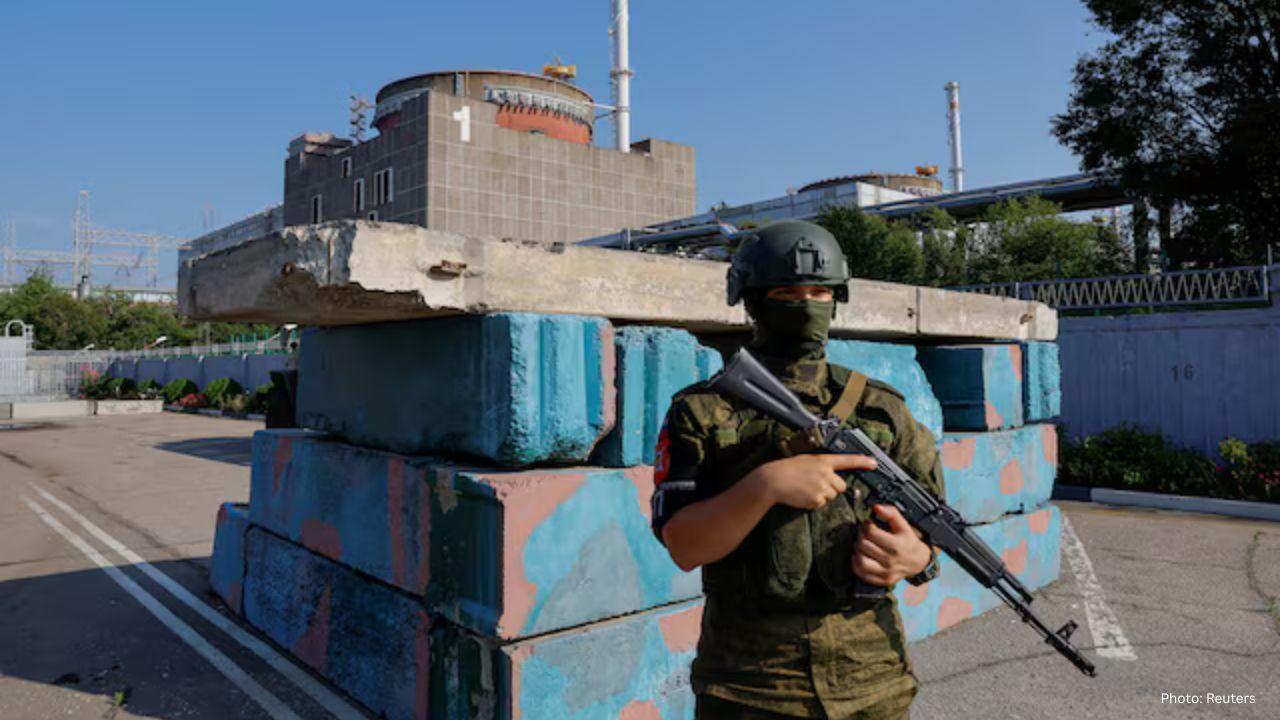
The fate of Ukraine's Zaporizhzhia nuclear power station is a pressing concern amid the ongoing conflict between Russia and Ukraine. This facility, which is the largest of its kind in Europe, has been in Russian hands since March 2022. As diplomatic efforts slowly progress, the future of this significant energy asset has emerged as a pivotal topic in negotiations involving Ukraine, Russia, and the United States.
Situated in Enerhodar along the Dnipro River in southern Ukraine, Zaporizhzhia houses six nuclear reactors that used to supply a substantial portion of Ukraine's electricity. With fighting encircling the facility, all reactors have been deactivated and are currently in a “cold shutdown” state, necessitating constant cooling to ensure safety despite not producing power.
Ukraine asserts that the facility is its rightful property under international law—a stance echoed by the majority of nations. Conversely, Russia claims the plant is now part of its territory and has transferred control to Rosatom, the state nuclear company. This contention has turned the power station into a contested political and security issue.
Ukrainian President Volodymyr Zelenskiy has indicated that the U.S. proposed a collaborative framework involving Ukraine, the U.S., and international oversight to manage the plant. One scenario suggests U.S. assistance in operating the facility, with an arrangement for shared electricity production. Russia, however, has voiced interest in a separate plan for cooperation with Washington, potentially sidelining Ukraine. These conflicting proposals underscore the complexity surrounding this issue.
Safety remains paramount, with the International Atomic Energy Agency frequently cautioning against military activity in close proximity to a nuclear facility. Throughout the war, various power lines supplying the plant have been severed, leaving operators reliant on emergency diesel generators for cooling. A sustained loss of power could precipitate dire safety hazards.
Water supply is another critical concern. The destruction of the Kakhovka dam in 2023 has significantly diminished water levels essential for cooling the reactors and storing spent nuclear fuel. Officials are increasingly worried about whether the plant can safely operate even a limited number of reactors in the future.
Russia is eager to restore operations at the plant to address electricity shortages in both occupied regions and parts of southern Russia. Ukraine vehemently opposes such moves, warning that reactor restarts lacking adequate safety measures and international oversight might lead to nuclear incidents. Ukrainian energy specialists estimate that, even if control is regained, inspection and repairs could take years before safe operation is resumed.
Ukraine urgently requires the electricity that the plant can provide, particularly as Russian bombardments have devastated much of the national energy grid, resulting in widespread blackouts, especially in winter months. Experts suggest Ukraine is short by several gigawatts of electricity, closely matching the potential output of a fully operational Zaporizhzhia plant.
For the moment, the plant is silent, monitored by military personnel rather than engineers focused on energy production. Its future hinges not only on ensuring technical safety but also on the resolution of political agreements, which remain in flux. As discussions slowly inch forward, the Zaporizhzhia nuclear power plant symbolizes the conflict's hazards and is vital to achieving long-term energy security and stability in the region.










Starc Compares Australia's Tough Year to McIlroy's Major Sweep
Mitchell Starc says Australia winning three away Test series and the World Cup would match Rory McIl

France’s Sesterce Plans $11 Billion AI Data Centre in Finland
Sesterce plans a $11 billion AI data centre in Finland, with major expansion, green energy plans and

Danaher to Launch AI-Powered Autonomous Research Lab in 2027
Danaher plans an AI research lab for 2027, combining robotics and automation to speed up drug discov

Musk Welcomes German Support for Tesla Driver Assistance Tech as EU Approval Push Continues
Elon Musk welcomes Germany's backing for Tesla FSD as the company seeks EU approval amid speed, safe

Microsoft and Nvidia CEOs to Unveil AI Laptop at San Francisco Event
Microsoft and Nvidia showcase a new AI laptop with RTX Spark chips as they push powerful local AI co

Man to face charges over perfume thefts at Changi Airport
A 47-year-old man faces charges over perfume theft at Changi Airport after six items worth nearly S$