You have not yet added any article to your bookmarks!
Join 10k+ people to get notified about new posts, news and tips.
Do not worry we don't spam!
Post by : Anis Farhan
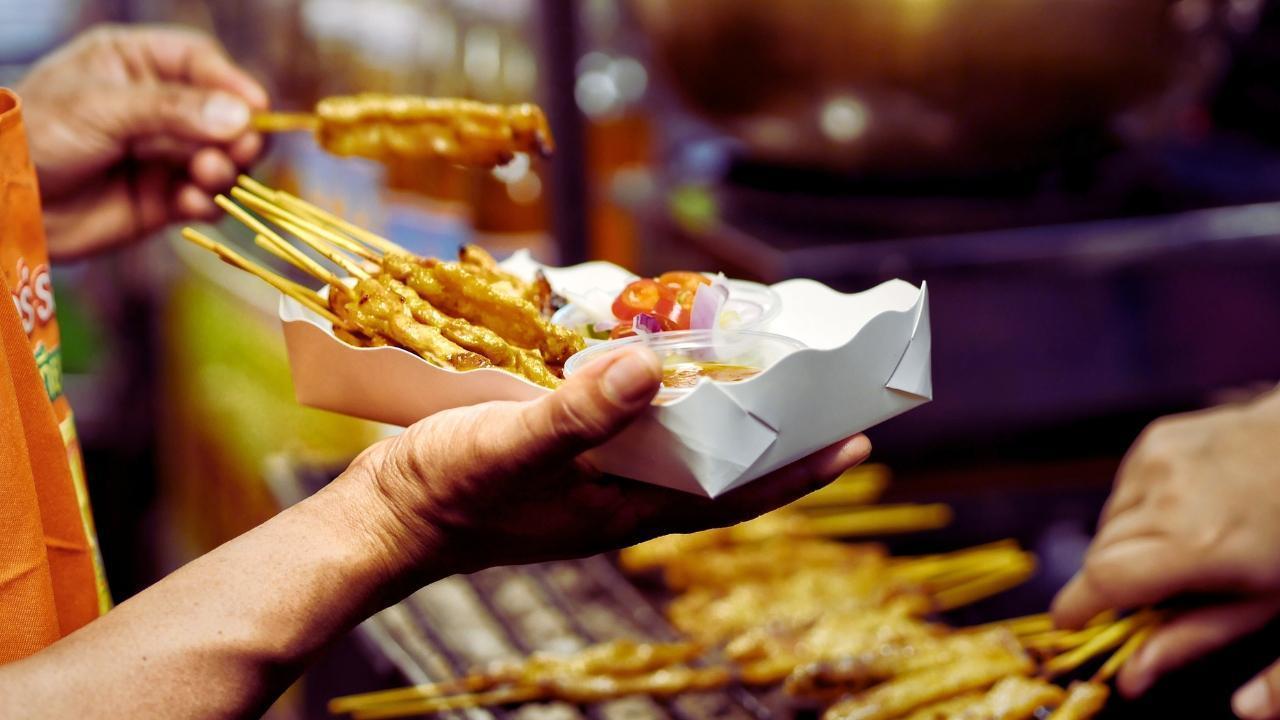
In the vibrant streets of Bangkok, the smoky aroma of grilled chicken mingles with the scent of lemongrass and fresh coriander. In Istanbul, roasted chestnuts pop in sidewalk stands while fish sandwiches are served off rocking boats on the Bosphorus. And in Mexico City, late-night taco stands sizzle with al pastor meat spinning on vertical spits, the scene illuminated only by a single bulb. These are not just quick meals—they are snapshots of identity, tradition, and history.
Street food has always existed as the most democratic and accessible form of cuisine. It requires no reservations, no dress code, and no formality. But beneath the simplicity lies something far deeper: a coded language of place, migration, resistance, and belonging. Street food teaches us, through smell and taste, how cultures evolve, how people move, and how flavors adapt without losing their soul.
Every bite of street food carries a tale of movement—of people forced to flee, of migrants seeking opportunity, of colonial trade routes that transported not just goods but flavors. The famous Vietnamese bánh mì, for example, merges a French baguette with local pickled vegetables and pâté. It is a culinary child of colonialism, conflict, and creativity.
In Indonesia, the Dutch influence can still be tasted in “semur,” a soy-braised meat stew with unmistakable European notes. In Malaysia, Indian, Chinese, and native Malay dishes converge seamlessly in street hawker centers, their flavors a living record of centuries of immigration and coexistence. These aren't fusion dishes crafted in labs—they are the natural outcomes of cultural contact and resilience.
In this way, street food becomes an edible archive. You don’t need a passport to experience the history of trade, war, diaspora, and diplomacy—just a paper plate and an open mind.
Modern food blogs love to use the word “fusion,” but street vendors have been blending cultures for centuries. Migration and urbanization create contact zones where ingredients and techniques merge out of necessity or creativity. Peruvian chifa (Chinese-Peruvian) food isn’t a fad—it’s over 150 years old, dating back to Cantonese migrants in the 19th century. Similarly, the beloved Korean taco popularized in Los Angeles was born on the streets, not in fine dining rooms.
True fusion happens when cultures meet in marketplaces, when cooks substitute unavailable ingredients, and when new palates are formed. The Indian-Chinese food sold in Kolkata is unapologetically spicy and uniquely local, despite its foreign roots. From Mexico’s Arab-influenced tacos al pastor to Singapore’s laksa, which fuses Malay and Chinese flavors, street food shows that “fusion” is not deviation—it’s evolution.
Often without formal culinary training, street vendors are some of the world’s most committed historians. Recipes are passed down orally, refined over decades, and adapted to ever-changing cities. These vendors don't just cook—they preserve.
In Thailand, pad thai was once promoted as a national dish during the mid-20th century to foster national unity and pride. Today, it’s on every tourist’s plate, but its origins tie closely to government policy and nation-building. Similarly, tamales in Mexico date back to pre-Columbian times, eaten by warriors on the move. To eat one on a bustling street corner is to taste centuries of cultural continuity.
These vendors, many of them immigrants or marginalized workers, serve more than food—they serve stories. A grandmother rolling rice dumplings on a sidewalk in Taipei, or a father grilling skewers under a tarp in Nairobi, are guardians of culture in its most edible form.
In an increasingly globalized world, many fear the erosion of cultural specificity. Global fast-food chains dominate skylines and menus, yet street food remains defiantly local, rooted in geography and seasonality. The banana leaf wrapping on a Malay nasi lemak, the bamboo skewer of a Tokyo yakitori—these details resist homogeneity.
That said, street food isn't isolated from global trends. Vendors often adapt—adding vegan options, swapping ingredients for health-conscious consumers, or experimenting with international flavors. In doing so, they strike a delicate balance: preserving identity while staying relevant. This duality—traditional yet contemporary—is exactly what makes street food such a strong symbol of global identity today.
It’s not about purity. It's about pride. It’s about maintaining authenticity even while navigating modern demands. And most importantly, it's about survival through adaptation—something every community, not just cooks, can relate to.
The rise of mega-cities has drastically transformed the way people eat—and by extension, how they see themselves. Street food thrives in dense urban spaces, providing affordable nourishment to workers, students, and travelers alike. It's not just food—it’s an urban ecosystem.
In cities like Jakarta, Manila, or Lagos, the informal food economy is a major source of income, especially for women and migrants. The aesthetics of these stalls—neon signs, handwritten menus, sizzling woks—become part of the city’s cultural identity. You can't imagine Bangkok without its night markets or New York without its halal carts.
Yet, urban development often marginalizes these spaces. In the name of hygiene or modernization, cities have attempted to regulate, relocate, or even eliminate street vendors. These actions threaten not only livelihoods but also cultural memory. Street food may not always fit into the neat plans of city architects, but it fits into the hearts of the people.
Unlike fine dining, which often alienates through price and exclusivity, street food is inclusive. A construction worker and a corporate executive can stand in the same queue for dumplings or falafel. In this shared moment, class distinctions blur. The experience is humble, grounded, and egalitarian.
In many cultures, the best meals are not found in five-star kitchens but on plastic stools by the roadside. Taste isn't determined by cost, but by love, repetition, and the secrets passed down across generations. This democratization of taste is what makes street food such a potent metaphor for equality.
In that regard, street food doesn't just reflect identity—it challenges social hierarchy. It says that a grandmother with a charcoal grill can feed more souls and tell more stories than any Michelin-starred chef ever could.
Some of the world’s most inventive dishes have come not from laboratories or elite chefs, but from daring street vendors. Free from corporate oversight or menu constraints, these cooks have the liberty to experiment. Spicy ice creams, samosa burgers, sushi burritos—creativity thrives in informal economies.
This isn’t just about culinary flair. It’s also a form of cultural commentary. Many street vendors belong to marginalized groups—immigrants, refugees, informal laborers—who use food to carve out a space in societies that often exclude them. Their carts and stalls become platforms of expression, their dishes laced with the defiance of survival.
Food here is not just nourishment. It's protest. It's poetry. It's power on a paper plate.
As travelers increasingly seek “authentic” experiences, street food has become both attraction and commodity. Local dishes are highlighted in guidebooks, food tours, and influencer reels. In places like Vietnam or Morocco, entire economies thrive on the global demand for street eats.
While this attention can boost income and visibility, it also risks diluting authenticity. Vendors may adapt recipes for foreign palates, alter presentation styles, or even relocate to trendy neighborhoods. In doing so, the food may gain popularity—but at the cost of cultural intimacy.
This tension—between visibility and vulnerability—is at the heart of what street food teaches us about global identity. We crave authenticity, but often reshape it to fit consumption. The challenge lies in honoring origin stories while appreciating evolution.
Ultimately, what street food reveals is the immense dignity of ordinary people. Despite economic hardship, despite regulatory crackdowns, despite social invisibility, millions of vendors continue to show up—day after day—offering not just food but hospitality, care, and cultural pride.
Street food shows us that identity is not static. It’s cooked, shaped, shared, and served daily. It tells us that history isn't locked in museums—it simmers in pots, smokes from grills, and is wrapped in banana leaves or foil. And above all, it teaches us that culture lives best not behind walls, but on streets.
This editorial article is for informational purposes and aims to explore street food culture as a lens into global identity. The content does not reflect the stance of any particular organization and is written in a general, human tone without promotional bias.









Lamborghini Catches Fire on Singapore's ECP, Causing Heavy Traffic
A Lamborghini caught fire on Singapore's ECP, causing heavy traffic and bus delays. No injuries were

Bangkok Airport Duty-Free Area Flooded by Pipe Burst
A burst water pipe flooded the duty-free shopping area at Bangkok's Suvarnabhumi Airport on July 16,

Nine Monks Killed in Thailand Pickup Truck Tragedy
An 11-year-old boy driving a pickup truck crashed into monks during a pilgrimage in northeastern Tha

Anwar Congratulates Xi on CPC's 105th Anniversary
Malaysia reaffirms strong ties with China as PM Anwar Ibrahim sends a congratulatory letter to Presi

Thai Agriculture Team Reviews 2026 Farm Development Plans
Agriculture Ministry officials inspected livestock and organic rice projects in Nakhon Sawan to moni

Thailand, Canada Boost Ties in PM-Level Phone Talks
Thailand and Canada agreed to strengthen trade, security, OECD cooperation and ASEAN-Canada FTA talk