You have not yet added any article to your bookmarks!
Join 10k+ people to get notified about new posts, news and tips.
Do not worry we don't spam!
Post by : Anis Farhan
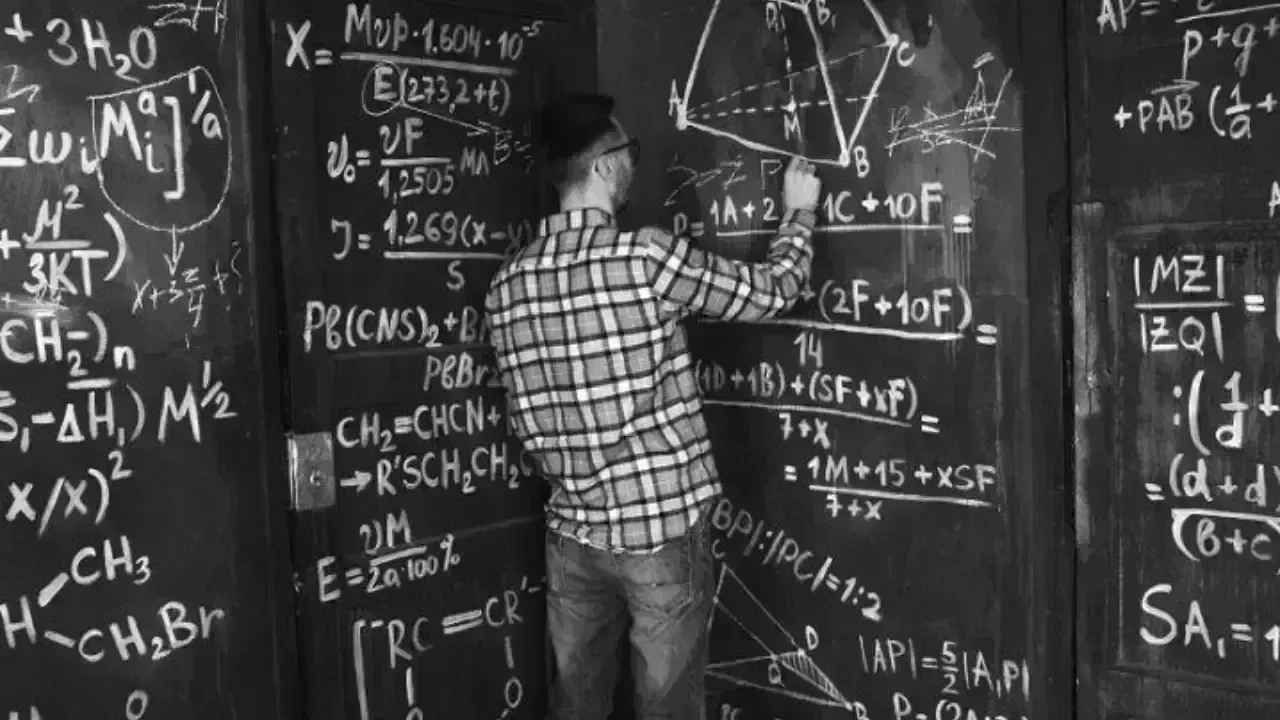
Science does not advance only through safe ideas. Some of the most transformative breakthroughs began as theories that sounded implausible, even absurd, to their contemporaries. The idea that Earth moves around the Sun, that invisible microbes cause disease, or that time can slow down all faced resistance before evidence forced acceptance. Today, modern science is again entertaining ideas that challenge intuition—concepts that feel more like philosophy or science fiction than laboratory physics. Yet growing evidence suggests that some of these unusual theories may not only be possible, but true.
As experimental tools grow more powerful and data accumulates at unprecedented scales, scientists are revisiting bold hypotheses about reality, consciousness, space, time, and the universe itself. This article explores some of the most unconventional scientific theories that are currently being taken seriously—and explains why they cannot be dismissed outright.
From Philosophy to Testable Physics
The idea that reality might be an advanced computer simulation was once the domain of philosophy and science fiction. Today, it is discussed seriously by physicists, technologists, and cosmologists. The Simulation Hypothesis, popularised by Nick Bostrom, suggests that if advanced civilizations can simulate entire universes, it is statistically more likely that we are inside one than in the original “base reality.”
What makes this theory scientifically intriguing is not speculation about programmers, but the nature of physical limits. The universe exhibits discrete units of energy and space, much like pixels and processing limits in computation. Some physicists have noted that the laws of physics resemble optimized code—simple rules generating vast complexity.
Experiments in quantum mechanics show reality behaving differently when observed, raising questions about whether the universe “renders” details only when needed. While there is no proof that we are in a simulation, there is also no known law of physics that forbids it. Researchers have even proposed tests looking for computational limits embedded in physical constants.
The Invisible Mass Holding the Universe Together
Astronomers have known for decades that visible matter accounts for only a small fraction of the universe. Galaxies rotate too fast to be held together by observable mass alone, leading to the theory of Dark Matter—a mysterious substance that does not emit light but exerts gravitational influence.
Despite extensive searches, dark matter has never been directly detected. This has led some scientists to consider that dark matter might not be a particle at all.
Some researchers propose that gravity itself behaves differently on cosmic scales, an idea explored in modified gravity theories. Others suggest dark matter could be a field, a property of space, or evidence that our understanding of gravity is incomplete. The possibility that something so fundamental remains misunderstood keeps this theory very much alive.
The Illusion of Direction
Time feels like it moves in one direction—from past to future. Yet the equations governing fundamental physics work just as well forward as backward. This raises a disturbing possibility: the arrow of time may not be fundamental at all.
Physicists suggest that time’s direction emerges from entropy—the tendency of systems to move toward disorder. At microscopic levels, time may be symmetrical, with no preferred direction.
If time does not truly flow, then cause and effect may be emergent rather than fundamental. Some theories propose that past, present, and future all exist simultaneously, and consciousness simply moves through them. While deeply counterintuitive, this view aligns with certain interpretations of relativity and quantum mechanics.
Reality Encoded on a Boundary
The Holographic Principle proposes that all the information in a volume of space can be described by data encoded on its surface. In simple terms, our three-dimensional universe might be a projection of information stored on a two-dimensional boundary.
This idea emerged from attempts to resolve the black hole information paradox and gained mathematical support through string theory. While still theoretical, it has successfully explained certain properties of quantum gravity.
If true, this theory would radically alter our understanding of space and reality. What we perceive as depth and volume may be emergent phenomena, much like a hologram appearing three-dimensional despite being flat.
Beyond a Single Cosmos
The Multiverse suggests that our universe is just one of many. These universes may have different physical laws, constants, or dimensions.
This idea arises naturally from cosmic inflation theory and quantum mechanics. In some models, universes constantly bud off from one another, forming an ever-expanding multiverse.
The multiverse helps explain why physical constants appear finely tuned for life. If countless universes exist, it is not surprising that at least one supports complex structures. While direct observation may be impossible, indirect evidence could emerge from cosmic background patterns or theoretical consistency.
The Observer Problem
Quantum mechanics reveals that particles behave differently when observed. This has led some scientists to question whether consciousness plays a role in shaping physical outcomes. While mainstream physics avoids attributing special powers to awareness, the measurement problem remains unresolved.
Some interpretations suggest that reality does not fully exist until observed, while others propose that consciousness collapses quantum possibilities into definite outcomes.
Most physicists remain cautious, emphasizing that “observation” does not require a human mind. Still, the relationship between consciousness and physical law remains one of the deepest open questions in science.
From Passive Stage to Active Participant
Traditionally, space-time has been viewed as a passive backdrop. New theories suggest it may be emergent, dynamic, or even self-organizing. Some physicists describe space-time as behaving more like a system than a container.
In this view, gravity, particles, and even time itself arise from deeper interactions within a fundamental network of information.
If space-time is emergent, then the universe is not built from matter moving through space, but from relationships that generate both matter and space. This idea could unify gravity with quantum mechanics—one of science’s greatest unsolved problems.
Most searches for extraterrestrial life focus on Earth-like conditions. However, some scientists argue that life may exist in radically different forms—based on silicon, ammonia, plasma, or even organized energy patterns.
These possibilities challenge our definitions of life itself. If life is defined by self-organization and information processing rather than chemistry, the universe may be far more alive than we imagine.
Astrobiology increasingly recognizes that Earth-centric assumptions may blind us to unfamiliar life. As exploration expands, scientists are rethinking what “living” truly means.
Unconventional ideas are not embraced because they are exciting, but because evidence fails to rule them out. Science advances by testing boundaries, not reinforcing comfort. Many ideas discussed here may ultimately be wrong—but history shows that today’s heresy can become tomorrow’s textbook.
Perhaps the most important lesson is humility. Despite centuries of progress, we still understand only a fraction of reality. The universe continues to surprise us, suggesting that the truth may be stranger—and more beautiful—than anything we currently imagine.
Unusual scientific theories are not distractions; they are signposts pointing toward unanswered questions. Whether or not these ideas turn out to be true, exploring them expands the boundaries of human understanding. As technology advances and evidence accumulates, some of these theories may shift from speculation to accepted science.
The history of discovery suggests one thing with certainty: reality has never cared about human intuition.
Disclaimer:
This article explores theoretical scientific ideas that are actively discussed within academic and research communities. Many of these theories remain unproven and are subject to ongoing investigation, debate, and revision as new evidence emerges.










Lamborghini Catches Fire on Singapore's ECP, Causing Heavy Traffic
A Lamborghini caught fire on Singapore's ECP, causing heavy traffic and bus delays. No injuries were

Bangkok Airport Duty-Free Area Flooded by Pipe Burst
A burst water pipe flooded the duty-free shopping area at Bangkok's Suvarnabhumi Airport on July 16,

Nine Monks Killed in Thailand Pickup Truck Tragedy
An 11-year-old boy driving a pickup truck crashed into monks during a pilgrimage in northeastern Tha
Anwar Congratulates Xi on CPC's 105th Anniversary
Malaysia reaffirms strong ties with China as PM Anwar Ibrahim sends a congratulatory letter to Presi

Thai Agriculture Team Reviews 2026 Farm Development Plans
Agriculture Ministry officials inspected livestock and organic rice projects in Nakhon Sawan to moni

Thailand, Canada Boost Ties in PM-Level Phone Talks
Thailand and Canada agreed to strengthen trade, security, OECD cooperation and ASEAN-Canada FTA talk