
You have not yet added any article to your bookmarks!
Join 10k+ people to get notified about new posts, news and tips.
Do not worry we don't spam!
Post by : Rameen Ariff
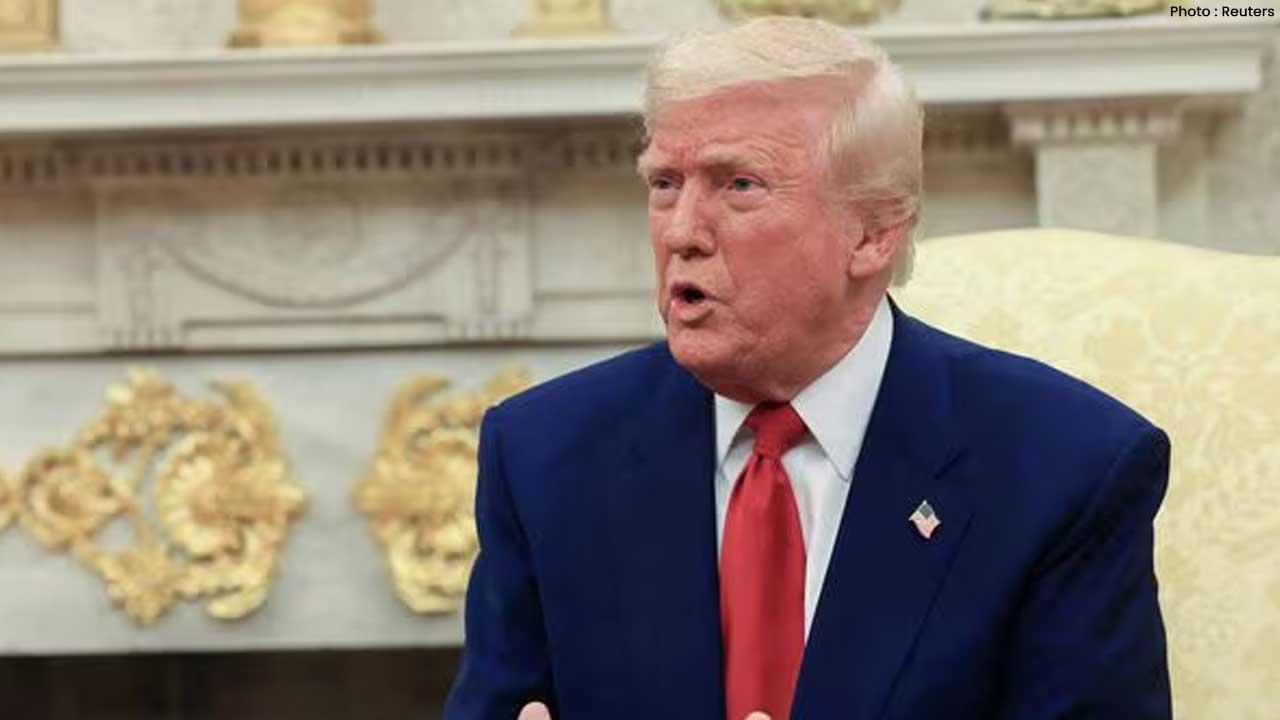
Former US President Donald Trump’s recent trade actions with China have caused significant stock market fluctuations, highlighting the challenges of market timing even for experienced dealmakers. On Friday, the S&P 500 Index was rising toward a new record when Trump announced a potential 100% tariff on Chinese imports. This caused a sharp drop in the Nasdaq Composite Index, which closed 3.6% lower.
By Sunday, the White House reversed the decision, signaling willingness to negotiate with Chinese President Xi Jinping to ease trade tensions. As Asian markets were closed over the weekend, traders in China had to wait until Monday to react, by which time it was clear that the proposed tariffs might not happen. The Hang Seng Index fell 1.7%, far lower than the dramatic 13.1% drop seen in April during similar tariff threats.
The main market impact was felt in the United States. The CBOE Volatility Index, known as the “fear gauge,” jumped more than 30%, reflecting investor uncertainty. Cryptocurrency markets also faced heavy selloffs over the weekend due to the renewed trade concerns.
Experts note that Trump’s rapid reversal demonstrates the shifting balance of leverage toward China. Beijing’s recent export controls on rare earth elements, essential for producing AI chips, have reinforced China’s dominance in the global supply chain. Companies like Taiwan Semiconductor Manufacturing Co. and Samsung Electronics rely on these elements, and restrictions could disrupt AI chip production. ASML’s lithography machines, crucial for advanced semiconductors, are also vulnerable to these supply limitations.
Additionally, China is restricting the purchase of Nvidia H20 AI chips and cracking down on smuggling, which has impacted Nvidia’s stock, causing a 4.9% decline on Friday. These measures indicate China’s push to strengthen its domestic AI capabilities while reducing dependence on US technology.
Earlier in April, investors benefited from the “TACO trade” strategy, buying stocks during tariff fears and selling after reversals. However, the speed of Trump’s recent reversals may limit the effectiveness of this strategy, as markets now have less time to adjust to sudden policy changes.
In summary, while Trump’s trade announcements created short-term market turbulence, China’s strategic control over rare earths and its export policies pose a longer-term challenge for global supply chains, particularly in the AI and tech sectors.










PM Modi Pays Tribute to Mahatma Gandhi, Urges People to Support Khadi
PM Modi pays tribute to Mahatma Gandhi on Gandhi Jayanti and urges citizens to support Khadi and the

Amazon Seeks to Offload $8 Billion in Nvidia Chips to Investors
Amazon plans to move $8 billion in Nvidia chips to investors, using a new financing model to strengt

Samsung Raises Galaxy S26 Prices as Memory Chip Costs Rise
Samsung raises Galaxy S26 prices in South Korea as rising memory chip costs put pressure on smartpho

Lewis Hamilton Calls Singapore Grand Prix One of F1's Toughest Races
Lewis Hamilton discusses the demanding Singapore Grand Prix and brings Plus44 and Almave to Singapor

Denmark's Pandora Opens World's Largest Jewellery Factory in Vietnam
Pandora opens its largest jewellery factory in Vietnam, expanding global production, strengthening s

Gautam Gambhir Questions Batting-Friendly Pitches After India's Record ODI Chase
Gautam Gambhir questions batting-friendly ODI pitches after India’s record chase, calling for a bett

