
You have not yet added any article to your bookmarks!
Join 10k+ people to get notified about new posts, news and tips.
Do not worry we don't spam!
Post by : Shweta
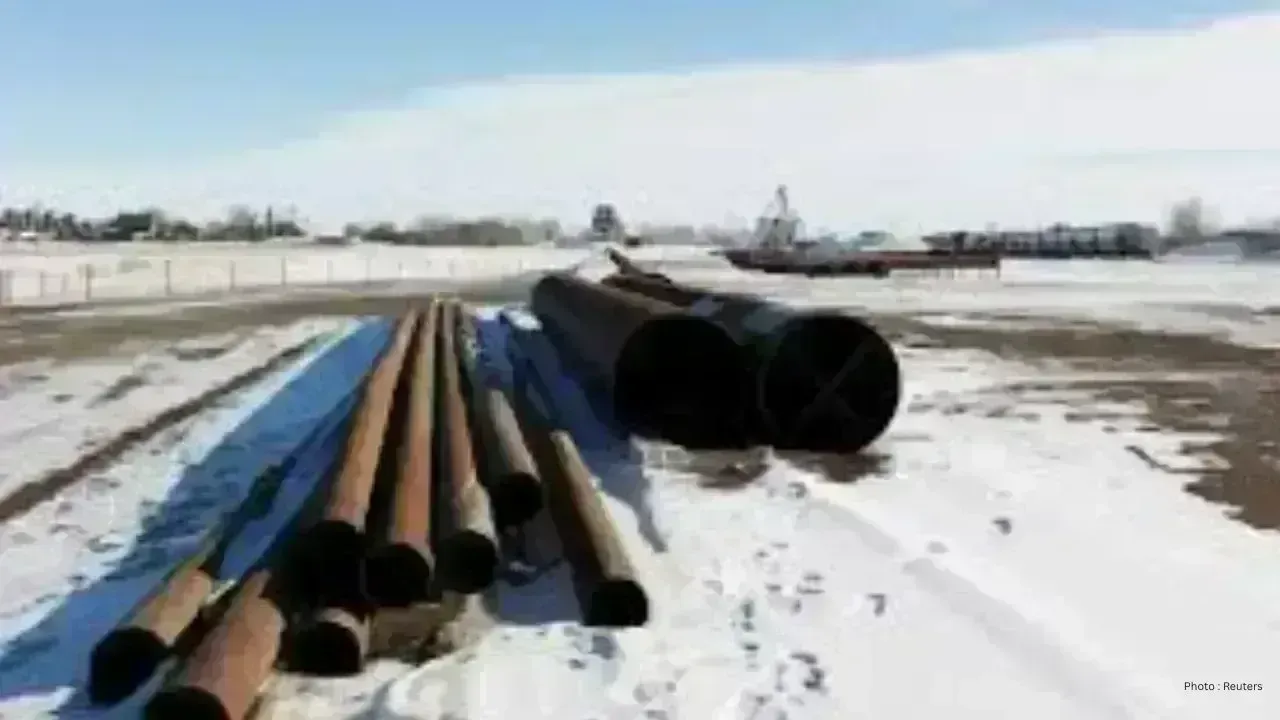
In a significant move, US President Donald Trump has signed an executive order that greenlights the construction of a new oil pipeline stretching from Canada to Wyoming, effectively reviving segments of the suspended Keystone XL pipeline. This order eliminates a critical regulatory obstacle for the energy initiative, poised to transport over 500,000 barrels of crude oil daily from the Canadian border into the United States.
The permit has been issued to Bridger Pipeline LLC, a privately owned oil transport firm situated in Casper, Wyoming. Earlier this year, the company approached the Montana Department of Environmental Quality with its proposal, asserting that the project would fortify America’s energy framework while bolstering domestic fuel supplies.
According to the executive order endorsed by Trump, Bridger Pipeline now enjoys the authority to construct, connect, operate, and maintain facilities that traverse the US-Canada boundary. The development will utilize segments of the previously abandoned Keystone XL route, which remained incomplete following its official cancellation in 2021.
The Keystone XL pipeline, first proposed in 2008, has been a focal point of heated debates concerning energy in North America. Proponents claimed it would generate jobs and enhance North American energy independence, while environmental advocates raised alarms over climate impacts, oil spills, and heightened greenhouse gas emissions. The project has been marred by years of protests, legal challenges, and political discourse in both Canada and the US.
Work on the Keystone XL was stopped after former US President Joe Biden rescinded a crucial presidential permit shortly after taking office in 2021, claiming the pipeline conflicted with America’s climate initiatives. Trump, a steadfast ally of the oil sector during both his presidential terms, has continuously criticized Biden's decision and advocated for the augmentation of fossil fuel infrastructure.
This latest directive is part of Trump's overarching “national energy emergency” agenda revealed earlier this year. Under this policy, federal agencies are tasked with accelerating approvals for undertakings related to oil, natural gas, and energy transportation systems. The administration contends that the aim is to mitigate fuel costs, amplify domestic energy production, and empower energy autonomy.
Despite this recent approval, uncertainty lingers regarding whether a complementary Canadian pipeline connection will materialize. Industry experts indicate that oil producers are still deliberating the volume of crude they intend to export to the US, especially as new discussions surrounding export pipelines to Canada’s West Coast gather pace.
Calgary-based South Bow Corporation, which oversees segments of the previous Keystone XL infrastructure, is actively communicating with landowners in Saskatchewan about resurveying areas along the old pipeline route. Earlier this year, the company also sought long-term commitments for a prospective pipeline project dubbed Prairie Connector, which aims to transport oil from Hardisty, Alberta, to multiple US delivery points.
However, South Bow representatives have confirmed that the Prairie Connector initiative remains in the preliminary planning phases. Spokesperson Solomiya Martoiu noted that the firm is still assessing commercial interest and hasn’t reached a final investment decision.
Energy analysts maintain that many firms remain hesitant due to the political unpredictability surrounding transnational pipeline projects. Peter Tertzakian, associated with the ARC Energy Research Institute, remarked that producers might be reluctant to invest heavily in projects that may later face cancellation under future US administrations, particularly after experiencing prolonged uncertainty with Keystone XL.
Industry specialists also highlight the shifting global energy paradigms as a contributing factor. Recently, Canada has prioritized diversifying its oil exports away from the US, with federal and provincial bodies exploring enhanced access to Asian markets via pipelines associated with Canada’s Pacific Coast, where oil producers can secure higher prices for crude shipments.
Analysts caution that oil companies may need to confront challenging decisions regarding where to allocate future production levels. If substantial quantities of oil are directed to a southern pipeline heading into the United States, this could curtail their adaptability in supporting upcoming export initiatives towards Canada’s West Coast.
The financial considerations are equally significant. Experts estimate that the costs of filling and running a major pipeline can be two to three times more than its construction. Given that modern pipeline ventures require billions in investment, firms are likely to meticulously evaluate long-term demand, political risks, and international energy valuations prior to making final commitments.
Meanwhile, environmental groups are already voicing strong criticism of Trump’s new directive. Climate advocates contend that resurrecting any segment of Keystone XL would escalate fossil fuel reliance at a time when several nations are striving to cut carbon emissions and invest in greener energy alternatives. Legal challenges against this project are also anticipated as a result.
The US Bureau of Land Management is on course to issue a conclusive environmental impact statement concerning the Bridger pipeline project in the spring of 2027. The final governmental determination on broader approvals and construction timelines is expected to follow after this review process concludes.










PM Modi Pays Tribute to Mahatma Gandhi, Urges People to Support Khadi
PM Modi pays tribute to Mahatma Gandhi on Gandhi Jayanti and urges citizens to support Khadi and the

Amazon Seeks to Offload $8 Billion in Nvidia Chips to Investors
Amazon plans to move $8 billion in Nvidia chips to investors, using a new financing model to strengt

Samsung Raises Galaxy S26 Prices as Memory Chip Costs Rise
Samsung raises Galaxy S26 prices in South Korea as rising memory chip costs put pressure on smartpho

Lewis Hamilton Calls Singapore Grand Prix One of F1's Toughest Races
Lewis Hamilton discusses the demanding Singapore Grand Prix and brings Plus44 and Almave to Singapor

Denmark's Pandora Opens World's Largest Jewellery Factory in Vietnam
Pandora opens its largest jewellery factory in Vietnam, expanding global production, strengthening s

Gautam Gambhir Questions Batting-Friendly Pitches After India's Record ODI Chase
Gautam Gambhir questions batting-friendly ODI pitches after India’s record chase, calling for a bett

