
You have not yet added any article to your bookmarks!
Join 10k+ people to get notified about new posts, news and tips.
Do not worry we don't spam!
Post by : Saif Rahman
Though carbon paper might seem like a relic of history, its significance is tied to numerous tools we utilize today. The “CC” used in emails is derived from the practice of creating duplicate copies with carbon paper. A fresh perspective on its history reveals how this unassuming sheet enabled document replication long before digital technology emerged.
In an era devoid of laptops, screens, and digital directories, duplicating documents required tangible materials, adhesive, and considerable effort. Early newspaper professionals relied on bromides—actual sheets—to make edits. If a typo occurred or an image needed modification, they would cut and paste sections onto the final presentation, giving rise to the term “cut and paste.” This was not a digital endeavor; it was scissors and glue at play.
Numerous attempts were made to streamline duplication. In the early 20th century, devices called Photostats employed light projections for document copying, leading to copy machines gaining popularity after Xerox's introduction in the 1950s.
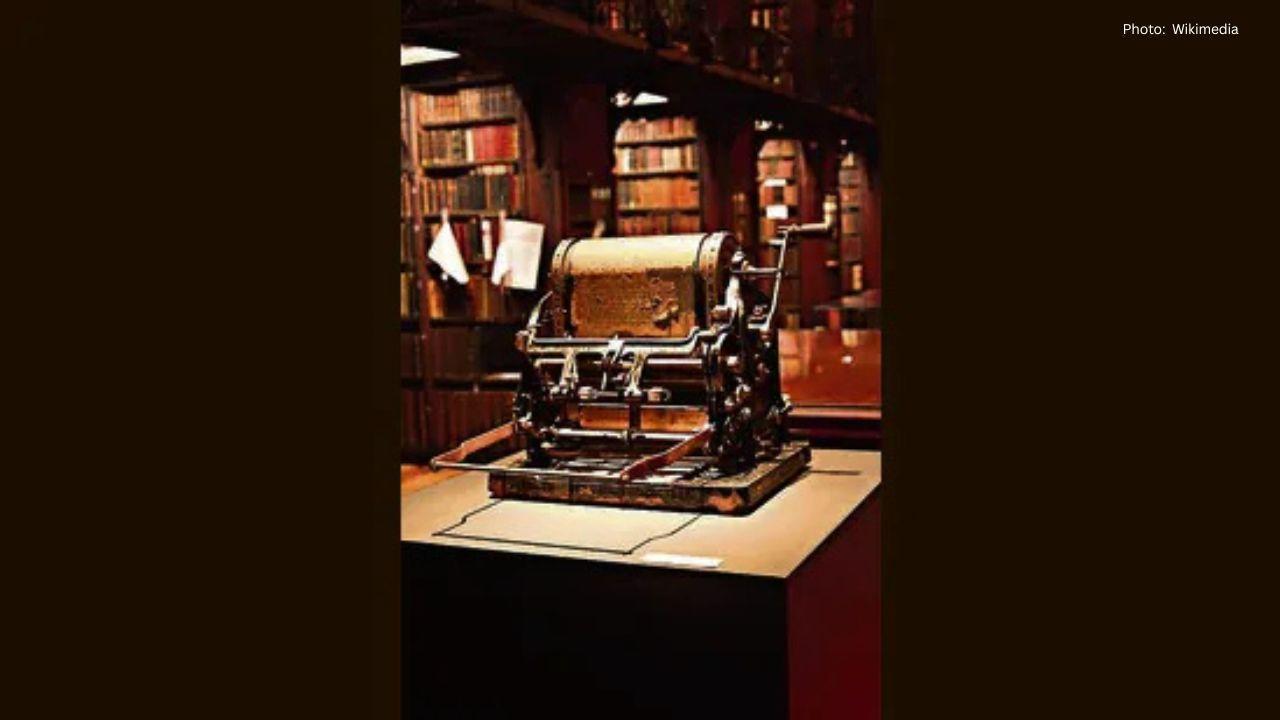
However, the advent of copy machines wasn’t instant. Before them, the 1880s saw the emergence of hand-operated “cyclostyle” machines that pressed ink through stencils to produce copies—precursors to modern inkjet printers. The stencil creation also occurred with these machines, marking a revolutionary period.
Typewriters were also employed to generate copies, though this necessitated retyping each letter repeatedly, a laborious process. The first typewriter was invented in the 1860s by Christopher Sholes, who contributed to the development of the QWERTY keyboard that remains in use today.
Yet, before typewriters gained popularity, carbon paper was already in existence. This straightforward tool allowed for instantaneous duplication. When placed between sheets of paper, writing on the upper sheet transferred the carbon layer onto the lower sheet, producing a real-time copy. Carbon paper was affordable, user-friendly, and required no electricity.
While carbon paper may appear outdated today, it is still utilized in various applications, such as receipt books, shipping documents, and legal paperwork—anywhere duplicate records are needed without electronic devices. Additionally, some artists leverage it for tracing designs. In many small offices and towns globally, carbon paper continues to serve as a practical tool.
Even though technological advancement has surged, the influence of carbon paper remains evident. The “carbon copy” email feature reminds us of how duplicates were once created manually. Technologies that succeeded carbon paper, like typewriters and photocopiers, paved the way for the modern digital infrastructure that we rely on today.
Carbon paper may be a simple invention, but its legacy in communication, office productivity, and printing technology is significant. It serves as a bridge between eras, illustrating how seemingly minor inventions can shape the world across generations.










PM Modi Pays Tribute to Mahatma Gandhi, Urges People to Support Khadi
PM Modi pays tribute to Mahatma Gandhi on Gandhi Jayanti and urges citizens to support Khadi and the

Amazon Seeks to Offload $8 Billion in Nvidia Chips to Investors
Amazon plans to move $8 billion in Nvidia chips to investors, using a new financing model to strengt

Samsung Raises Galaxy S26 Prices as Memory Chip Costs Rise
Samsung raises Galaxy S26 prices in South Korea as rising memory chip costs put pressure on smartpho

Lewis Hamilton Calls Singapore Grand Prix One of F1's Toughest Races
Lewis Hamilton discusses the demanding Singapore Grand Prix and brings Plus44 and Almave to Singapor

Denmark's Pandora Opens World's Largest Jewellery Factory in Vietnam
Pandora opens its largest jewellery factory in Vietnam, expanding global production, strengthening s

Gautam Gambhir Questions Batting-Friendly Pitches After India's Record ODI Chase
Gautam Gambhir questions batting-friendly ODI pitches after India’s record chase, calling for a bett

