You have not yet added any article to your bookmarks!
Join 10k+ people to get notified about new posts, news and tips.
Do not worry we don't spam!
Post by : Samjeet Ariff
Over the last ten years, short-term rentals have surged in popularity, fundamentally altering travel, property investment, and urban experiences. Platforms facilitating short-term rental accommodations allow homeowners to monetize spare spaces while offering travelers diverse and often budget-friendly options. Yet, this boom has significantly impacted local neighborhoods, reshaping housing access, community dynamics, and city infrastructure.
This analysis investigates the dual effects of short-term rentals on neighborhoods, emphasizing the importance of understanding these changes for residents, stakeholders, and governing bodies.
Initially crafted for homeowners to occasionally rent out spare rooms, short-term rentals have blossomed into a thriving market.
Key reasons for this expansion include:
Growing demand for adaptable travel options
The rise of remote work and digital nomadism
Increased profitability compared to long-term leases
User-friendly online management systems
Consequently, numerous neighborhoods now host multiple short-term rental properties, often surpassing traditional long-term homes.
Short-term rentals visibly impact the availability of local housing.
As property owners pivot from long-term tenants to short-term visitors, fewer houses are accessible for local residents, straining an already constrained housing market.
The shortage in housing supply escalates demand, resulting in higher rents. Long-standing residents, particularly low- and middle-income families, find it challenging to meet these growing costs.
More investors are acquiring homes exclusively for short-term rentals, redirecting ownership from residents to profit-focused operators and changing the essence of neighborhoods.
Despite potential drawbacks, short-term rentals provide significant economic benefits.
Many locals depend on income from short-term rentals to:
Manage mortgage payments
Alleviate rising living expenses
Maintain property conditions
This financial support offers stability, especially during economic uncertainties.
Shop at local businesses
Dine at nearby eateries
Engage with neighborhood services
This diversifies tourism revenue beyond standard hotel areas.
Property owners often invest more in maintenance to attract guests, enhancing overall property standards and neighborhood aesthetics.
While economic benefits are noteworthy, community integrity remains a significant concern for residents.
Frequent visitor turnover hampers the development of long-term neighborly connections. Familiar faces are replaced by transient guests, diluting community cohesion.
Tourists might not adhere to local standards regarding:
Noise control
Parking regulations
Waste disposal
This can create tensions between residents and short-term rental occupants.
Residents may feel uneasy with unfamiliar faces regularly entering shared spaces or neighborhoods, particularly in apartment complexes.
Short-term rentals can tax local infrastructure.
Higher occupancy levels lead to increased consumption of water, electricity, waste management, and sewage services.
Tourist vehicles can congest residential thoroughfares, limiting parking accessibility for local inhabitants.
Emergency services may face difficulties locating or reaching properties with transient occupants.
Short-term rentals subtly and significantly shape neighborhood economies.
Local cafés, convenience stores, and transport services might refocus their offerings on visitors rather than residents.
Businesses catering to permanent residents, like schools and family clinics, may face challenges as resident numbers dwindle.
Neighborhoods might succumb to cycles of boom and bust, heavily influenced by tourism peak seasons, disrupting local business stability.
Short-term rentals notably influence real estate values and community demographics.
Heightened investor interest drives prices upward, rewarding sellers while sidelining first-time buyers and local families.
Neighborhoods may evolve into hubs for short-term guests instead of permanent residents, shifting the social landscape.
Increased property costs and rents can displace long-established communities, altering the area's cultural fabric.
Several municipalities require hosts to register rentals, ensuring accountability and adherence to safety standards.
In some locales, limitations are placed on the number of days a property can be rented each year.
Residential areas may impose restrictions to safeguard the housing supply.
Municipalities are increasingly applying hotel-like taxes on short-term rentals to fund essential public services.
These guidelines aim to meditate between economic gains and community welfare.
Residents typically hold ambivalent views about short-term rentals.
Heightened property maintenance
Thrive in local business
Boosted neighborhood visibility
Soaring housing expenses
Noise and privacy invasions
Loss of community stability
Residents generally favor guidelines that enable limited short-term rentals without overwhelming localities.
Short-term rentals can coexist with neighborhoods if managed judiciously.
Establish clear house rules
Restrict guest numbers
Engage with neighbors
Ensure efficient waste management
Comply with local laws precisely
Some hosts focus on longer bookings, catering to professionals or families who are better integrated into the community.
Short-term rentals are likely here to stay, but neighborhoods will continue to evolve.
Future success hinges on:
Clear regulations
Responsible ownership
Community engagement
Advancements in monitoring, noise reduction, and occupancy tracking can mitigate negative effects.
Cities are increasingly aiming to address residents' needs, while continuing to foster tourism economies.
For property investors, grasping the neighborhood dynamics is vital.
Regulations can swiftly change
Community pushback can influence property valuations
Sustainable returns necessitate thoughtful planning
Investors who respect community ethos often achieve more reliable returns in the long run.
Short-term rentals extend beyond housing debates. They impact:
Social welfare
City planning
Local cultures
Equity in opportunities
The measures taken by cities regarding short-term rentals will shape future urban environments.
While short-term rentals present clear economic benefits, unchecked growth can undermine neighborhood stability. The essential task is balancing interests—allowing homeowners to prosper while safeguarding housing availability, community culture, and quality of life for residents.
Sustainable neighborhoods will flourish when tourism, investment, and community needs align rather than clash.
This article serves informative purposes only and should not be construed as legal, financial, or real estate guidance. The effects of short-term rentals vary based on locality, regulations, and market conditions. Readers are encouraged to seek advice from local authorities or qualified professionals before making property or policy choices.










George Russell Wins Dutch GP Sprint, Boosts Mercedes Morale
George Russell wins the Dutch GP Sprint from pole as Mercedes teammate Kimi Antonelli extends his F1

Australia 50/3 After Bangladesh Bowled Out for 64 in Second Test
Australia reached 50/3 after Bangladesh were bowled out for 64 in the second Test, with Mitchell Sta

Jordan Burroughs Returns to Wrestling with 2028 Olympic Dream
Jordan Burroughs returns to wrestling with Real American Freestyle as the Olympic champion eyes a po

Lamborghini Catches Fire on Singapore's ECP, Causing Heavy Traffic
A Lamborghini caught fire on Singapore's ECP, causing heavy traffic and bus delays. No injuries were

Bangkok Airport Duty-Free Area Flooded by Pipe Burst
A burst water pipe flooded the duty-free shopping area at Bangkok's Suvarnabhumi Airport on July 16,
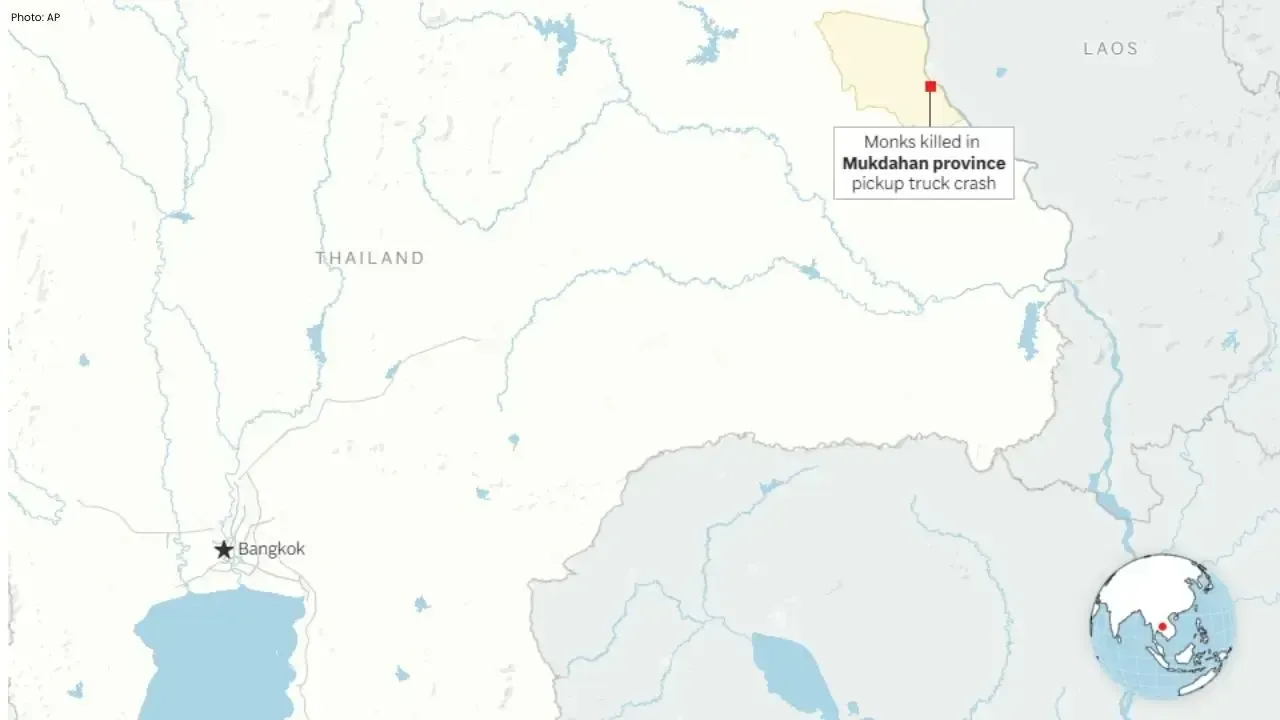
Nine Monks Killed in Thailand Pickup Truck Tragedy
An 11-year-old boy driving a pickup truck crashed into monks during a pilgrimage in northeastern Tha