
You have not yet added any article to your bookmarks!
Join 10k+ people to get notified about new posts, news and tips.
Do not worry we don't spam!
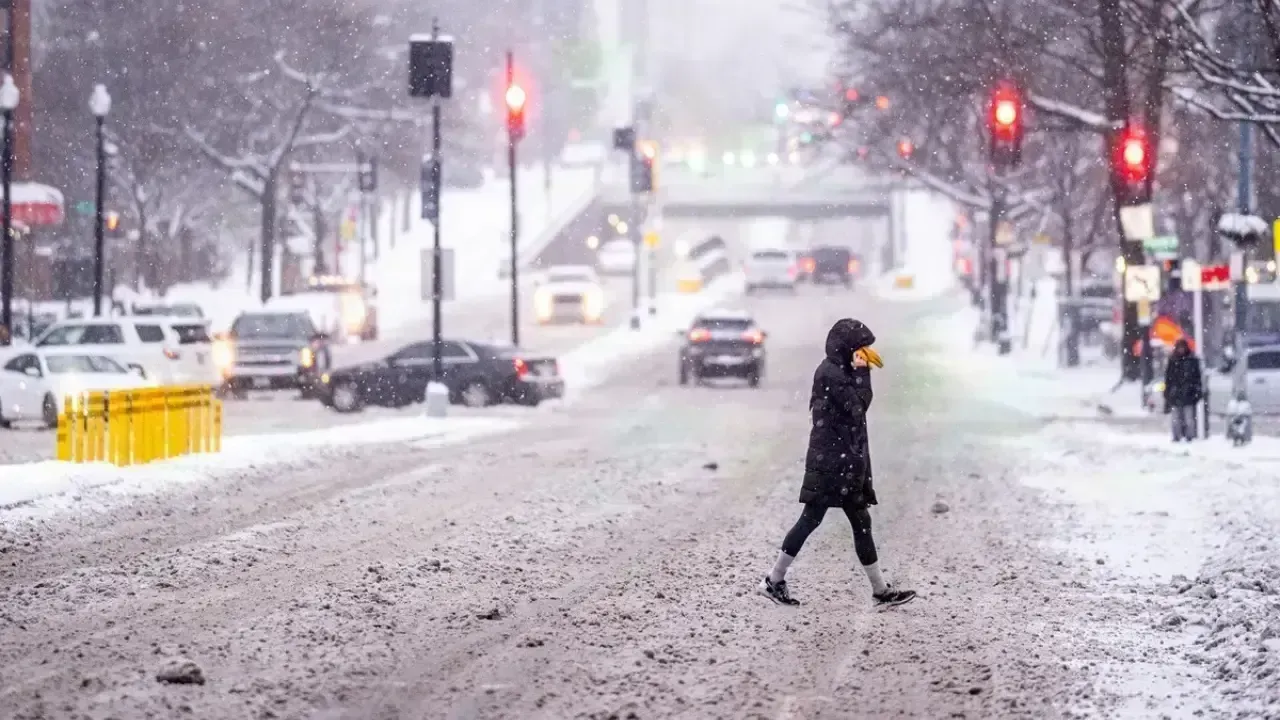
Post by : Anis Farhan
Ice storms are among the most dangerous and destructive forms of winter weather. Unlike snowstorms, which primarily bring heavy snowfall, ice storms coat roads, trees, power lines, and structures in freezing rain that can accumulate in layers of solid ice. This buildup can bring down tree limbs, cut power to millions, close highways for days, and lead to economic losses in the billions of dollars. Because freezing rain is difficult to forecast and can form rapidly when temperatures hover around the freezing point, ice storms remain one of the most unpredictable and perilous winter threats.
In recent history, some of the most damaging ice storms in the United States have reshaped how communities prepare for winter, spurred investments in weather forecasting technology, and highlighted vulnerability in critical infrastructure. Ice storms differ from other winter weather events in their ability to create solid, heavy ice layers that dramatically increase the risk of structural collapse and long-term grid failures, making them uniquely destructive.
When assessing severity, meteorologists and historians consider several key factors:
Ice Accumulation: Amount of freezing rain that freezes on contact, often measured in inches.
Duration: How long freezing conditions persist, allowing ice to build up.
Infrastructure Impact: Power line and tree damage, road closures, and utility failures.
Human Impact: Fatalities, injuries, and the number of people affected.
Economic Loss: Cost of damage to infrastructure, homes, businesses, and emergency response expenses.
These benchmarks help categorize the most destructive and transformative ice storms in U.S. history.
One of the earliest recorded severely icy events occurred during the New Year’s period of 1961 in northern Idaho. Over three days, freezing rain persisted long enough to create astonishing ice accumulations — in some places up to eight inches — which remains among the heaviest single-storm accumulations in U.S. history. The weight of this ice led to widespread power outages and significant damage to trees and infrastructure.
Although this storm occurred in a less densely populated region compared to later ice storms, its impact on small towns was dramatic, setting a precedent for how dangerous ice accumulation can be even in rugged, rural environments.
During late January 2000, a crippling ice storm swept through the southeastern United States, impacting areas from Alabama and Tennessee into Georgia and the Carolinas. The freezing rain event struck just days before a major cultural milestone — the Super Bowl — leaving many residents stranded and complicating logistics for large gatherings.
This storm disrupted travel, caused half a million residents to lose power, some for more than a week, and resulted in over $1.2 billion in damages when adjusted for inflation. The impact was felt widely across the Southeast, where infrastructure is historically less equipped for prolonged ice.
On New Year’s Eve in 1978, a severe ice storm hit north-central Texas, creating dangerous conditions over a stretch of nearly 100 miles. Ice accumulations of up to two inches were recorded across major roadways and urban centers, forcing massive traffic shutdowns and trampling holiday travel plans.
The storm inflicted widespread tree and utility damage, leading to prolonged power losses. In a region unaccustomed to such crippling ice events, the aftermath demonstrated how quickly infrastructure can be overwhelmed by freezing rain.
During mid-December 2000, a region stretching from Texas through Arkansas and into Oklahoma experienced a powerful ice storm over the Christmas holiday period. More than 500,000 people lost power, and officials described the impact on utilities as one of the worst in regional memory.
This storm highlighted the vulnerability of southern states to winter weather events, especially when freezing rain arrives without the extensive preparation often seen in colder northern regions.
In January 1994, parts of Mississippi experienced one of the worst regional ice storms in state history. In Clarksdale, Mississippi, officials deployed 200,000 gallons of ice-melting chemicals, reflecting the storm’s intensity and the challenges of keeping roadways passable.
Ice accumulated on major arteries, bringing traffic to a standstill, damaging trees, and disrupting commerce. This storm served as a wake-up call for southern states about the resilience needed in the face of heavy ice accumulation.
In late January 2009, persistent freezing rain blanketed parts of northern Arkansas and Kentucky, depositing ice layers exceeding two inches in places. This accumulation was enough to cripple transportation networks, snap utility poles, and bring down trees — blocking vital roadways and paralyzing communities for days.
State officials in Kentucky termed it the worst weather event in modern state history, with the National Guard mobilized to assist. The storm’s widespread impact presented some of the most extensive tree and utility damage seen in the region in decades.
Referred to historically as one of the costliest ice events of its era, the Great Ice Storm of 1951 stretched from Louisiana through Tennessee into parts of the Ohio Valley. Heavy ice accumulation caused massive losses in livestock, timber, and crop yields, alongside widespread damage to power infrastructure and prolonged outages.
The storm is credited with over $100 million in damages (in historical economic terms) and remains one of the most destructive mid-century ice events recorded in the U.S.
In December 2008, a severe ice storm blanketed large portions of the Northeastern United States, affecting metro areas from Upstate New York through New England. More than 1.7 million people lost power, and fallen utility wires and poles coated in ice blocked roads and caused extensive infrastructural damage.
The storm was widely considered the most severe ice event in that region in over two decades, with significant delays in restoring services and widespread travel disruption across major urban centers.
Though not yet fully tallied in post-event severity rankings, the late January 2026 winter storm — now named Winter Storm Fern — has earned recognition as one of the most impactful ice storms in recent U.S. history. This storm brought widespread freezing rain, heavy ice accumulation, and prolonged cold across more than 30 states, from the Deep South to the Northeast. Major power outages exceeded one million customers, and travel across airports and highways was severely disrupted.
Emergency declarations spanned more than a dozen states, and the depth of ice and snow impacted essential services and energy demand at unprecedented scales in multiple regions simultaneously. The storm’s breadth and severity underscore how contemporary climate patterns can fuel large-scale winter events with catastrophic effects.
Although historically significant ice events occurred in the early 20th century and mid-century, modern records consistently identify a combination of the 2000 Atlanta ice event and recently the widespread January 2026 storm as among the most severe ever documented when considering power outages, geographic reach, and economic loss. The specifics vary by region and historical measurement methods, but together these illustrate the highest level of destruction recorded in U.S. climatic history.
Experts note that when ice accumulation exceeds typical thresholds — often a quarter-inch or more — emergencies become far more likely, leading in extreme cases to multi-day outages and cascading infrastructure failure across jurisdictions previously unprepared.
Ice storms are not relics of the distant past; they continue to reshape how communities, utilities, and governments prepare for winter weather. The extensive damage caused by these events — particularly in regions unaccustomed to heavy icing — underscores the importance of:
Enhanced forecasting tools and early warning systems
Strengthening utility grids and tree maintenance programs
Public education on winter preparedness and personal safety
Regional coordination for emergency response and shelter support
Climate scientists also note that as atmospheric patterns shift, the potential for rapid freezes and moisture events may increase, making proactive planning essential for reducing human and economic tolls.
Disclaimer: This article is based on historical weather research and contemporary reporting on winter storms. It is intended for informational and educational purposes and does not substitute professional climate or disaster preparedness advice.










PM Modi Pays Tribute to Mahatma Gandhi, Urges People to Support Khadi
PM Modi pays tribute to Mahatma Gandhi on Gandhi Jayanti and urges citizens to support Khadi and the

Amazon Seeks to Offload $8 Billion in Nvidia Chips to Investors
Amazon plans to move $8 billion in Nvidia chips to investors, using a new financing model to strengt

Samsung Raises Galaxy S26 Prices as Memory Chip Costs Rise
Samsung raises Galaxy S26 prices in South Korea as rising memory chip costs put pressure on smartpho

Lewis Hamilton Calls Singapore Grand Prix One of F1's Toughest Races
Lewis Hamilton discusses the demanding Singapore Grand Prix and brings Plus44 and Almave to Singapor

Denmark's Pandora Opens World's Largest Jewellery Factory in Vietnam
Pandora opens its largest jewellery factory in Vietnam, expanding global production, strengthening s

Gautam Gambhir Questions Batting-Friendly Pitches After India's Record ODI Chase
Gautam Gambhir questions batting-friendly ODI pitches after India’s record chase, calling for a bett

