You have not yet added any article to your bookmarks!
Join 10k+ people to get notified about new posts, news and tips.
Do not worry we don't spam!

Post by : Samjeet Ariff
Once the primary method of conducting transactions, cash is quickly losing its grip. In cities and rural areas alike, digital payment trends are redefining how individuals manage their finances. This transition stems from technological advancements, changing consumer preferences, and evolving economic conditions.
The decline of cash isn't merely about technology; it's indicative of a profound alteration in trust, speed, transparency, and overall financial conduct. Understanding the motivations behind this shift can help individuals, businesses, and policymakers gear up for a future where physical currency holds less significance.
Throughout history, money has adapted alongside society. Moving from barter to coins, paper, and now digital formats, each evolution sought to enhance transaction efficiency and ease.
For centuries, cash was effective due to its:
Universal acceptance
User-friendliness
Technology independence
Yet, as economies evolved, cash highlighted its limitations in speed, traceability, and security.
Consequently, digital payments rose to address these concerns, providing instantaneous transfers, accurate tracking, and accessibility from afar.
Digital payments encompass any transaction performed without cash, utilizing electronic methods like:
Mobile wallets
Credit and debit cards
Instant bank transfers and UPI
Online banking
Payments via QR codes
NFC contactless payments
These mechanisms facilitate electronic movement of funds, often instantly.
The transition from cash to digital methods is motivated by several compelling behavioral and practical aspects.
Users no longer need to fumble for exact change or visit ATMs, as transactions can be completed within seconds, both online and in-person.
Services such as bill payments and online shopping can be executed without having to be physically present, a necessity highlighted during global crises.
Digital transactions automatically log spending, allowing users to manage their finances and budgets more proficiently.
With reduced cash in hand, the chances of theft decrease. Digital platforms incorporate security features like PINs, biometrics, and OTPs.
Smartphones have been pivotal in boosting the adoption of digital payments.
With a single device, users can:
Manage multiple payment methods
Scan QR codes
Monitor expenditures
Receive immediate payment confirmations
Smartphones have integrated payments into everyday routines, transforming them into a standard habit.
Digital payments reduce wait times and enhance customer flow during peak periods.
Cash management requires significant effort, and digital transactions ease these operational mandates.
Electronic transactions simplify processes related to accounting, taxation, and compliance.
Firms accepting digital payments are better positioned to serve online customers and tourists.
For many businesses, going digital is not merely an option; it is essential for continued operation.
The rise of digital transactions is subtly reshaping consumer attitudes towards money.
Digital logs of transactions facilitate greater visibility into spending habits, encouraging responsible expenditures.
By not being confined to the cash in their pockets, consumers are more prone to frequent purchasing, while budgeting tools gain importance.
Quick and efficient payment experiences make cash feel less favorable, leading to a rapid decline in cash usage.
Digital payments promote the important notion of financial inclusion.
These platforms aid in integrating unbanked and underbanked demographics into the financial landscape.
Data from transactions assists lenders in gauging eligibility for loans and other benefits.
Digital transfers decrease exploitation and delays in payments, forming a connection between informal and formal economic sectors.
Globally, governments are championing the growth of digital transactions.
Such transactions help combat black-market activities and promote tax adherence.
Direct transfers minimize waste and ensure timely disbursement of funds.
Operational expenses related to printing and securing physical currency diminish with digital systems.
Policy interventions boost public confidence and foster adoption.
Initially, security concerns hampered acceptance, but modern technology has effectively mitigated many risks.
Safeguards like PINs, OTPs, and biometrics enhance transaction security.
AI tools monitor activities to identify suspicious behaviors promptly.
Frameworks for dispute resolution and transaction reversals increase user confidence.
As trust builds, hesitancy towards digital payments diminishes.
Although digital payments are on the rise, cash continues to coexist.
Certain regions contend with inadequate internet connectivity or device availability.
Some individuals favor the anonymity that cash transactions offer.
In certain cultures, cash remains a prevalent medium of exchange.
Nonetheless, cash's presence continues to dwindle as alternate payment methods gain traction.
Initially reluctant, small businesses now realize the substantial advantages of accepting digital payments.
QR-based systems require minimal initial investment.
Real-time transactions enhance liquidity for small merchants.
Shoppers prefer businesses that allow diverse payment methods.
Digital transactions empower smaller vendors.
As cash usage declines, the wider economy is also influenced.
Digital transactions accelerate financial exchanges, stimulating economic growth.
Data generated from payments aids in understanding consumer behavior, enhancing business strategies.
Platforms create new job opportunities, drive innovation, and deliver novel services.
A digital transaction-based economy remains more adaptable and responsive.
Despite advances, obstacles persist.
The evolving landscape demands upgraded security measures continuously.
Some users require guidance and resources.
Heavy reliance on technology introduces vulnerabilities. Addressing these challenges is vital for sustained growth.
The outlook identifies trends like:
Rise in contactless methods
Payments integrated within daily applications
Biometric and voice-activated transactions
Effortless international transfers
While cash may linger as a fallback, the impulse for digital-first approaches will prevail.
A transition to a cashless society necessitates responsibility.
Budgeting will be crucial
Transparent spending patterns foster accountability
Financial education becomes imperative
While digital tools are beneficial, their impact hinges on responsible usage.
The transition from cash to digital payments results not from cash's failures, but because digital options address contemporary issues more effectively. Enhanced speed, convenience, and integration into daily routines make digital payment methods the favored choice. Although this shift is progressive, it is inevitable. Cash is unlikely to disappear shortly, but its prominence will inevitably diminish as digital transaction habits take root.
This article serves informational purposes only and does not offer financial, legal, or technical advice. Variations in digital payment systems, regulations, and associated risks may differ by location and provider. Readers are encouraged to conduct personal research or consult relevant professionals before making any decisions regarding financial technology or payment approaches.










George Russell Wins Dutch GP Sprint, Boosts Mercedes Morale
George Russell wins the Dutch GP Sprint from pole as Mercedes teammate Kimi Antonelli extends his F1

Australia 50/3 After Bangladesh Bowled Out for 64 in Second Test
Australia reached 50/3 after Bangladesh were bowled out for 64 in the second Test, with Mitchell Sta

Jordan Burroughs Returns to Wrestling with 2028 Olympic Dream
Jordan Burroughs returns to wrestling with Real American Freestyle as the Olympic champion eyes a po

Lamborghini Catches Fire on Singapore's ECP, Causing Heavy Traffic
A Lamborghini caught fire on Singapore's ECP, causing heavy traffic and bus delays. No injuries were

Bangkok Airport Duty-Free Area Flooded by Pipe Burst
A burst water pipe flooded the duty-free shopping area at Bangkok's Suvarnabhumi Airport on July 16,
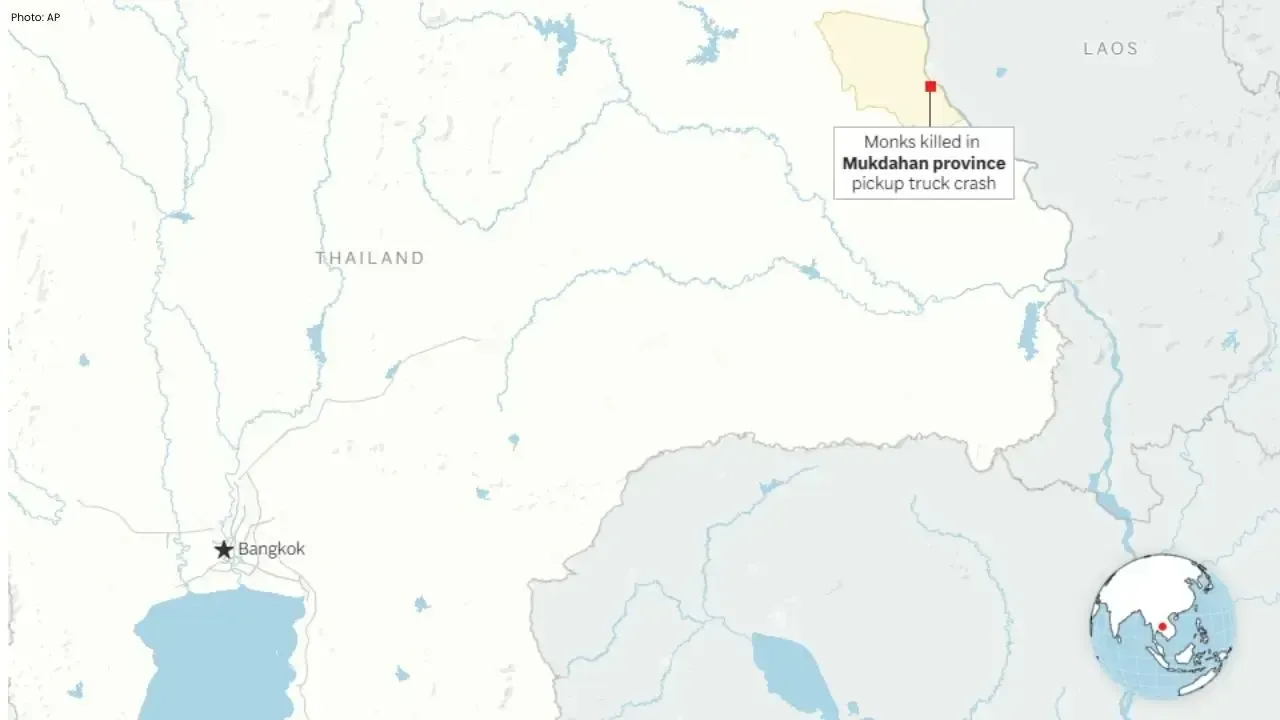
Nine Monks Killed in Thailand Pickup Truck Tragedy
An 11-year-old boy driving a pickup truck crashed into monks during a pilgrimage in northeastern Tha