
You have not yet added any article to your bookmarks!
Join 10k+ people to get notified about new posts, news and tips.
Do not worry we don't spam!
Post by : Shakul
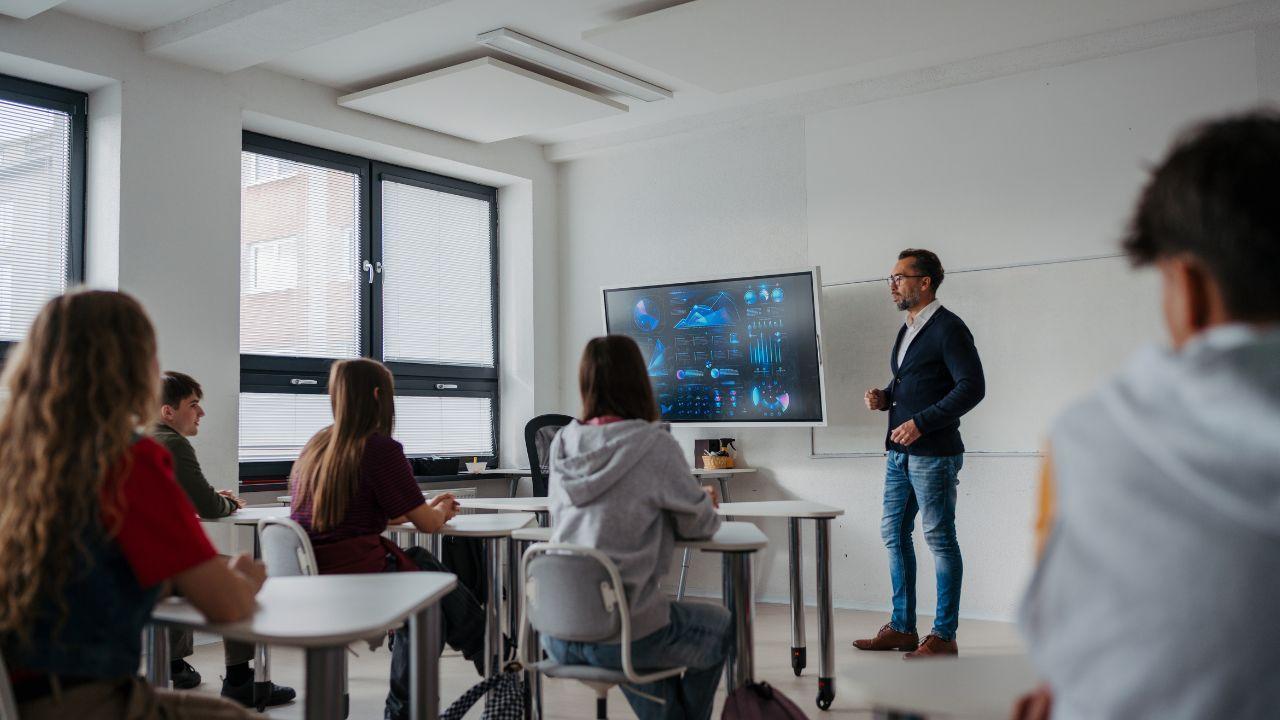
Thailand has launched a new digital education initiative with the introduction of Smart Classrooms in ten pilot schools located in the provinces of Buriram and Si Sa Ket. The project is part of the Technology-Enabled Open Schools for All (TEOSA) programme, developed through collaboration between UNESCO, Thailand’s Ministry of Education and Huawei.
The initiative aims to strengthen digital infrastructure in schools and promote the use of artificial intelligence in teaching and learning. Officials say the programme supports Thailand’s broader strategy to modernise education through digital transformation and aligns with the country’s National AI Strategy and Action Plan for 2022–2027.
Under the project, each province has one “mother school” serving as a regional digital hub, linked with four surrounding “child schools.” These schools are equipped with high-speed internet connectivity, interactive digital display systems and collaborative learning platforms that allow teachers and students to share educational content in real time. The system also supports blended learning, combining traditional classroom teaching with digital and AI-supported tools.
Teachers are also receiving training to effectively integrate the new technology into daily lessons. Around 45 teachers from the participating schools attended professional development workshops in early March where they observed live demonstrations of the Smart Classroom systems. These sessions showcased how AI-supported applications, interactive screens and collaborative tools can enhance teaching methods and student engagement.
Education experts say the initiative highlights the importance of pairing technological investment with teacher training. UNESCO representatives noted that while digital tools are essential for modern classrooms, teachers remain the key drivers of innovation in education through their creativity and professional judgment.
Huawei officials stated that the company sees technology as a tool to bridge the digital divide, particularly for students in rural or underserved communities. The Smart Classroom programme is designed to provide equal access to quality digital education while encouraging collaboration between governments, educators and technology companies.
The TEOSA initiative is expected to serve as a model for future digital education projects in Thailand. By combining policy reform, improved digital infrastructure and teacher capacity-building, the programme aims to help the country prepare students for a technology-driven future and strengthen its global competitiveness.










PM Modi Pays Tribute to Mahatma Gandhi, Urges People to Support Khadi
PM Modi pays tribute to Mahatma Gandhi on Gandhi Jayanti and urges citizens to support Khadi and the

Amazon Seeks to Offload $8 Billion in Nvidia Chips to Investors
Amazon plans to move $8 billion in Nvidia chips to investors, using a new financing model to strengt

Samsung Raises Galaxy S26 Prices as Memory Chip Costs Rise
Samsung raises Galaxy S26 prices in South Korea as rising memory chip costs put pressure on smartpho

Lewis Hamilton Calls Singapore Grand Prix One of F1's Toughest Races
Lewis Hamilton discusses the demanding Singapore Grand Prix and brings Plus44 and Almave to Singapor

Denmark's Pandora Opens World's Largest Jewellery Factory in Vietnam
Pandora opens its largest jewellery factory in Vietnam, expanding global production, strengthening s

Gautam Gambhir Questions Batting-Friendly Pitches After India's Record ODI Chase
Gautam Gambhir questions batting-friendly ODI pitches after India’s record chase, calling for a bett

