
You have not yet added any article to your bookmarks!
Join 10k+ people to get notified about new posts, news and tips.
Do not worry we don't spam!
Post by : Meena Ariff
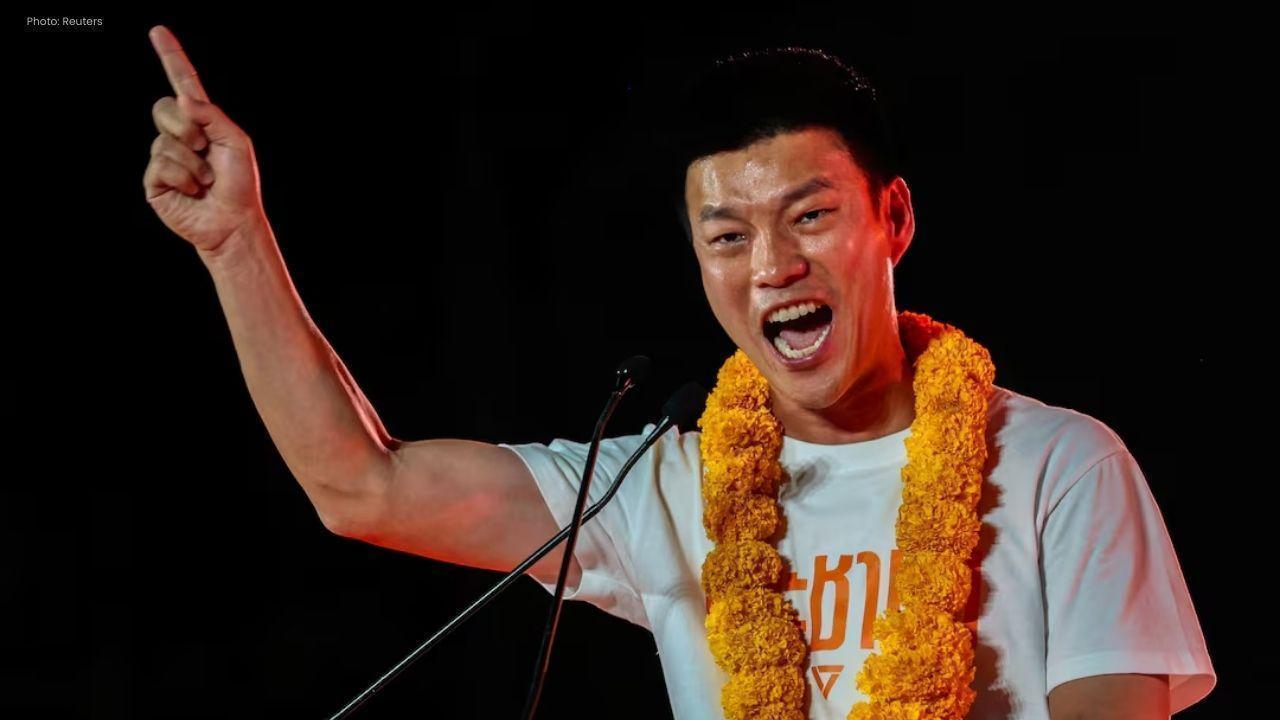
As Thailand prepares for its critical general election on February 8, the political landscape is witnessing a heated and closely fought contest among three major parties. At the forefront of the race is Natthaphong Ruengpanyawut, the progressive leader of the People’s Party, who continues to dominate recent opinion polls. His rising popularity signals a major challenge to the incumbent Prime Minister Anutin Charnvirakul and his conservative Bhumjaithai Party, which is eager to secure another term in power.
The upcoming vote has effectively narrowed down to a high-stakes three-way competition. Alongside Natthaphong’s reform-driven People’s Party and Anutin’s Bhumjaithai Party, the former ruling Pheu Thai Party remains a powerful contender, vying to reclaim influence in Thai politics. This trio now defines the core of Thailand’s political future, offering voters distinct choices regarding the country’s direction.
Natthaphong Ruengpanyawut’s leadership has energized the People’s Party, whose platform emphasizes progressive reforms aimed at addressing long-standing social and economic challenges. His ability to attract widespread support reflects a growing appetite among Thai voters for change and fresh leadership.
Meanwhile, Prime Minister Anutin Charnvirakul, heading the Bhumjaithai Party, is campaigning to maintain his government’s hold on power. Known for his conservative stance and pragmatic approach, Anutin’s leadership has seen mixed reactions amid the shifting political climate. His party’s position in the polls, though strong, faces increasing pressure from Natthaphong’s surge and the persistent appeal of the Pheu Thai Party.
The Pheu Thai Party, historically one of Thailand’s most influential political forces, remains a formidable player. Despite setbacks in recent years, it continues to enjoy substantial grassroots support and seeks to capitalize on voter dissatisfaction with the current administration.
As the election day approaches, Thailand finds itself at a crossroads. The outcome will not only determine which party forms the next government but also shape the policy priorities and reform agenda for the nation. Observers note that this election could redefine Thailand’s political landscape for years to come, with the three main parties competing intensely to secure a mandate from the electorate.
With polls showing Natthaphong Ruengpanyawut leading but no clear majority in sight, political analysts predict that coalition-building and strategic alliances will play a crucial role in the post-election phase. For voters, the February 8 election represents a pivotal moment to influence the country’s future path amid ongoing economic and social challenges.










PM Modi Pays Tribute to Mahatma Gandhi, Urges People to Support Khadi
PM Modi pays tribute to Mahatma Gandhi on Gandhi Jayanti and urges citizens to support Khadi and the

Amazon Seeks to Offload $8 Billion in Nvidia Chips to Investors
Amazon plans to move $8 billion in Nvidia chips to investors, using a new financing model to strengt

Samsung Raises Galaxy S26 Prices as Memory Chip Costs Rise
Samsung raises Galaxy S26 prices in South Korea as rising memory chip costs put pressure on smartpho

Lewis Hamilton Calls Singapore Grand Prix One of F1's Toughest Races
Lewis Hamilton discusses the demanding Singapore Grand Prix and brings Plus44 and Almave to Singapor

Denmark's Pandora Opens World's Largest Jewellery Factory in Vietnam
Pandora opens its largest jewellery factory in Vietnam, expanding global production, strengthening s

Gautam Gambhir Questions Batting-Friendly Pitches After India's Record ODI Chase
Gautam Gambhir questions batting-friendly ODI pitches after India’s record chase, calling for a bett

