You have not yet added any article to your bookmarks!
Join 10k+ people to get notified about new posts, news and tips.
Do not worry we don't spam!

Post by : Anis Farhan
In an era of escalating global tech competition, Taiwan is doubling down on innovation. The island’s government recently unveiled a landmark initiative—the “Ten Major AI Infrastructure Projects”—aimed at generating over T$15 trillion, roughly US$510 billion, in economic value by 2040. This is no idle promise. It is a long-term strategic bet on Taiwan’s strengths in semiconductors, ICT hardware, and industrial ecosystems.
The plan zeroes in on three major pillars—silicon photonics, quantum technologies, and AI robotics—while advancing sovereign AI, computing infrastructure, venture capital infusion, job creation, and regional development. The question now becomes: how does Taiwan intend to execute such a sweeping vision, and can it truly reshape the global AI landscape?
Silicon photonics stands as the technological heartbeat of Taiwan’s plan. It involves using light, rather than electrons, to transmit data. This approach dramatically improves bandwidth, speed, and energy efficiency—all critical for massive AI workloads and next-generation data centers.
Taiwan’s semiconductor leaders—most prominently, TSMC—are central to this push. They are investing in photonics-capable foundries and R&D hubs. This coincides with global academic breakthroughs, such as the development of reconfigurable silicon photonic processors enabling matrix multiplications, neural-network layers, and secure encryption on chip. Essentially, Taiwan seeks to be a world leader in merging optical networking with chipmaking, cementing its edge in AI computation.
Quantum technology represents both promise and suspense. Taiwan’s initiative signals clear intent to develop a full quantum technology ecosystem—from hardware to talent and applications.
Building such infrastructure requires quantum-grade instrumentation, secure supply chains, and research labs capable of tackling quantum decoding, quantum-safe encryption, and scalable quantum processors. By establishing globally ranked quantum research facilities within the next decade or so, Taiwan is aiming to become the quantum hub for industries and governments navigating post-classical computing.
Robotics is Taiwan’s third pillar. The island already has a robust hardware supply chain—covering everything from actuators to control systems. But the AI robotics push accelerates this by integrating autonomous decision-making, machine learning, and natural interface layers into physical machines.
To spearhead this, an AI Robotics Industry Grand Alliance, led by Foxconn, will align robotics design with AI logic. The goal: create domestic, scalable, and globally competitive AI robotic systems. These could serve manufacturing, healthcare, logistics, agriculture, or even elder care—leveraging Taiwan’s tech expertise and demographic needs.
A plan of this magnitude needs capital and structure. Taiwan’s government is channeling T$100 billion (approx. US$3 billion) in dedicated venture capital funds to support AI startups, research labs, and private-sector co-investments—a move expected to triple within five years.
This funding also seeks to stimulate regional innovation hubs, attracting global AI talent and diversifying development beyond Taipei. The establishment of three international-level AI research laboratories promises to anchor academic leadership and commercial translation.
Economic modeling reveals bold predictions: the AI infrastructure push could lift Taiwan’s GDP by six percentage points. It also targets 500,000 specialist jobs across sectors like photonics, quantum engineering, robotics, and advanced manufacturing.
There’s another layer—AI sovereignty. Taiwan’s ecosystem aims to build independent capability in AI models, algorithms, and compute infrastructure. That means reduced reliance on foreign providers, enhanced data protection, and strategic autonomy in an era of geopolitical tech tensions.
Part of the strategy involves expanding real-world infrastructure. Recent developments align with this:
AI Data Centre Build-out
Foxconn and Nvidia will co-develop high-powered AI data centers in Kaohsiung, eventually delivering up to 100 megawatts of computing power—enabling expansive AI training capacity.
Semiconductor Packaging Advances
Taiwan’s SPIL opened an advanced AI chip packaging plant in Taichung, with Nvidia’s CEO onsite. The facility includes cutting-edge silicon photonics packaging—integral for high-bandwidth chip interconnects.
TSMC’s Expansion
TSMC reported record quarterly sales—over $30 billion—thanks to AI demand. It plans at least 15 new fabs and packaging sites worldwide and is targeting 2nm process node mass-production in 2026, critical for next-gen AI chips.
This initiative builds upon Taiwan’s long-established innovation infrastructure. The National Science and Technology Council (NSTC), formerly the Ministry of Science and Technology, now coordinates strategy across science parks, R&D funding, and international collaborations.
Additionally, Taiwan’s Industrial Technology Research Institute (ITRI) plays a big role—blending industrial R&D, startup incubation, and smart tech targeting, as outlined in its 2030 roadmap.
Ambition doesn’t guarantee success. Several challenges loom:
Energy Constraints
Photonic chips, data centers, and fabs consume huge power. Taiwan will need clean electricity scaling to avoid carbon spikes while keeping operations reliable.
Geopolitical Tensions
Cross-strait dynamics, US export controls, and supply chain volatility complicate Taiwan’s international tech navigation.
Execution Complexity
Coordinating government, industry, startups, academia, and international partners across three bold domains involves staggering logistic and regulatory challenges.
If realized, Taiwan's strategy would dramatically recalibrate the global AI ecosystem. The island could emerge not just as a chip foundry nexus, but as a compute, robotics, and quantum powerhouse. That could shift supply chains, R&D leadership, and strategic partnerships across Asia-Pacific and beyond.
Moreover, successes here could inspire similar multi-sectoral AI infrastructure pushes in other innovation economies—foreshadowing a new wave of national-scale technology ecosystems.
Taiwan’s T$15 trillion AI infrastructure initiative is audacious—but coherent. It builds upon existing strengths, addresses future horizons, and aims to secure long-term economic and strategic positioning in AI.
From silicon photonics to quantum labs to AI robots, the plan is a multi-pronged, deeply ambitious bet on intelligent transformation by 2040. If well-executed—and supported by energy, policy, collaboration, and global trust—it could redefine Taiwan as not just the world’s chipmaker, but its computing brain and robotic heart.
This article is provided for informational and editorial purposes only. It reflects publicly available developments as of mid-2025. Newsible Asia offers no financial or strategic advice, and readers are encouraged to consult official sources and policy publications for decision-making.





Lamborghini Catches Fire on Singapore's ECP, Causing Heavy Traffic
A Lamborghini caught fire on Singapore's ECP, causing heavy traffic and bus delays. No injuries were

Bangkok Airport Duty-Free Area Flooded by Pipe Burst
A burst water pipe flooded the duty-free shopping area at Bangkok's Suvarnabhumi Airport on July 16,
Nine Monks Killed in Thailand Pickup Truck Tragedy
An 11-year-old boy driving a pickup truck crashed into monks during a pilgrimage in northeastern Tha
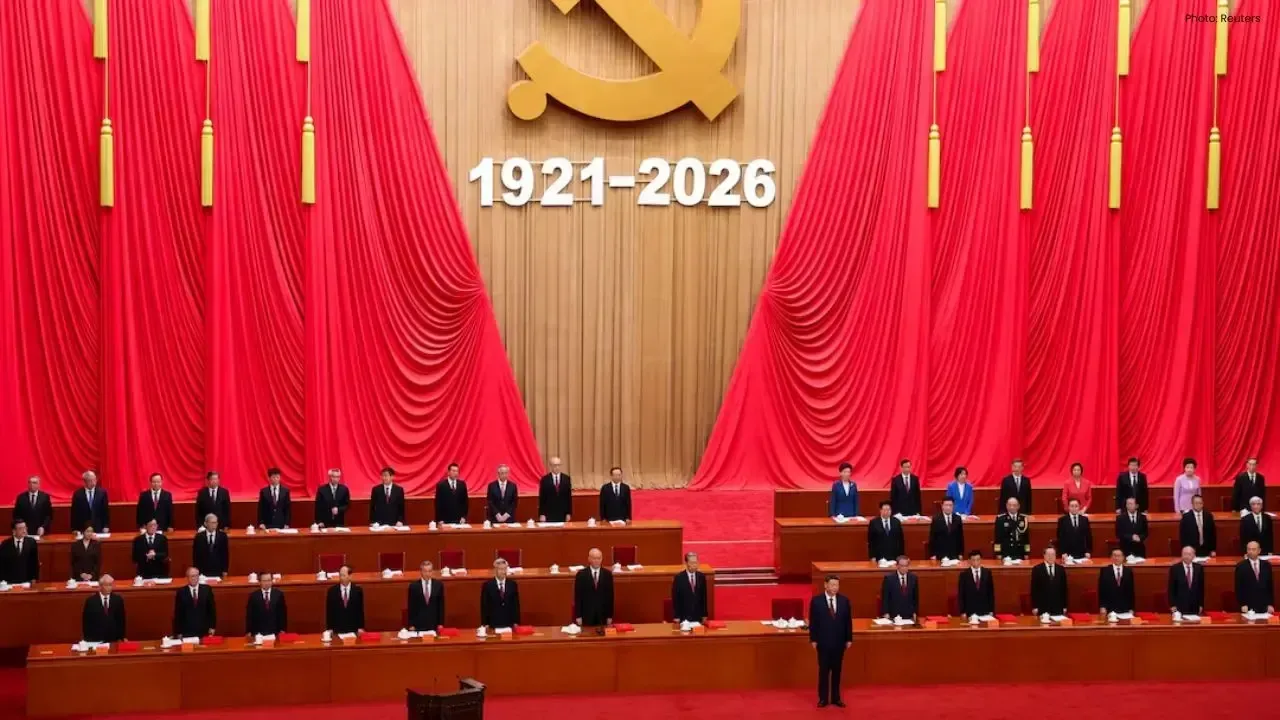
Anwar Congratulates Xi on CPC's 105th Anniversary
Malaysia reaffirms strong ties with China as PM Anwar Ibrahim sends a congratulatory letter to Presi
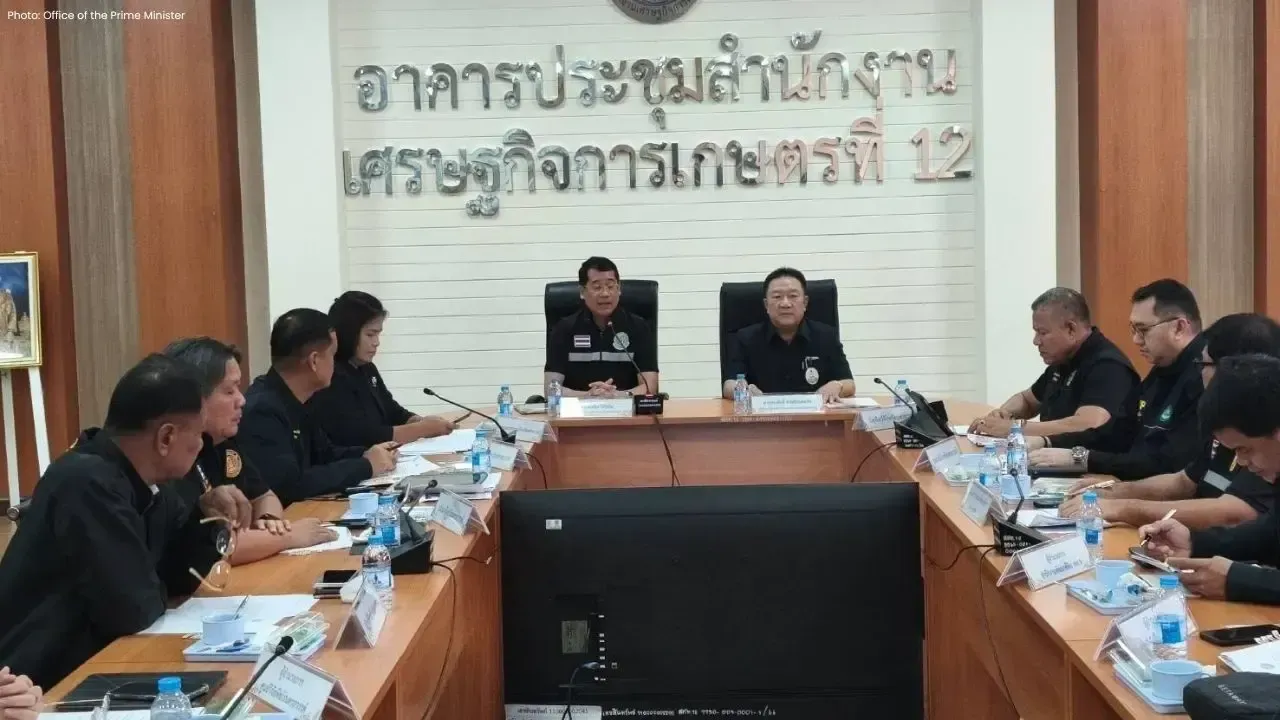
Thai Agriculture Team Reviews 2026 Farm Development Plans
Agriculture Ministry officials inspected livestock and organic rice projects in Nakhon Sawan to moni

Thailand, Canada Boost Ties in PM-Level Phone Talks
Thailand and Canada agreed to strengthen trade, security, OECD cooperation and ASEAN-Canada FTA talk