
You have not yet added any article to your bookmarks!
Join 10k+ people to get notified about new posts, news and tips.
Do not worry we don't spam!
Post by : Rameen Ariff
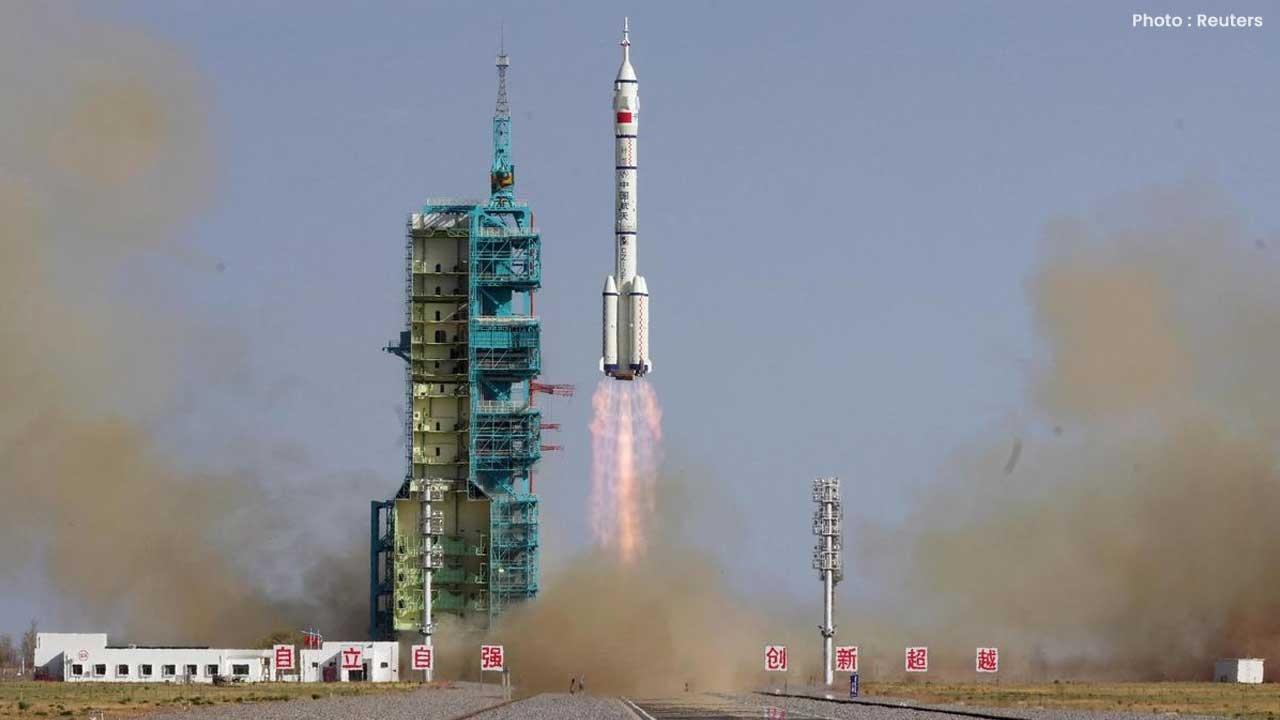
China's human spaceflight authority has announced a hold on the planned return of the crewed Shenzhou-20 spacecraft after signs it may have been struck by small pieces of orbital debris. Officials said an investigation into the extent of the damage and the attendant safety risks is under way.
The China Manned Space Agency (CMSA) confirmed teams are conducting an impact assessment and risk review but offered no new landing date. The mission had been expected to touch down in northern China on Wednesday before the delay was announced.
Orbital debris—discarded rocket stages, broken satellite parts and other fragments—circulates around the planet and presents an increasing hazard to crewed vehicles and stations. Shenzhou missions normally rotate crews after about six months at the Tiangong complex, where astronauts perform experiments and maintenance tasks, sometimes to rectify damage from impacts.
CMSA has not clarified whether the suspected strike occurred while Shenzhou-20 was in free flight or docked to Tiangong. The pause comes during a handover period: both the Shenzhou-20 and newly arrived Shenzhou-21 crews are currently on the station.
Authorities say several contingencies exist. If the spacecraft cannot be certified as flightworthy, Shenzhou-21’s vehicle could return its crew, or a standby Shenzhou capsule and Long March-2F rocket kept at the Jiuquan Satellite Launch Centre could be readied to secure crew safety. Previous technical setbacks in other programmes, such as the delays seen with NASA’s Boeing Starliner, have illustrated how malfunctions can extend orbital missions.
The incident has renewed calls for stronger international coordination on space traffic management. China has urged collaborative monitoring of orbital objects; last year President Xi Jinping proposed creating a joint “space debris observation centre” with Arab partners. The United Nations has likewise promoted a common database and rules to reduce collision risks.
Tensions with the United States over activities that generate debris, including anti-satellite tests and avoidance manoeuvres involving the Tiangong station, have long complicated global dialogue. China is investing in debris-mitigation technologies, such as deorbiting sails designed to bring satellites down safely without producing further fragments.
As CMSA completes its evaluation, the episode underscores the wider challenge nations face in operating safely within an increasingly crowded orbital environment.










PM Modi Pays Tribute to Mahatma Gandhi, Urges People to Support Khadi
PM Modi pays tribute to Mahatma Gandhi on Gandhi Jayanti and urges citizens to support Khadi and the

Amazon Seeks to Offload $8 Billion in Nvidia Chips to Investors
Amazon plans to move $8 billion in Nvidia chips to investors, using a new financing model to strengt

Samsung Raises Galaxy S26 Prices as Memory Chip Costs Rise
Samsung raises Galaxy S26 prices in South Korea as rising memory chip costs put pressure on smartpho

Lewis Hamilton Calls Singapore Grand Prix One of F1's Toughest Races
Lewis Hamilton discusses the demanding Singapore Grand Prix and brings Plus44 and Almave to Singapor

Denmark's Pandora Opens World's Largest Jewellery Factory in Vietnam
Pandora opens its largest jewellery factory in Vietnam, expanding global production, strengthening s

Gautam Gambhir Questions Batting-Friendly Pitches After India's Record ODI Chase
Gautam Gambhir questions batting-friendly ODI pitches after India’s record chase, calling for a bett

