You have not yet added any article to your bookmarks!
Join 10k+ people to get notified about new posts, news and tips.
Do not worry we don't spam!
Post by : Anis Farhan
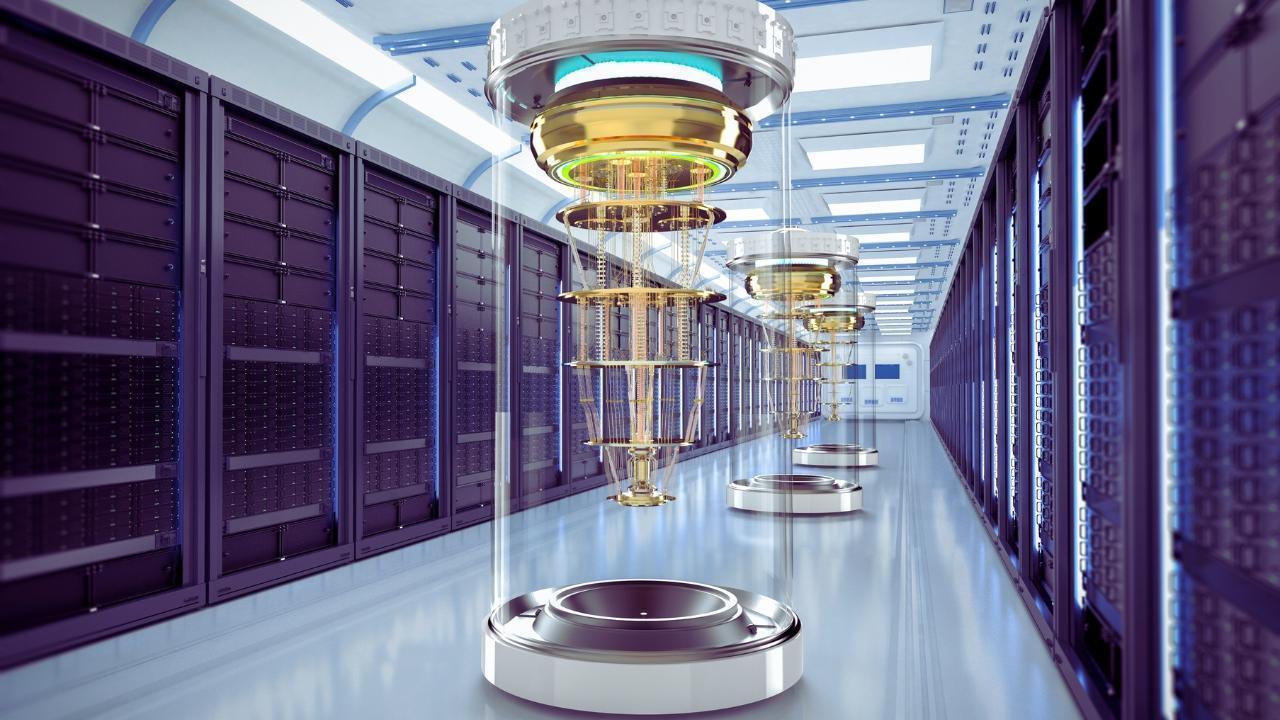
Quantum computing is emerging as the next frontier in technology—a powerful new computational paradigm that promises to tackle challenges classical machines simply cannot solve. While still early in its velocity curve, by 2030, quantum machines are expected to be stepping into industries like pharmaceuticals, logistics, energy, cybersecurity, and materials science. This transition marks more than a tech upgrade—it’s a leap toward transforming entire sectors, economies, and life as we know it.
What sets quantum apart from classical computing is its fundamental building block: the qubit. Unlike standard bits limited to 0 or 1, qubits can exist in superposition—both 0 and 1 at once—and can become entangled with one another. This means a few qubits working together can simulate vast combinations simultaneously. For certain tasks—like simulating molecular interactions or optimizing complex systems—this can yield solutions in seconds that would take classical supercomputers millions or billions of years.
Already, researchers have demonstrated quantum computers solving benchmark problems with astonishing speed. One system, for example, completed a computation in minutes that would take conventional machines an essentially impossible timeframe. Such breakthroughs provide a glimpse into how quantum could reshape our computational expectations in the near future.
Quantum computing is beginning to shift from theoretical potential to real-world utility, slowly but meaningfully. In medicine, there’s growing momentum for using quantum processors to simulate complex biological molecules. Pharmaceutical labs are exploring ways to rapidly test thousands of drug compounds in silico—an approach that could drastically reduce drug development timelines. One team recently used a quantum system to model the longest known segment of mRNA ever simulated, a step toward more effective mRNA-based vaccines.
Manufacturing and materials science are also primed for change. Quantum algorithms are helping scientists design new materials—solar components, aerospace alloys, even sustainable chemicals—that classical computers cannot realistically evaluate. With advanced simulation, researchers can iterate on molecular designs faster, exploring possibilities that remain out of reach today.
In logistics and transportation, quantum has equally compelling promise. The technology can crunch countless variables—traffic, demand, routes, constraints—to produce optimized scheduling or supply chains. Imagine delivery networks that reorganize in real time, autonomously rerouting trucks or drones for peak efficiency.
Financial services are equally eager. Quantum-powered risk models could analyze market behaviors, fraud patterns, and portfolio stresses with speed and accuracy exponentially greater than today. This could revolutionize trading, insurance underwriting, and fraud detection, giving early adopters a huge edge.
Asia is not sitting on the sidelines. Across countries like China, India, Japan, Singapore, South Korea, and Taiwan, governments and corporates are investing in quantum research, talent, and infrastructure. China has made headlines with quantum systems achieving computational feats once thought impossible. India, under its National Quantum Mission, is investing billions and has already unveiled a 25-qubit machine built by a local startup—marking an important homegrown milestone in quantum hardware.
Singapore is cultivating hybrid quantum-classical computing initiatives. Malaysia has launched quantum intelligence centers, while South Korea has discovered new quantum states in semiconductor materials—advances that may help build more stable qubits. Taiwan is aligning quantum with its semiconductor strengths, and Hong Kong is building academic networks robust enough to nurture global-leading researchers.
These efforts reflect Asia’s growing ambition: to not only consume quantum innovation but to lead it.
Forecasts for quantum’s economic value grow more bullish every year. Some analyses project that quantum could deliver up to a trillion dollars in “value creation” by 2035, including cost savings, efficiencies, and entirely new revenue streams. Vendor revenue from quantum sales and services may reach tens of billions of dollars as well.
In India alone, quantum technologies could add over $300 billion to the economy by 2030, across sectors like manufacturing, defense, finance, and high-tech. With half a million professionals expected to work in the quantum ecosystem by 2030, the wave of job creation—from research to software to industry adoption—will be massive. Getting ready for the quantum future means investing in human capital as much as hardware.
Not everything the quantum era promises is positive. Key global systems—based on encryption standards like RSA—could be broken by sufficiently large quantum machines. Within the next decade, some forecasts suggest quantum computers may crack those codes, potentially exposing vast amounts of personal and financial data. That makes “quantum-safe” encryption more than an academic exercise—it’s a critical need for governments, financial institutions, and enterprises worldwide.
Some organizations are already developing quantum-resistant cryptographic solutions. But the transition must start now—not when a crisis breaks.
Quantum’s accessibility is equally transformative. No longer confined to elite labs, quantum hardware is available via the cloud. Providers like IBM, Microsoft (Azure Quantum), Amazon, and others offer platforms where businesses, researchers, educators—even startups—can experiment with real quantum processors remotely.
This democratization is key. It allows companies to explore quantum without major upfront investment, testing algorithms and use cases at a pace that encourages innovation and cross-industry collaboration. It’s like giving the world early access to an experimental superpower.
So what lies between us and widespread quantum adoption? Here are the key markers:
Hardware scaling: Systems must grow from hundreds to thousands or millions of qubits. Stability, error correction, and coherence times are current hurdles.
Hybrid computing: Early practical use will come from hybrid systems—combining classical and quantum processing in seamless workflows.
Talent and education: Training a workforce skilled in quantum programming, algorithms, hardware, and applications is urgent.
Policy and funding: Governments must commit sustained funding, supportive regulation, and public-private frameworks to support an evolving quantum industry.
Ethical and security norms: Quantum’s power must be balanced with safeguards—particularly as it touches national security, data privacy, and digital trust.
Executives are getting the message: delay in preparing for the quantum future could mean being left behind. Leaders from IBM to Microsoft warn that businesses not aligning technology strategies with upcoming quantum capabilities risk losing competitive ground. Those investing today—experimenting, building quantum-literate teams, forming partnerships—will likely define industries of tomorrow.
The transformation may not unfold in one dramatic leap. But even incremental quantum gains—improved drug assays, faster logistics, richer cryptographic options—can cascade into sweeping change over time. And with Asia’s quantum race accelerating, the region may well become both benefactor and battleground of the next technological revolution.
By 2030, quantum computing may be woven into sectors previously out of reach—healthcare, finance, materials, logistics, national security. Its impact could be measured in trillions of dollars in economic value, hundreds of thousands of jobs, and entirely new ways of solving problems. But making the leap from potential to practice requires investment—not only in machines, but in human talent, policy frameworks, hybrid architectures, and security foundations.
The quantum leap isn’t a question of if—it’s a matter of when, and whether we’re ready. The time to prepare is now.
This article is a forward-looking analysis based on prevailing trends in quantum technology, industry forecasts, and public developments. It does not represent projections from any specific entity but reflects the evolving landscape as of 2025.










Lamborghini Catches Fire on Singapore's ECP, Causing Heavy Traffic
A Lamborghini caught fire on Singapore's ECP, causing heavy traffic and bus delays. No injuries were

Bangkok Airport Duty-Free Area Flooded by Pipe Burst
A burst water pipe flooded the duty-free shopping area at Bangkok's Suvarnabhumi Airport on July 16,

Nine Monks Killed in Thailand Pickup Truck Tragedy
An 11-year-old boy driving a pickup truck crashed into monks during a pilgrimage in northeastern Tha
Anwar Congratulates Xi on CPC's 105th Anniversary
Malaysia reaffirms strong ties with China as PM Anwar Ibrahim sends a congratulatory letter to Presi

Thai Agriculture Team Reviews 2026 Farm Development Plans
Agriculture Ministry officials inspected livestock and organic rice projects in Nakhon Sawan to moni

Thailand, Canada Boost Ties in PM-Level Phone Talks
Thailand and Canada agreed to strengthen trade, security, OECD cooperation and ASEAN-Canada FTA talk