You have not yet added any article to your bookmarks!
Join 10k+ people to get notified about new posts, news and tips.
Do not worry we don't spam!
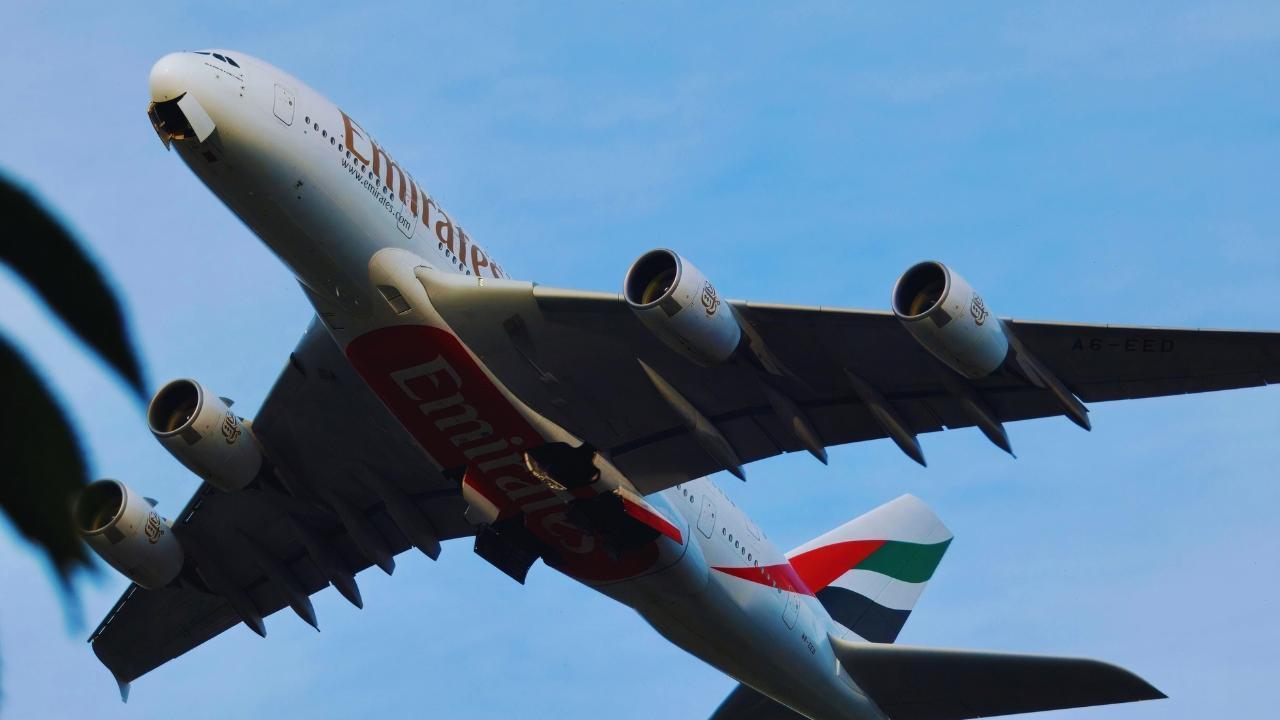
Post by : Anis Farhan
The aviation industry is no stranger to big-ticket deals, but the announcement of Qatar Airways’ $96 billion purchase agreement with Boeing has set a new benchmark. The deal, which includes hundreds of next-generation aircraft ranging from long-haul widebodies to fuel-efficient mid-sized jets, is not just about expanding a fleet. It is about signaling dominance, shaping alliances, and redefining the global aviation economy in the decade ahead.
Qatar Airways, already ranked among the most awarded airlines in the world, has now positioned itself as the central player in the next wave of aviation competition. This deal is more than just about planes—it is about global influence, industrial supply chains, and the geopolitical clout that comes with controlling the future of skies.
For years, Qatar Airways has branded itself as more than just a carrier. It has positioned itself as a global ambassador for Qatar, connecting passengers from every continent through its strategically located hub at Hamad International Airport in Doha. As international air travel rebounds post-pandemic, Qatar sees a unique opportunity: capture global demand for both premium long-haul travel and regional connectivity.
The $96 billion deal ensures that Qatar Airways not only maintains but expands its competitive edge against rivals like Emirates, Etihad, Turkish Airlines, and Singapore Airlines. These new aircraft are expected to offer greater fuel efficiency, advanced passenger comfort, and improved cargo capacity—three key elements in an era where sustainability and profitability are equally crucial.
In simple terms, this order is not just about keeping up with demand; it is about leading the next generation of air travel.
For Boeing, this order represents a lifeline at a critical moment. The aerospace giant has faced years of turbulence, from the 737 MAX crisis to supply chain breakdowns and intensified competition from Airbus. Securing a $96 billion agreement with one of the world’s leading airlines provides not only financial stability but also reputational recovery.
The deal is expected to cover Boeing’s 777X, 787 Dreamliner, and potentially new orders of the 737 MAX family, which together offer efficiency improvements of up to 20% compared with earlier models. With Airbus aggressively pushing its A350 and A321neo series, Boeing needed a headline-grabbing order to reaffirm its market relevance.
Qatar Airways’ decision to favor Boeing on such a massive scale also shifts competitive dynamics. It shows confidence in Boeing’s ability to deliver cutting-edge aircraft despite its recent setbacks. For the American aerospace industry, this isn’t just about planes—it’s about jobs, exports, and global influence.
Aircraft production is not a local business. Every order involves thousands of suppliers spread across dozens of countries, from engine manufacturers in the UK and Germany to composite materials sourced in Japan. With a deal this size, the ripple effect will be enormous.
Estimates suggest the order will sustain over a million direct and indirect jobs in the United States and its partner countries over the next decade. Small component manufacturers, technology providers, and logistics firms will all benefit. In regions still struggling to recover from pandemic-induced economic slowdowns, this could provide much-needed stability.
Additionally, Qatar Airways’ order ensures long-term engagement between Boeing and Gulf nations, reinforcing ties that go beyond aviation and spill into energy, defense, and strategic partnerships.Geopolitical Implications of the Deal
Mega aviation deals rarely exist in isolation; they are almost always tied to geopolitics. Qatar has used aviation as an extension of its foreign policy, and this deal further solidifies that approach.
By aligning with Boeing and, by extension, the United States, Qatar strengthens its strategic ties with Washington. In a region where geopolitical alliances shift quickly, having an economic partnership of this magnitude secures goodwill from policymakers. It also positions Qatar as a critical player in the Middle East’s aviation arms race, where rivals like the UAE and Saudi Arabia are pouring billions into their national carriers.
This deal also demonstrates Qatar’s long-term vision: positioning itself not only as a global energy leader but also as a global transport hub. Aviation is, in many ways, the new oil—a tool to project influence, attract business, and shape perceptions.
The Gulf has become the epicenter of aviation competition. Emirates, based in Dubai, remains the largest international carrier, while Saudi Arabia recently launched Riyadh Air with bold expansion plans. Etihad Airways in Abu Dhabi continues to reinvent itself after years of restructuring.
Qatar Airways’ record-breaking deal resets the game. It signals to competitors that Qatar intends to remain ahead of the curve, not just in terms of fleet size but in technology, sustainability, and passenger experience. With Doha hosting major global events and positioning itself as a luxury and transit hub, these aircraft will ensure Qatar Airways remains the airline of choice for millions.
It also raises questions: how will Emirates and Riyadh Air respond? Will this trigger a new wave of mega orders from Airbus or Boeing by rival carriers? Industry watchers believe this is just the beginning of a fresh cycle of fleet expansion in the Middle East.
No modern aviation deal can ignore the climate factor. Air travel contributes to global carbon emissions, and airlines are under increasing scrutiny to reduce their footprint. Qatar Airways’ Boeing order emphasizes fuel-efficient aircraft with cutting-edge engines and lighter materials, which together could reduce emissions significantly compared to older models.
Moreover, Qatar Airways has pledged to integrate sustainable aviation fuel (SAF) into its operations, aligning with international climate commitments. While critics argue that no amount of efficiency can offset the massive carbon impact of such a large fleet expansion, Qatar Airways insists that modernization is a crucial step toward greener skies.
This also puts pressure on global regulators and competitors to match sustainability benchmarks, potentially accelerating innovation across the industry.
For passengers, what does a $96 billion order mean? It translates into more routes, better comfort, and enhanced services. The new aircraft will be equipped with upgraded cabin designs, quieter engines, and advanced digital systems that improve in-flight connectivity.
Qatar Airways has long marketed itself on the strength of its passenger experience, from award-winning business class suites to state-of-the-art lounges. With these aircraft, the airline is set to raise the bar further. Business travelers, leisure tourists, and even cargo shippers stand to benefit from this expansion.
Often overlooked in these mega deals is the role of cargo. Qatar Airways Cargo is already one of the largest air freight operators in the world, playing a vital role during the pandemic in delivering vaccines and medical supplies.
The new fleet will expand this capacity further, ensuring Doha remains a major hub for global trade. For Asia, Africa, and Europe—regions that rely heavily on quick air logistics—this order enhances connectivity and strengthens global supply chains. In a world where maritime trade has been disrupted by conflicts and bottlenecks, cargo-friendly aviation is increasingly critical.
Despite the celebratory tone, challenges remain. Boeing must deliver on time, something that has been a sore point in recent years. Any delay could strain relations and dent Qatar Airways’ ambitious plans. Financing such a massive order also requires careful management, though Qatar’s sovereign wealth and energy revenues provide strong backing.
There are also risks from volatile oil prices, geopolitical conflicts, and potential downturns in global travel demand. A mega fleet expansion is only beneficial if the demand materializes. While forecasts are optimistic, unforeseen events—such as pandemics or wars—could change the equation quickly.
The Qatar Airways-Boeing $96 billion agreement is more than a business deal; it is a blueprint for the future of global aviation. It reflects shifting economic priorities, strategic alliances, and the evolving needs of both passengers and cargo operators.
In the coming decade, this order will influence everything from aircraft manufacturing and job creation to tourism flows and geopolitical strategies. It will be studied not only as a record-setting purchase but as a turning point in how airlines wield economic power on the world stage.
For Qatar Airways, it is a statement of intent: to remain at the forefront of aviation, not just as an airline but as a symbol of a nation’s ambition.
This article is written for informational and editorial purposes only. The views expressed reflect current developments in global aviation and are not financial or investment advice. Readers should consult multiple sources for broader perspectives.








Jordan Burroughs Returns to Wrestling with 2028 Olympic Dream
Jordan Burroughs returns to wrestling with Real American Freestyle as the Olympic champion eyes a po

Lamborghini Catches Fire on Singapore's ECP, Causing Heavy Traffic
A Lamborghini caught fire on Singapore's ECP, causing heavy traffic and bus delays. No injuries were

Bangkok Airport Duty-Free Area Flooded by Pipe Burst
A burst water pipe flooded the duty-free shopping area at Bangkok's Suvarnabhumi Airport on July 16,

Nine Monks Killed in Thailand Pickup Truck Tragedy
An 11-year-old boy driving a pickup truck crashed into monks during a pilgrimage in northeastern Tha

Anwar Congratulates Xi on CPC's 105th Anniversary
Malaysia reaffirms strong ties with China as PM Anwar Ibrahim sends a congratulatory letter to Presi

Thai Agriculture Team Reviews 2026 Farm Development Plans
Agriculture Ministry officials inspected livestock and organic rice projects in Nakhon Sawan to moni